Ancient Hindu temple's land illegally occupied by encroachers in West Champaran, Bihar
 Bettiah, Bihar, India
  4 August, 2026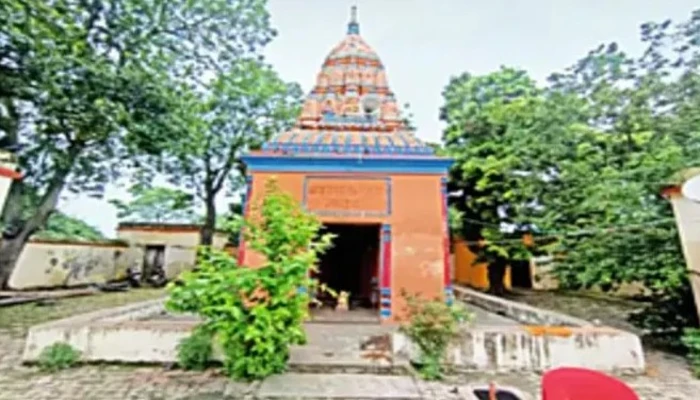
Case Summary
In West Champaran, Bihar, land belonging to an ancient Hindu temple dedicated to Lord Shiva was illegally occupied by unidentified encroachers. The encroachers constructed houses on portions of the temple property, reducing the area available to the historic temple complex. The temple was the 300-year-old Siddheshwar Nath Mahadev Shiva Temple, located in Bhaisahi Pokhariya Panchayat of Champatiya block in West Champaran. Situated on the bank of the Uttarvahini River, the temple was an important place of religious faith and was visited by devotees from nearby and distant areas throughout the year. It attracted larger gatherings during Shrawan, a sacred month in the traditional Hindu calendar, while an annual fair was held there on Teras in the month of Phalgun. According to the temple’s 70-year-old priest, Shambhu Mishra, the temple had been constructed by Bettiah Raj. Mishra, a native of Chhapra, was the fourth generation of his family to serve as the temple’s priest and performed regular worship there. He received an honorarium of ₹2,000 per month from Bettiah Raj, which supported both the conduct of worship and his livelihood. The temple complex covered around four acres, portions of which had been encroached upon and used for constructing houses. The temple had also deteriorated due to prolonged lack of maintenance, with insufficient resources even for basic painting and repairs. Local residents and representatives, including Panchayat head Parshuram Ram, former councillor Nandlal Sharma, Batti Kushwaha, Raju Mishra and Suresh Yadav, described the temple’s condition as poor. In the absence of adequate maintenance, villagers had arranged painting and repairs through community contributions every two to four years. Officials from the Raj administration visited the temple only occasionally, while the report stated that no elected representative or government had taken a serious initiative to address the encroachment of the temple land or ensure the preservation and development of the historic Hindu religious site.
Why it is Hate Crime ?
This case has been added to the tracker under the primary category: Attack on Hindu religious representations. Within this, the subcategory selected is: Encroachment or illicit takeover of temple land/land near temple. In Hinduism, a temple is the abode of the Deity. The Deity in the Temple is consecrated, thereby, making it a real, breathing entity. Hindus believe that not just the Deity but the temple premises itself are sacred to Hindus since Hindus hold the faith that the entire Temple space is an amalgamation of the divine energy of the deity. Not only the Temple but the Temple premises in its entirety are considered sacred by Hindus. In several cases, the premises of the Temple and/or religious centre are illicitly taken over by institutions belonging to other faiths – like the Waqf board or the Church. Other times, the temple property, land or the property of religious centres are illicitly encroached by non-Hindu groups. Any illicit take over or encroachment is a crime an initio, however, when non-Hindu groups illicitly take over or encroach the sacred land of Hindus, it is an affront to the Hindu community and is therefore classified as a religiously motivated hate crime under this category. In this incident, the land belonging to a 300-year-old Hindu temple in Bihar was illegally encroached upon by unidentified individuals who constructed houses on the temple property. The temple and its land are not merely physical property but form an integral part of a sacred Hindu religious institution dedicated to the worship of Hindu deities. In Hindu tradition, temple premises are regarded as sacred spaces associated with the presence and worship of the respective deity. The land attached to a temple serves as the foundation and supporting space for religious activities, rituals, festivals, gatherings of devotees and the continued functioning of the institution. Temple land is therefore considered part of the religious endowment and carries significance beyond its material or economic value. Therefore, any unauthorised occupation or takeover of such land diminishes the sacred space belonging to the temple and interferes with the preservation and functioning of the Hindu religious institution. In this case, the construction of houses on portions of the temple property appropriates space that is traditionally associated with the temple and its deity, treating land belonging to a sacred Hindu institution as ordinary property for unauthorised use. This disregards the religious sanctity attached to the land, undermines the integrity of the sacred site and deprives the Hindu community of part of the space belonging to its place of worship. Such conduct demonstrates disregard for the religious significance of Hindu temple property and reflects hostility towards a Hindu religious institution. This thereby hurts the religious sentiments and rights of the Hindu community. At the time of writing this report, although the identities of the perpetrators remain unknown, the act demonstrated hostility towards the Hindu community and its sacred places of worship. Therefore, the incident is being documented in the hate crime database of the Hinduphobia Tracker. Disclaimer: The Hinduphobia Tracker records incident dates based on when the crime occurs, rather than when the media reports it. In this case, the report did not specify when the encroachment began. Therefore, the media publication date, 5 August 2026, has been recorded as the indicative incident date for documentation purposes.


Case Status
Unknown


Perpetrators Details
Perpetrators
Unknown
Perpetrators Range
Unknown
Perpetrators Gender
unknown
 Sources




