Hindu doctor subjected to anti-Hindu abuse over bindi by Christian social media users in United States
 United States
  22 July, 2026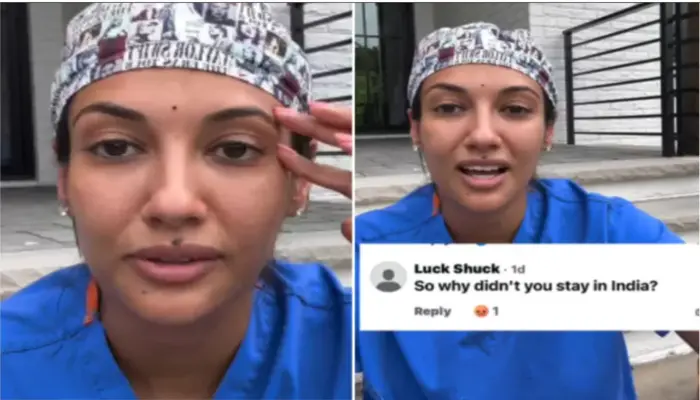
Case Summary
In the United States, a Hindu plastic surgeon, Dr Karishma Reddy, faced anti-Hindu and racist abuse from Christian users on social media. This occurred after she shared an Instagram reel about an interaction with a patient concerning her bindi. The comments targeted her Hindu identity and mocked her religious beliefs, while also repeatedly telling her to "go back to India" despite her being born and raised in the United States. The comments specifically mocked Hinduism and denigrated Hindu religious beliefs and practices. One user told Reddy that she was "too sensitive" and needed to "find Jesus" if she wanted to go to heaven. Another mocked Hindu beliefs about the sacredness of cows and hurled the cow-urine jibe, stating that people in India believed "drinking cow urine is good for your health". A further comment described Hinduism as "the dumbest religion" and mocked beliefs about cows, cow urine and cow dung, while also stating that Hinduism was responsible for destruction in India and telling Reddy to "go back to India". Another user described the original remarks as "hilarious" and contrasted life in India with the United States by referring to the consumption of cow urine. The abuse also included racial, xenophobic and cultural stereotypes directed at Reddy. Multiple users told her to return to India, including comments stating, "I wish you weren't in USA. Go back to India" and "so why didn't you stay in India", despite her being born and raised in the United States. One user responded to the discussion by referring to violence against women in India and wrote that "it's all relative". The comments collectively targeted Reddy for her Hindu faith, Indian heritage and cultural identity, while invoking Christianity as a means of denigrating her religious beliefs. In a video recorded by Reddy, she directly addressed the backlash, saying that the comment section had gone "absolutely nuts" after her bindi-related reel and that she had never experienced such a level of hate in her life. She said many users had told her to go back to India despite her being born and raised in the United States. She explained that she had spent much of her life working in hospitals, clinics and other healthcare settings, where Indian people were not generally seen as a minority and where she had mostly been treated with kindness and respect. She said this experience had left her unprepared for the level of hostility directed at her online. Addressing the comments about Hinduism and cows, Reddy explained that Hindus do not eat beef and described the cultural significance of cows in Hinduism. She sought to correct misconceptions about Hindu beliefs and practices and said she hoped her response would help viewers better understand Hinduism and the significance of cows. She also expressed concern that people had become comfortable spreading hatred online over cultural differences, urged people to learn about cultures different from their own, and ended her message by asking people to be kind. The response video received widespread support on social media, with users praising Reddy and her explanation of Hindu traditions. One person identifying as her patient expressed support for her and praised her work.
Why it is Hate Crime ?
This case has been added to the tracker under the primary category: Attack not resulting in death. The subcategory selected is: Attacked for Hindu identity. In several cases, Hindus are attacked merely for their Hindu identity without any perceived provocation. A classic example of this category of religiously motivated hate crime is a murder in 2016. 7 ISIS terrorists were convicted for shooting a school principal in Kanpur because they got ‘triggered’ seeing the Kalava on his wrist and tilak that he had put. In this, the Hindu victim had offered no provocation except for his Hindu religious identity. The motivation for the murder was purely religious, driven by religious supremacy. Such cases where Hindus are targeted merely for their religious identity would be documented as a hate crime under this category. The other primary category selected is: Hate Speech against Hindus. The subcategory selected is: Anti-Hindu slurs, mocking faith. Anti-Hindu slurs and the deliberate mocking of the Hindu faith owing to religious animosity involve the usage of derogatory terms, stereotypes, or offensive references to religious practices, symbols, or figures. One of the common anti-Hindu slurs used against Hindus is “cow-worshipper” and “cow piss drinker”. The intention of using this term is to demean and mock Hindus as a group and their religious beliefs since Hindus consider the cow holy. Additionally, some symbols and the slurs attached to them have a historical context that exacerbates the insult, hate, stereotyping, dehumanisation and oppression against Hindus. Cow worship has been used for centuries to denigrate Hindus, insult their faith and oppress Hindus specifically as a religious group. There has been overwhelming documentation about how cow slaughter has been used to persecute Hindus with cow meat being thrown in temples and places of worship. There has also been overwhelming documentation where cow meat (beef) has been force-fed to Hindus to either forcefully convert them to Islam or denigrate their faith. Apart from cow worship, the Swastika – which holds deep religious significance for the Hindus – has also been misinterpreted and distorted to use as a slur against Hindus. Similarly, the worship of the Shivling has been used by supremacist ideologies and religions to denigrate Hindus owing to religious animosity. Such slurs and denigration stem out of inherent animosity and hate towards Hindus and their faith, therefore, it is categorised as hate speech targeted at Hindus specifically owing to their religious identity. This case was a clear example of a religiously driven hate crime, as the Hindu victim was subjected to severe anti-Hindu abuse and had her faith denigrated by the Christian perpetrators. Dr Karishma Reddy was targeted after sharing an Instagram reel about an interaction with a patient concerning her bindi, and the subsequent abuse specifically focused on her Hindu identity and religious beliefs. The fact that a Hindu woman was subjected to such hostility over a religious symbol and a light-hearted discussion about it demonstrated that her Hindu identity was central to the abuse. The comments therefore went beyond criticism or disagreement and amounted to targeted hostility against her because she was Hindu, making this a clear instance of religiously driven animosity. The bindi holds deep religious and cultural significance in Hinduism and serves as a visible marker of Hindu identity rather than being merely an element of personal appearance. Reddy's reel simply recounted an interaction with a patient regarding her bindi and did not contain any remarks targeting another community or attempting to provoke a religious dispute. However, instead of engaging with the substance of her post, several Christian users fixated on her bindi and used it as a pretext to ridicule Hinduism and direct abusive remarks at her. The discussion shifted away from the experience she had shared and became centred on denigrating her faith and its symbols, demonstrating that she was singled out not because of anything she had said, but because the bindi visibly identified her as a Hindu. By turning an otherwise ordinary social media post into an opportunity to attack her religion, the perpetrators profiled and targeted her on the basis of her Hindu identity. This makes this incident a clear example of a religiously driven hate crime. The perpetrators further directed their hostility at Hindu beliefs concerning the sacredness of the cow. The cow holds profound religious and cultural significance in Hinduism and is traditionally revered as a symbol of nourishment, motherhood, life and sustenance. Hindu scriptures and traditions accord the cow a sacred status, and the Vedas describe the cow as Aghnya, meaning "that which should not be killed". Cow protection and the condemnation of cow slaughter therefore form part of a longstanding Hindu religious and cultural tradition. Cow products, including milk, ghee, dung and urine, also have recognised religious, spiritual and medicinal uses in various Hindu household and ritual practices, particularly within traditional Vedic and religious contexts. The perpetrators mocked Hindu beliefs by repeatedly invoking cow urine, turning a religiously significant practice into an object of ridicule. The repeated use of the "cow-urine" jibe has become a common form of anti-Hindu abuse, deliberately trivialising Hindu reverence for the cow and insulting a practice that carries religious significance for millions of Hindus. Such remarks do not merely ridicule a particular practice; they seek to delegitimise and belittle the Hindu faith itself by portraying a sacred tradition as an object of contempt. Similar rhetoric had also appeared in explicitly anti-Hindu and violent contexts, including remarks by Pulwama terrorist Ahmed Dhar, who used the "cow urine" slur while justifying violence against CRPF personnel. This demonstrated how such language extends beyond mockery of a religious practice and becomes a tool for expressing hatred towards Hindus and rationalising violence against them. By repeatedly invoking cow urine to humiliate Reddy, the perpetrators therefore targeted a sacred aspect of her Hindu identity and reinforced a broader pattern of contempt towards Hindu religious beliefs and practices. The perpetrators also displayed explicit religious hostility by directly denigrating Hinduism itself. One comment described Hinduism as "the dumbest religion", moving beyond ridicule of individual beliefs or practices to attack the faith as a whole. Such language did not criticise any specific doctrine or practice but sought to demean an entire religion and its followers by portraying Hinduism as inherently irrational and inferior. By insulting the religion itself while simultaneously mocking Hindu symbols and practices and targeting a Hindu woman because of her visible religious identity, the perpetrators demonstrated that their hostility was directed not merely at the victim as an individual, but at Hinduism and the Hindu community more broadly. This overt denigration of a religious faith underscored the anti-Hindu and religiously motivated nature of the abuse. The instruction that Reddy should "find Jesus" if she wanted to go to heaven further demonstrated the religious character of the abuse. The remark did not simply express the user's personal Christian belief; it was directed at a Hindu woman in the context of an ongoing attack on her faith and sought to present Christianity as the path to salvation while dismissing her existing Hindu faith. By telling a Hindu victim to abandon or reject her own religious tradition in favour of Christianity, the perpetrator denigrated Hinduism and treated her Hindu identity as spiritually inferior or inadequate. When this statement was made alongside direct mockery of Hindu beliefs and practices, it formed part of a broader pattern of religious hostility rather than an isolated expression of religious preference. The attempt to disparage Hinduism while elevating another faith therefore further established the religious motivation underlying the abuse. The repeated demands that Reddy "go back to India" also acquired a religious dimension when considered alongside the direct attacks on Hinduism, her bindi and Hindu religious practices. Such remarks could, in isolation, constitute racist or xenophobic abuse directed at her Indian identity; however, in this case, the xenophobic language appeared alongside explicit anti-Hindu hostility, making it inseparable from the religious targeting of the victim. Reddy was born and raised in the United States, yet the perpetrators attempted to portray her as a foreign outsider because of her Indian and Hindu identity. This reflected an exclusionary outlook in which India was treated not merely as a foreign country but as a marker of the Hindu collective, making hostility towards India and Indians a vehicle through which hostility towards Hinduism and Hindus was expressed. By treating a Hindu woman's religious and cultural identity as evidence that she did not belong in the United States, the perpetrators sought to alienate her on the basis of her faith, further establishing the religiously driven nature of the abuse. Overall, since this case meets the parameters of a religiously driven offence, it is being added to the hate crime database of the Hinduphobia Tracker. Disclaimer: The Hinduphobia Tracker records incident dates based on when the victim’s ordeal began, rather than when the media reported it. In this case, the available reports did not mention the exact date when the online abuse began. The earliest report documenting the backlash was published on 23 July 2026. Therefore, 23 July 2026 has been recorded as the indicative incident date for documentation purposes.
Victim Details
Total Victim
1
Deceased
0
Gender
- Male 0
- Female 1
- Third Gender 0
- Unknown 0
Caste
- SC/ST 0
- OBC 0
- General 1
- Unknown 0
Age Group
- Minor 0
- Adult 1
- Senior Citizen 0
- Unknown 0


Case Status
Unknown


Perpetrators Details
Perpetrators
Christian Extremists
Perpetrators Range
From 2 To 5
Perpetrators Gender
unknown
 Sources




