Hindu woman marries Muslim man posing as Hindu, faces forced conversion after marriage in Basirhat, West Bengal
 Basirhat, West Bengal, India
  6 August, 2012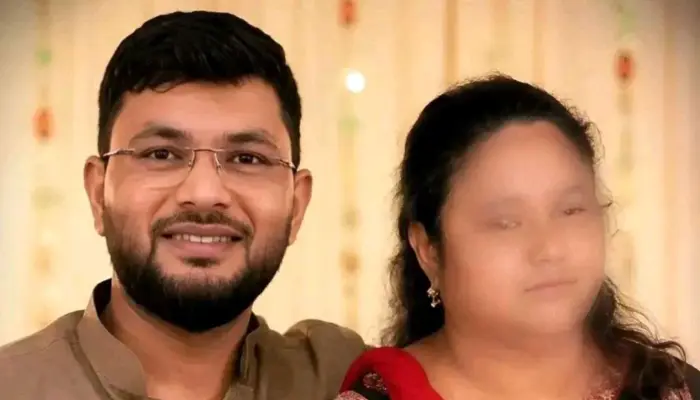
Case Summary
In Basirhat, West Bengal, a Hindu woman, Mahua Sarkar, was deceived into marriage by a Muslim man who faked his religious identity to trap her. After marriage, she was pressurised to convert to Islam. She was also subjected to physical assault, mental torture, and death threats. The incident occurred in Ward No. 19 of the Basirhat Municipality. According to the victim, the accused introduced himself as “Bappa Banerjee”, and the two fell in love. Subsequently, in 2012, Mahua, a resident of the Neora area of Basirhat, married Mustafizur Ghazi, against her family’s wishes. Around five months after the marriage, Mahua discovered Ghazi's real identity through various documents. After this, she was repeatedly pressured to change her religion. When she refused, she was subjected to beating and mental torture. She stated that pressure from her in-laws eventually forced her to change her religion, after which her name was changed to “Tania Ghazi”. She also stated that she was forced to use the new name on social media. The couple had a son in 2016. Mahua further stated that after the birth of the child, her husband’s multiple affairs came to light. In 2023, when the situation became unbearable, she left her in-laws’ house at night, took refuge at a relative’s house in Kolkata and filed a case. Mahua stated that she later received death threats when she contacted her husband’s family to get her child back. She filed a written complaint against Mustafizur at Basirhat Police Station on 7th August, 2026 and also approached Basirhat court.
Why it is Hate Crime ?
This case has been added to the tracker under the primary category - Crimes against women in relationships and other sexual crimes. Within this, the subcategory selected is- Man pretends to be Hindu. The tertiary category selected is- Name Changed. When a non-Hindu man pretends to be a Hindu to deceive a Hindu woman into a relationship, the act is seen as triggered by malafide intentions. In some cases, the woman eventually accepts the man’s original religious identity and converts after the man’s identity is revealed. These cases could be argued as cases of religious brainwashing and a result of the pressure a woman feels after getting into a relationship with a man. The woman, it can be argued, also changed her religious identity because of the stigma she believes she might face if she chooses to walk out of a deceptive relationship. However, for the purpose of documenting hate crimes, the cases in this subcategory are limited to those where there is explicit violence aimed at religious conversion against the wishes of the victim (force-feeding beef, blackmailing with intimate videos, rape on refusal to convert, etc), or if the woman herself complains of the man’s religious deception. In such cases, it is established that the deception of the non-Hindu man had a specific aim of religious conversion or targeting of the victim due to her Hindu religious identity, therefore, making it a religiously motivated hate crime. The other sub-category selected is - Forced conversion after marriage In such cases, a non-Hindu man marries a Hindu woman, and the force/pressure to convert to any Abrahamic faith, like Islam, begins after marriage. In such cases, typically, two patterns emerge. First, when the relationship is consensual, and the religious identity of the perpetrator is known to the Hindu woman in the relationship. The marriage could be under the Special Marriages Act, where neither parties are required to convert their religion for the marriage to be considered legitimate. While the victim in such cases enters matrimony assuming that religious identity is not a barrier, the non-Hindu man starts to pressure the woman to convert her religion after marriage. The second is when the woman gets into a marriage with the man, pretending to share her faith. Later, when the truth is revealed, the man starts pressuring the woman to convert her religion and give up her religious identity. In both situations, there is application of force by the perpetrator, including the denial of the woman’s religious rights. Some of the means by which the woman is forced/pressured to convert include force-feeding beef, being forced to read the Kalma, being forced to wear a hijab, forced to undergo Halala, etc. There are several instances where, after marriage, the woman voluntarily converts to Islam. Such cases are often argued to be a result of religious brainwashing, however, for the purpose of documenting religiously motivated hate crimes, in the absence of the victim complaining of forced conversion, such cases do not form a part of the database. Also, the third subcategory selected is: Assault or threat upon refusal to convert. When Hindu women are in a relationship with non-Hindu men, there are cases where the woman faces threats or assault after she refuses to convert and change her religious identity owing to pressure/force by the non-Hindu man. Such relationships may be consensual with the religious identity of the non-Hindu man known to the victim. Somewhere along the relationship, the non-Hindu man starts pressurizing the Hindu woman to convert to Islam and upon her refusal, assaults or threatens the victim. Such cases are driven by specific religious motivations and against the religious identity of the victim and are therefore qualified as hate crimes. Cases where the Hindu woman converts to Islam and does not file a complaint about the force or threat, are not considered a part of the hate tracker, even though, it may be argued that the woman was brainwashed or threatened to convert to Islam. This incident has been categorised under Predatory Proselytisation because religion was not incidental to the relationship but central to the manner in which the victim was deceived, controlled, and coerced. The first and most significant religious marker was the accused's deliberate concealment of his Muslim identity. By presenting himself as a Hindu, he deprived the victim of the opportunity to make an informed decision about entering into the relationship and marriage. Had religion been irrelevant, there would have been no need to misrepresent his faith. The concealment itself demonstrates that the accused recognised that his true religious identity could have influenced the victim's decision and therefore resorted to deception to secure her trust. Such concealment amounts to religious fraud because a false religious identity became the means of initiating and sustaining the relationship. The religious nature of the deception became even more apparent after the marriage, when the victim's own faith became the focus of the relationship. Once the accused's true identity came to light, the victim was no longer accepted as she was but was pressured to abandon her Hindu identity and embrace Islam. This sequence of deception followed by conversion-related pressure demonstrates that concealing his identity was not an isolated act of dishonesty but the first step in a larger process aimed at replacing the victim's religious identity. The subsequent change of the victim's name to "Tania Ghazi" further reinforces this conclusion. In conversion-related cases, a change of name is not merely a personal preference but often signifies the abandonment of one's previous religious identity and the adoption of a new one. The fact that the victim was made to use this name publicly, including on social media, indicates that the pressure extended beyond private belief to the outward expression of her identity. The objective was not simply to rename the victim but to erase her visible Hindu identity and replace it with an Islamic one. The physical assault, threats, and intimidation inflicted upon the victim also cannot be viewed in isolation from the demand for religious conversion. They were not random acts of domestic violence but operated as tools to compel compliance with the accused's religious objective. The use of force and intimidation ensured that the victim's resistance to abandoning her faith carried severe personal consequences. In this context, violence became the mechanism through which religious coercion was enforced. Viewed in its entirety, the incident reveals a continuous pattern of religious deception, coercion, and intimidation. The accused first concealed his religious identity to induce the victim into marriage and, once the relationship was established, sought to replace her Hindu identity through conversion, a change of name, and sustained threats and physical violence. These were not independent acts but successive stages of the same course of conduct, all directed towards compelling the victim to abandon her Hindu faith. These actions of the accused stemmed from inherent hostility towards the victim's professed faith, since Abrahamic faiths believe that any non-adherent to the faith is subject to being dehumanised till they convert. This mindset does not merely tolerate the existence of another faith but seeks its erasure or assimilation. As a result, Hindus are often targeted not because of who they are as individuals, but because of their religious identity. The violence, deception, or humiliation inflicted in such cases is therefore not random, but part of a broader ideological hostility toward Hinduism and its symbols, practices, and adherents. Here, too, the predatory actions stemmed from doctrinal animosity towards the Hindu faith, which is why this case is being documented as a religiously motivated hate crime. Disclaimer: The Hinduphobia Tracker records incident dates based on when the victim's ordeal began, rather than when the media reported it. In this case, the reports stated that the victim's marriage took place in 2012, which marked the beginning of the incident. Therefore, 7 August 2012 has been recorded as the indicative incident date for documentation purposes, derived by aligning the known year with the article publication date of 7th August 2026.
Victim Details
Total Victim
1
Deceased
0
Gender
- Male 0
- Female 1
- Third Gender 0
- Unknown 0
Caste
- SC/ST 0
- OBC 0
- General 0
- Unknown 1
Age Group
- Minor 0
- Adult 1
- Senior Citizen 0
- Unknown 0


Case Status
Complaint registered


Perpetrators Details
Perpetrators
Muslim Extremists
Perpetrators Range
One Person
Perpetrators Gender
male
 Sources




