Anti-Hindu hate on display: Indian Muslim politician makes derogatory comments against Lord Ram and Hindutva
 Jammu and Kashmir, India
  6 December, 2024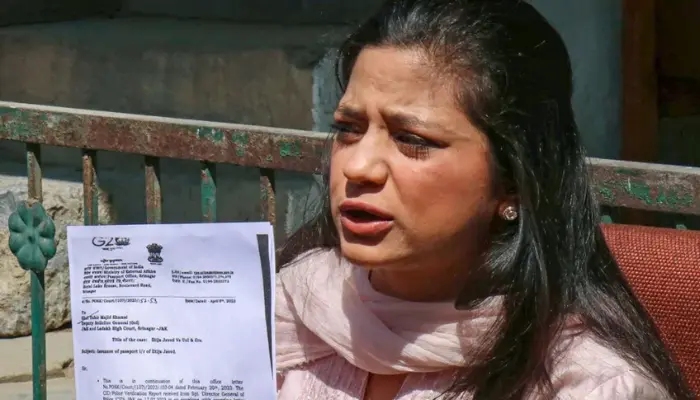
Case Summary
Anti-Hindu hate was displayed by People's Democratic Party (PDP) leader Iltija Mufti, who made derogatory remarks about Lord Ram and described Hindutva as a “disease” in a social media post on 7 December 2024. Her remarks referred to Lord Ram in a disparaging manner and characterised Hindutva as an affliction affecting millions of Indians. She made the remarks while responding to a purported video showing three minor Muslim boys being beaten and allegedly being forced to chant “Jai Shri Ram” in Madhya Pradesh. Sharing the purported video on X, Iltija Mufti wrote: “Ram the deity must hang his head in shame & watch helplessly as minor Muslim boys are whacked with chappals only because they refuse to chant his name. Hindutva is a disease that’s afflicted millions of Indians & sullied God’s name.” She later described Hindutva as an ideology of hate and stated that Veer Savarkar had propagated it in the 1940s with the aim of establishing the hegemony of Hindus and the idea that India belonged to and was for Hindus. She also said that Hinduism, like Islam, was a religion promoting secularism, love and compassion, and argued that Hindutva and Hinduism were distinct. Mufti further criticised the use of the slogan “Jai Shri Ram”, stating that it was being associated with lynching and used as a tool to instigate hate rather than representing the ideals of “Ramrajya”. She said that Hinduism was being distorted and reiterated that she had criticised Hindutva as an “illness”. Her remarks drew condemnation from Hindu organisations and Bharatiya Janata Party (BJP) leaders. BJP leader Ravinder Raina described her remarks as irresponsible and objectionable, stating that they hurt religious sentiments and create division in society. He demanded that Mufti apologise for her remarks. BJP leader Kavinder Gupta also condemned her comments, stating that she had made derogatory remarks against Lord Ram and hurt the faith of Hindus. Following the criticism, Mufti made another social media post on 8 December 2024 in which she stated that violence carried out in the name of Islam had contributed to Islamophobia and compared it with what she described as a similar situation involving Hinduism. She clarified that she was referring to Hinduism and not Hindutva, stating that Hinduism was being used and abused to lynch and persecute minorities. Police subsequently registered a First Information Report (FIR) against Iltija Mufti at Bus Stand Police Station, Jammu, under Section 299 of the Bharatiya Nyaya Sanhita (BNS), citing her remarks concerning Lord Ram, Hindus and Hindutva.
Why it is Hate Crime ?
This case has been added to the tracker under the prime category of: Hate speech against Hindus. The sub-category relevant to this case is: Anti-Hindu slurs, mocking faith. Anti-Hindu slurs and the deliberate mocking of the Hindu faith owing to religious animosity involve the usage of derogatory terms, stereotypes, or offensive references to religious practices, symbols, or figures. One of the common anti-Hindu slurs used against Hindus is “cow-worshipper” and “cow piss drinker”. The intention of using this term is to demean and mock Hindus as a group and their religious beliefs since Hindus consider the cow holy. Additionally, some symbols and the slurs attached to them have a historical context that exacerbates the insult, hate, stereotyping, dehumanisation and oppression against Hindus. Cow worship has been used for centuries to denigrate Hindus, insult their faith and oppress Hindus specifically as a religious group. There has been overwhelming documentation about how cow slaughter has been used to persecute Hindus with cow meat being thrown in temples and places of worship. There has also been overwhelming documentation where cow meat (beef) has been force-fed to Hindus to either forcefully convert them to Islam or denigrate their faith. Apart from cow worship, the Swastika – which holds deep religious significance for the Hindus – has also been misinterpreted and distorted to use as a slur against Hindus. Similarly, the worship of the Shivling has been used by supremacist ideologies and religions to denigrate Hindus owing to religious animosity. Such slurs and denigration stem out of inherent animosity and hate towards Hindus and their faith, therefore, it is categorised as hate speech targeted at Hindus specifically owing to their religious identity. In this case, the statements were made by People's Democratic Party (PDP) leader Iltija Mufti. She made derogatory remarks about Lord Ram and described Hindutva as a “disease” in a social media post. She also criticised the slogan “Jai Shri Ram”, stating that it had become associated with violence rather than the ideals of “Ramrajya”. As the statements targeted symbols and beliefs that hold deep significance for Hindus, the incident constitutes a case of anti-Hindu hate speech. The remarks were made while responding to a purported video showing Muslim boys being beaten for refusing to chant “Jai Shri Ram”. Even if the purported video accurately depicted the events and any such act of violence or coercion deserved condemnation, there was no necessity to denigrate Lord Ram while criticising the incident. Lord Ram is one of the most revered deities in Hinduism and is worshipped by millions of Hindus as "Maryada Purushottam", the ideal man and embodiment of righteousness, virtue, justice, compassion, courage, and dharma. For Hindus, Lord Ram is not merely a historical figure but a central object of faith, devotion, and worship whose life and teachings serve as a moral and spiritual ideal. Therefore, remarks such as “Ram the deity must hang his head in shame” were not directed at the perpetrators of the supposed assault but at a revered Hindu deity himself. By attributing shame to Lord Ram for the purported actions of certain individuals, Mufti shifted the focus from condemning the supposed perpetrators to disparaging a sacred figure of the Hindu faith. Criticism of an incident can be expressed without invoking or insulting a deity worshipped by millions. Such remarks went beyond political or social commentary and instead targeted a central religious figure whose sanctity is deeply intertwined with the beliefs and identity of the Hindu community. Consequently, these comments had insulted the religious sentiments of Hindus at large, giving the speech a distinctly anti-Hindu character. Mufti's remarks describing Hindutva as a “disease” also carried a distinctly anti-Hindu character. Hindutva is a political and civilisational movement centred on safeguarding Hindu interests, preserving India's Hindu civilisational heritage, and advocating for the rights of Hindus. It emerged as a unifying ideology to preserve the cultural and religious identity of Hindus, which had faced centuries of erosion through Islamic invasions, British colonisation, and Christian theological impositions and conversion efforts. Contrary to portrayals that depict it as inherently destructive, Hindutva is a movement for Hindu unity, cultural preservation, and the protection of Hindu rights. While individuals are free to debate or criticise any political or ideological movement, describing Hindutva as a “disease” went beyond legitimate criticism and instead employed dehumanising language to vilify a movement with which Hindus closely identify. By characterising Hindutva as an affliction that had "afflicted millions of Indians", Mufti portrayed it as something pathological and inherently harmful rather than engaging with it through reasoned criticism. Such terminology demeaned and delegitimised a movement that Hindus regard as integral to protecting their faith, culture, and civilisational identity, making it an instance of anti-Hindu hate speech. Furthermore, the term "Hindutva" is often used as a euphemism to make the targeting of Hindus more palatable while masking hostility directed at the Hindu community as a whole. It is frequently employed as a semantic device to justify or normalise hostility towards Hindus by suggesting that the attack is directed only at "Hindutva" rather than Hindus themselves, even where the two are treated as inseparable. This was evident during the "Dismantling Global Hindutva" conference held in the United States, where several leftist speakers argued that Hindutva and Hinduism were indistinguishable and asserted that dismantling Hindutva necessarily required dismantling Hinduism. Such examples demonstrate how the term "Hindutva" is used not merely to criticise an ideology but to target the broader Hindu religious and cultural identity. In this context, branding Hindutva as a "disease" was not merely criticism of a political viewpoint but was an attempt at showcasing contempt towards a movement that is meant for the protection of their Hindu religion, culture, and identity. Such rhetoric therefore reinforced the anti-Hindu nature of the remarks. By portraying Hindutva as a threat to minorities, Mufti did not merely express disagreement with a political or ideological movement but framed it as something inherently dangerous and harmful. Such characterisation portrayed the assertion and protection of Hindu interests, cultural heritage, and religious identity in an inherently negative light, suggesting that efforts aimed at preserving Hindu civilisation were themselves a source of intolerance. Rather than engaging with specific ideas or actions, her remarks painted the movement as intrinsically malign, thereby stigmatising a belief system with which Hindus closely identify. Mufti also sought to portray the slogan “Jai Shri Ram” in an exclusively negative light by associating it with lynching, violence, and hatred. “Jai Shri Ram”, which translates to “Victory to Lord Ram”, is one of the most sacred and widely recited religious slogans in Hinduism. It is chanted during prayers, devotional gatherings, religious processions, festivals, pilgrimages, and personal acts of worship as an expression of reverence towards Lord Ram. For millions of Hindus, it is a sacred invocation embodying devotion, righteousness, and adherence to dharma. Consequently, reducing this deeply revered religious slogan to a symbol of criminality or violence ignored its profound spiritual significance to all Hindus who use it solely as an expression of faith. Associating a sacred religious expression exclusively with acts of hatred and violence had the effect of stigmatising a central symbol of Hindu devotion and contributed to the denigration of Hindu religious identity, thereby giving the remarks an anti-Hindu character. Following the backlash, Mufti attempted to justify her remarks by asserting that her criticism was directed at Hindutva and not Hinduism, arguing that the two were distinct. As noted earlier, during the "Dismantling Global Hindutva" conference held in the United States, several speakers explicitly argued that Hindutva and Hinduism were inseparable and asserted that dismantling Hindutva necessarily required dismantling Hinduism. This illustrates how the term "Hindutva" has been used as a euphemism through which hostility directed towards Hindus and their religious identity is framed as criticism of an ideology rather than of the community itself. Consequently, when public figures first employ pejorative language such as describing Hindutva as a “disease” and later defend themselves by asserting that they criticised only Hindutva and not Hinduism, such a defence does not necessarily dispel the anti-Hindu nature of her earlier remarks. Overall, since this case met several parameters of an anti-Hindu hate speech, it is being added to the hate crime database of the Hinduphobia Tracker.


Case Status
Complaint registered


Perpetrators Details
Perpetrators
Muslim Extremists
Perpetrators Range
One Person
Perpetrators Gender
female
 Sources




