Hindu religious site desecrated; Muslim man dumps cow meat in front of sacred Kali temple in Sonitpur, Assam
 Rangapara, Assam, India
  3 August, 2026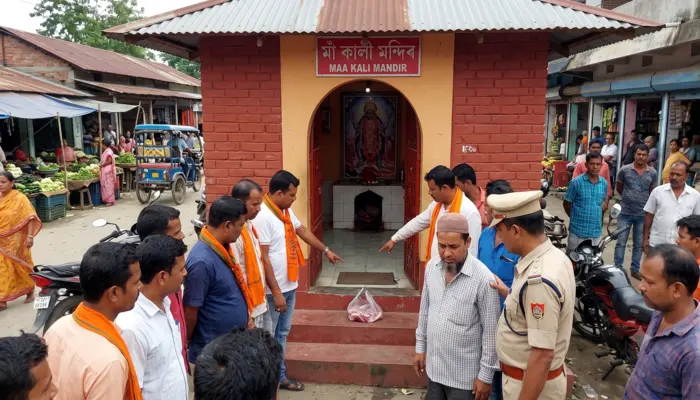
Case Summary
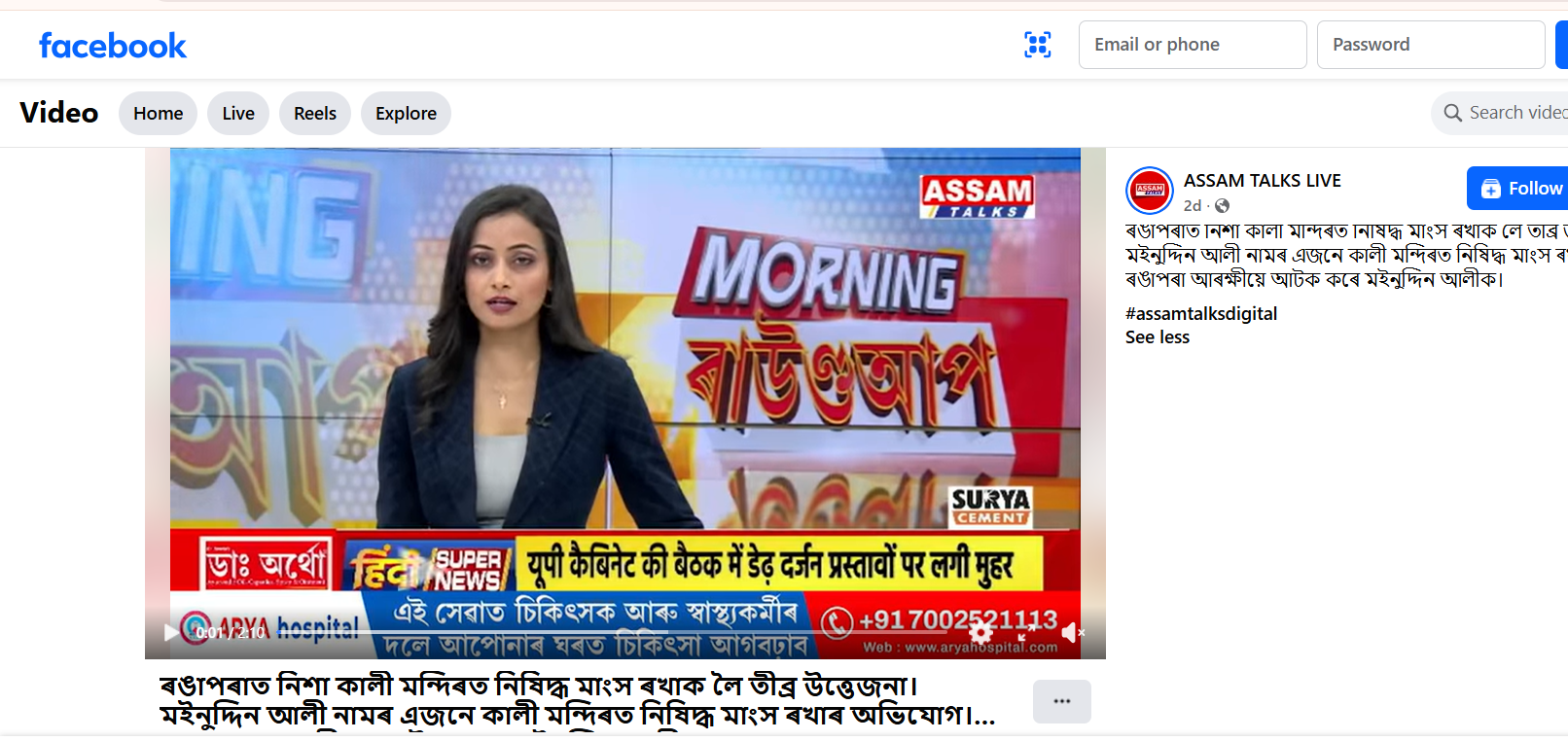
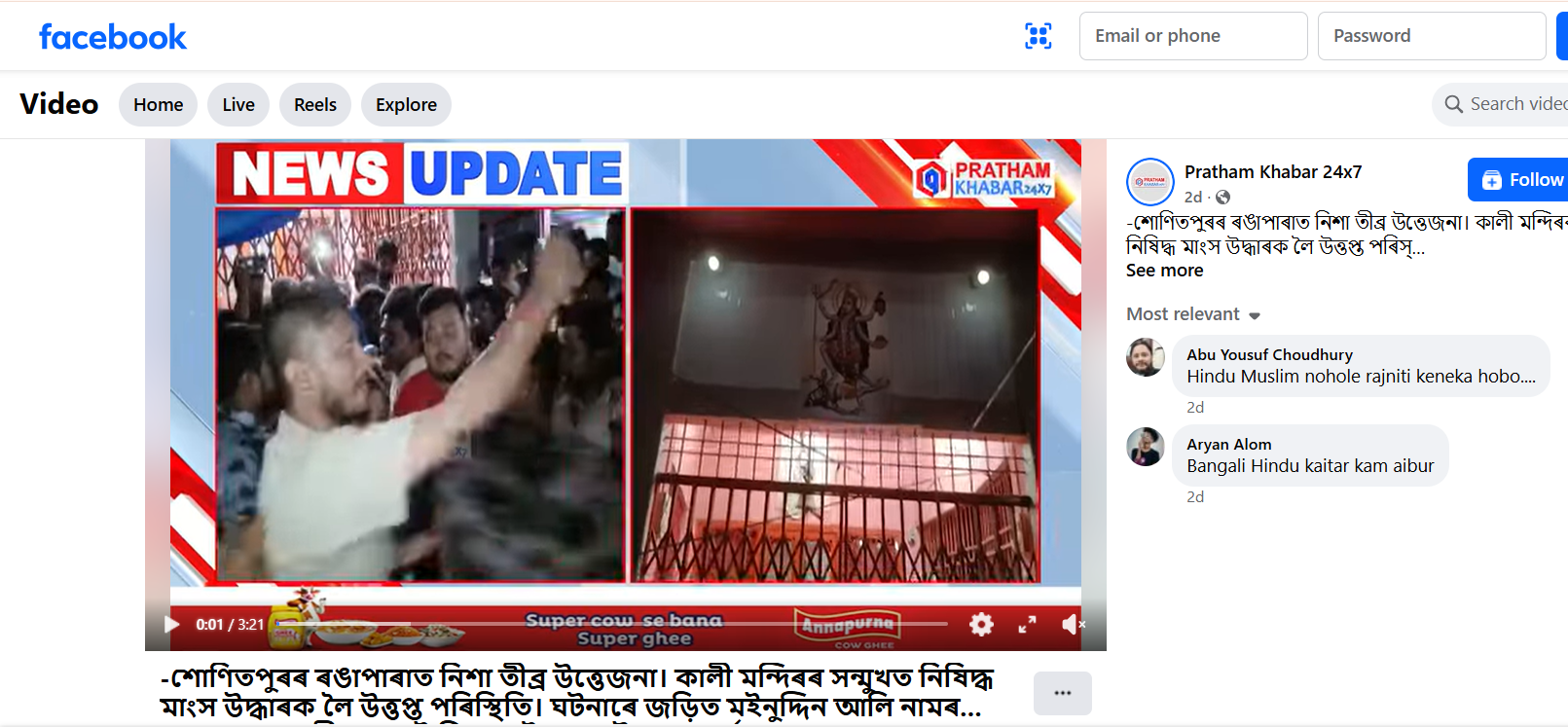
In Rangapara town of Sonitpur district, Assam, a Kali temple was desecrated by a Muslim man. The accused placed cow meat in front of the temple premises, hurting the religious sentiments of the local Hindu community. According to media reports, the incident occurred at the Kali temple located in the daily market area. The accused was identified as Mainuddin Ali alias Moinuddin, a Muslim man who operated a vegetable shop in the locality. He had procured the cow meat from an illegal market and transported it in a public vehicle before placing it in front of the Kali temple. The incident came to light when local residents noticed the meat outside the temple and confronted Mainuddin Ali. When questioned, he claimed that the substance was local fish purchased from the black market. However, the locals did not accept his explanation and called the driver of the vehicle in which the meat had been transported. The driver, who belonged to the Adivasi community, stated that both he and the vehicle's handyman were aware that the consignment contained cow meat and had attempted to stop Mainuddin Ali from transporting it. According to the driver, Mainuddin Ali insisted that the consignment was fish and continued transporting it despite their objections. Following the incident, local Hindu residents lodged a police complaint seeking legal action against the accused. Members of Bir Lachit Sena, Bajrang Dal, and Bhojpuri organisations also reached the spot, apprehended Mainuddin Ali, and handed him over to the police. The accused was subsequently detained, and the police initiated further legal action in connection with the incident. At the time of writing this report, the matter was under investigation.
Case Images
Why it is Hate Crime ?
In this case, the primary category selected is: Attack on Hindu religious representations. The subcategory selected is: Desecration of Hindu religious symbols. Icons and symbols or a religious representation of a spiritual ideal are widely revered in Hinduism. Iconography is of vital significance in the Hindu milieu. It helps connect people’s spiritual beliefs with the real world. Iconography within the Hindu faith takes several shapes and forms. Murtis are of most significance to Hindus, to which daily rituals, prayers and offerings are done. Besides the murtis, there are several other symbols which have deep significance in the Hindu faith – the Om and Swastika for example. Since these Hindu religious symbols hold paramount importance in Hinduism, any desecration of symbols, icons, murtis, religious representations and manifestations, is driven by animosity towards the faith itself which manifests itself through these murtis, icons and symbols. Therefore, any desecration of these Hindu religious symbols and representations is considered religiously motivated hate crimes under this category. The other subcategory selected is: Defiling religious customs Sanatan Dharma is not a religion of one book, which is to say that while it has religious scriptures that form the central tenets of the faith, there are several traditions followed through thousands of years, mostly passed from generation to generation orally. There are several such customs and traditions that are followed by various Hindus and Hindu sects. Defiling of these traditions and customs is a breach of an individual or group’s religious practices. Such practices can range from dietary restrictions like not eating non-vegetarian food for a certain period of the year, not eating non-vegetarian food at all, not eating beef since the cow is considered holy in Hinduism, the sanctity of religious customs followed in the house (like many ISCKON devotees), etc. Any malicious action leading to the breach of such traditions or defilement of these traditions owing to animosity towards the faith or for the sake of activism stems not only from the lack of faith in the religion itself but also from disregard for the faith of the devotees who follow the customs/traditions and implicit bias against the faith, the tradition itself. Since these specific traditions are central to the faith of the devotees of that specific sect of Hindus, any non-compliance with these traditional rules would be considered a religiously motivated hate crime. This case constituted a clear example of a religiously motivated hate crime because the Muslim perpetrator deliberately desecrated the sanctity of a Hindu place of worship by placing cow meat in front of a Kali Temple. The act was not committed at an ordinary public location but at the entrance of a functioning Hindu temple, making the temple itself the target of the offence. By specifically selecting a sacred Hindu religious site, the perpetrator violated the sanctity of the temple, desecrated a place held sacred by devotees, and caused deep injury to Hindu religious sentiments. In Hinduism, temples are not merely physical structures but consecrated spaces where deities are worshipped, and devotees perform prayers, rituals, and acts of devotion. A Kali Temple is dedicated to Goddess Kali, one of the most revered manifestations of the Divine Mother, and its premises are regarded as sacred. The sanctity and ritual purity of a temple are integral to Hindu religious practice, and devotees are expected to preserve this sacred environment. Any deliberate act that contaminates or defiles a temple amounts not merely to damage to property but to an attack on a sacred religious representation central to Hindu faith and worship. The religious significance of this incident is further heightened by the deliberate use of cow meat. In Hinduism, the cow is not merely an animal but is revered as Gau Mata (Mother Cow), a sacred symbol of motherhood, compassion, nurturing, sacrifice, and life-giving abundance. The sacred status of the cow is deeply rooted in Hindu belief and scripture. Vedic literature describes the cow as "Aghanya", meaning "one that should not be harmed or killed", while cow-derived products form an integral part of Hindu rituals and religious ceremonies. Consequently, cow slaughter is regarded by Hindus as a grave religious transgression and profound sin, and cow meat is considered ritually impure and fundamentally incompatible with the sanctity of Hindu places of worship. By bringing cow meat to the entrance of a Kali Temple, the perpetrator deliberately introduced a substance considered deeply offensive to Hindu beliefs into the immediate vicinity of a sacred shrine, thereby defiling its ritual purity and violating religious customs that are fundamental to Hindu devotional practice. The deliberate placement of cow meat outside the temple transformed the act from ordinary misconduct into the desecration of a sacred Hindu religious representation. The perpetrator did not merely dispose of meat at a random public location but consciously chose the entrance of a Hindu temple, where devotees regularly gathered for worship. If the objective had simply been to transport or discard the meat, innumerable ordinary public places, commercial areas, or waste disposal sites were available. Instead, the temple was specifically selected because of its religious significance. The act therefore derived its offensive character from violating the sanctity of a Hindu place of worship and directly interfering with a space dedicated to Hindu religious observance. The overall conduct of the perpetrator reflected a mindset of contempt towards Hindu religious beliefs and sacred spaces. The deliberate nature of the act and the conscious selection of a Hindu temple as its target demonstrated disregard for the sanctity attached to the site and the religious sentiments of the Hindu community. Viewed in its entirety, the conduct was not merely offensive but indicative of hostility towards the Hindu faith and its sacred representations. Since this case meets the parameters of a hate-driven offence, it is being added to the hate crime database of the tracker. Disclaimer: The Hinduphobia Tracker records incident dates based on when the crime occurred rather than when it was reported by the media. This incident was reported in the media on 4 August 2026. However, the exact date on which the accused placed cow meat outside the Kali Temple and was subsequently apprehended by local residents was not specified in the available sources. As no earlier date was available, 4 August 2026, the date of the earliest media reports, has been used as the indicative incident date for documentation purposes.


Case Status
Arrested


Perpetrators Details
Perpetrators
Muslim Extremists
Perpetrators Range
One Person
Perpetrators Gender
male
 Sources




