Sacred Hindu temple premises used to film objectionable dance reels in Rameshwaram, Tamil Nadu
 Rameswaram, Tamil Nadu, India
  2 August, 2026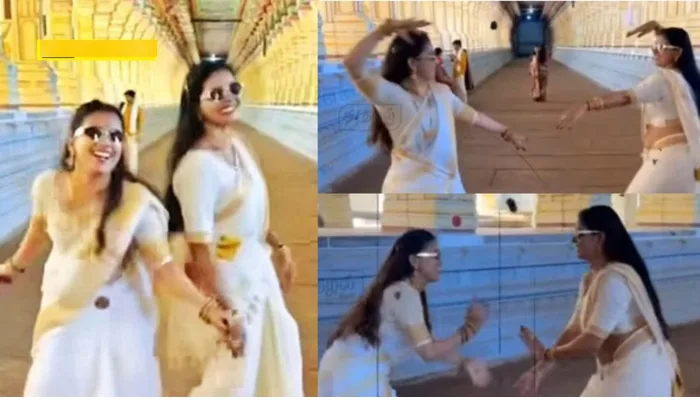
Case Summary
In Rameshwaram, Tamil Nadu, the sanctity of the world-famous Arulmigu Ramanathaswamy Temple, a revered Hindu temple, was undermined after two women filmed and uploaded a dance reel inside its premises. They filmed it at the temple’s iconic third prakaram, a revered part of one of Hinduism’s most significant places of worship. According to media reports, despite the temple’s prohibition on carrying mobile phones and cameras inside its premises, the women recorded themselves dancing to a film song in the third prakaram and uploaded the video as an Instagram reel. The video circulated widely on social media, drawing strong objections from devotees and Hindu organisations. Hindu Munnani and Hindu Makkal Katchi, two Hindu organisations, condemned the incident and urged the temple administration to initiate strict action against the women through the police. The organisations highlighted that sacred places of worship should not be used for filming reels or creating social media content. They called upon the temple administration to take measures to preserve the sanctity of the temple and prevent it from being turned into a space for commercial or entertainment activities.
Why it is Hate Crime ?
The primary category for this case is: Attack on Hindu religious representations. The subcategory for this case is: Breaking rules of a place of worship. Sanatan Dharma is not a religion of one book, which is to say that while it has religious scriptures that form the central tenets of the faith, there are several traditions followed through thousands of years, mostly passed from generation to generation orally. One of these oral traditions or written traditions is the rules of specific temples. Certain temples have rules which are traditional, dependent on the worship of the presiding deities. These rules and traditions have been followed for thousands of years, whether they find scriptural mention or not. Such traditions are based on the nature and rules of worship of the presiding deity of that temple. Any non-compliance with these traditions owing to animosity towards the faith or for the sake of activism stems not only from the lack of faith in the presiding deity but also from disregard for the faith of the devotees of that deity/temple and implicit bias against the faith, the tradition and the deity itself. Since these specific traditions are central to the faith of the devotees of that specific temple and presiding deity, any non-compliance with these traditional rules would be considered a religiously motivated hate crime. The incident qualified for documentation because it involved the deliberate disregard of rules protecting the sanctity of a revered Hindu place of worship. Hindu temples are not ordinary public spaces; they are sacred spaces where devotees follow established customs, traditions, and codes of conduct to maintain a spiritual atmosphere and ensure respectful worship. The violation of these practices inside the temple premises undermined the religious significance attached to the space and affected the sentiments of Hindus who regarded the temple as the sacred abode of the deity. In Hindu religious tradition, temples are considered the dwelling places of deities, where devotees seek blessings, offer prayers, and establish a spiritual connection with the divine. Every aspect of a temple, including its architecture, rituals, traditions, and restrictions, contributes to preserving its sacred character. Disregarding these practices within the temple premises amounts to a disregard for the religious values and sentiments associated with the place of worship. The Arulmigu Ramanathaswamy Temple in Rameswaram, Tamil Nadu, holds extraordinary significance in Hinduism as one of the twelve Jyotirlinga temples dedicated to Lord Shiva and one of the Char Dham pilgrimage sites. Revered as a major pilgrimage destination, the temple is associated with the Ramayana tradition, where Lord Rama is believed to have worshipped Lord Shiva after his victory over Ravana. The temple houses the Ramalingam, believed to have been established by Goddess Sita, and the Vishvalingam brought by Lord Hanuman. Devotees traditionally begin their pilgrimage with a holy dip at Agni Theertham, followed by ritual bathing in the temple’s 22 sacred theerthams before offering prayers to the deity. The restriction on carrying mobile phones and cameras inside the temple exists to preserve the discipline, solemnity, and spiritual atmosphere of the premises. By filming and performing an objectionable dance reel inside the third prakaram of the temple and using the sacred space as a backdrop for social media content, the women disregarded the religious environment that devotees entered the temple to experience. Such actions reduced a revered place of worship into a space for entertainment and online engagement, contrary to the purpose and traditions associated with the temple. The third prakaram where the video was filmed is not merely an architectural feature but a sacred part of a temple visited by thousands of devotees for worship and darshan. Turning such a space into a setting for recreational content showed disregard for the sentiments of Hindu devotees who considered every part of the temple premises to be connected with their faith and devotion. The act also undermined the efforts of temple authorities and devotees who followed restrictions intended to preserve the sanctity of the religious site. Respect for temple customs and traditions forms an essential part of Hindu religious practice. These customs are not superficial rules, but practices developed over generations to maintain the spiritual character of temples. When such traditions are knowingly violated inside a revered Hindu place of worship, it impacts the religious sentiments of the community that holds the temple sacred. For these reasons, the incident has been documented in the Hinduphobia Tracker as a religiously motivated hate crime, as it involved conduct that disrespected and undermined the sanctity of a revered Hindu religious space. Disclaimer: The Hinduphobia Tracker records incident dates based on the date on which a crime occurs, rather than the date on which it is reported by the media. However, in this current case, the exact date on which the dance reel was filmed and uploaded is not available from the sources reviewed. Accordingly, the Hinduphobia Tracker has recorded 3 August 2026 as the incident date, as this was the date on which the incident came into the public domain through media reports.


Case Status
Unknown


Perpetrators Details
Perpetrators
Unknown
Perpetrators Range
From 2 To 5
Perpetrators Gender
female
 Sources




