Hindu pilgrims' sacred Kanwar desecrated by Muslim man in Haridwar, Uttarakhand
 Haridwar, Uttarakhand, India
  1 August, 2026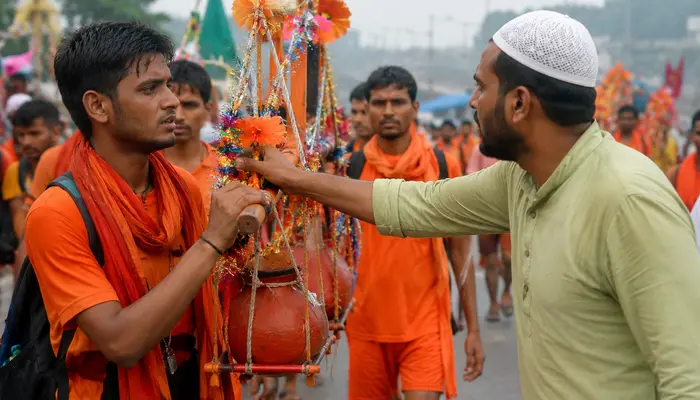
Case Summary
In Haridwar, Uttarakhand, a sacred Kanwar carried by Hindu pilgrims (Kanwariyas) during the Kanwar Yatra, a sacred Hindu pilgrimage, was desecrated by a Muslim man. The accused was identified as Mohammad Gulzar, who deliberately damaged the sacred Kanwar, causing outrage among Hindu devotees. The incident occurred when the Hindu pilgrims were carrying their sacred Kanwar, along with holy Ganga water collected for offering to Lord Shiva during the Kanwar Yatra. Mohammad Gulzar deliberately collided with the pilgrims, causing the sacred Kanwar to break. According to eyewitnesses, the accused was under the influence of alcohol at the time of the incident. They stated that he struck the pilgrims from behind, resulting in damage to the sacred Kanwar. Video footage from the scene showed bystanders identifying the accused and urging the police to take strict legal action against him. Despite the emotional nature of the incident, the Kanwariyas did not resort to violence. Instead, they informed the police and handed the accused over to the authorities. Police officers escorted Mohammad Gulzar into a police vehicle as the gathered crowd demanded legal action. At the time of writing this report, the matter was under investigation. Notably, the Kanwar Yatra is one of the largest annual Hindu pilgrimages, during which millions of devotees of Lord Shiva, known as Kanwariyas, travel on foot to collect holy water from the River Ganga and carry it in a decorated Kanwar, a sacred yoke suspended across the shoulders. The collected water is offered to Lord Shiva at temples during the holy month of Shravan (Sawan) as an act of devotion and penance. For Kanwariyas, both the Kanwar and the holy Ganga water it carries are deeply sacred and are treated with the utmost reverence throughout the pilgrimage.
Why it is Hate Crime ?
The primary category selected in this case is: Attack on Hindu religious representations. The subcategory selected is: Desecration of Hindu religious symbols. Icons and symbols or a religious representation of a spiritual ideal are widely revered in Hinduism. Iconography is of vital significance in the Hindu milieu. It helps connect people’s spiritual beliefs with the real world. Iconography within the Hindu faith takes several shapes and forms. Murtis are of most significance to Hindus, to which daily rituals, prayers and offerings are done. Besides the murtis, there are several other symbols which have deep significance in the Hindu faith – the Om and Swastika for example. Since these Hindu religious symbols hold paramount importance in Hinduism, any desecration of symbols, icons, murtis, religious representations and manifestations, is driven by animosity towards the faith itself which manifests itself through these murtis, icons and symbols. Therefore, any desecration of these Hindu religious symbols and representations is considered religiously motivated hate crimes under this category. This case constituted a clear example of a religiously motivated hate crime because the Muslim perpetrator deliberately desecrated the sacred Kanwar carried by Hindu Kanwariyas during the Kanwar Yatra. By intentionally damaging the Kanwar while devotees were undertaking an ongoing act of worship, the perpetrator interfered with a consecrated Hindu religious observance and desecrated a sacred religious symbol that forms an integral part of one of Hinduism's most significant annual pilgrimages. The act therefore caused profound injury to the religious sentiments of Hindu devotees. The Kanwar Yatra is one of the largest and most significant annual pilgrimages in Hinduism, dedicated to Lord Shiva. During the holy month of Shravan, millions of devotees, known as Kanwariyas, collect holy Ganga water from sacred sites such as Haridwar and carry it in a Kanwar to offer it to the Shiva Lingam through the ritual of Jalabhishek. The Kanwar is not merely a physical object used for transportation but a sacred religious symbol that becomes part of an ongoing act of worship once the holy water is collected. Throughout the pilgrimage, devotees observe strict religious disciplines, including maintaining ritual purity, walking long distances on foot, and ensuring that the Kanwar is treated with the utmost reverence. Hindu devotees believe that if the Kanwar is broken or its sanctity is violated before the offering is completed, the pilgrimage becomes spiritually incomplete and purification rituals must be performed before the religious observance can continue. Against this religious backdrop, the deliberate damage caused to the Kanwar amounted to far more than interference with property. By deliberately colliding with the Kanwariyas and breaking the sacred Kanwar, the perpetrator disrupted an ongoing act of Hindu worship and desecrated a religious symbol central to the devotees' faith. The act not only interfered with weeks of spiritual preparation, physical austerity, and religious observance but also rendered the sacred offering ritually defiled in the eyes of the devotees. Such conduct demonstrated deliberate disrespect towards a sacred Hindu religious symbol and the faith of millions of Hindus who undertake the Kanwar Yatra. The desecration of a consecrated religious object in the course of an ongoing pilgrimage therefore caused deep injury to the religious sentiments of the Hindu community and reflected hostility towards a sacred Hindu religious practice. Some may argue that the perpetrator carried out the act under the influence of alcohol. However, intoxication does not justify the deliberate desecration of a sacred Hindu religious symbol or negate the religious dimension of the offence. The perpetrator specifically damaged the Kanwar carried by Hindu Kanwariyas during the Kanwar Yatra, an object that holds deep religious significance as part of an ongoing act of worship dedicated to Lord Shiva. If the act was solely due to intoxication, the perpetrator could have damaged any ordinary object, non-religious property, or religious symbols belonging to any other community. Instead, the act resulted in the desecration of a sacred Hindu object associated with a major Hindu pilgrimage. The selective targeting of a Kanwar carried by Hindu devotees demonstrates that the act directly interfered with a Hindu religious observance and caused harm to the religious sentiments of the Hindu community. Such conduct reflected deliberate disrespect towards Hindu religious practices and sacred symbols, making it a religiously motivated offence. Overall, since this case meets the parameters of a hate-driven offence, it is being added to the hate crime database of the Hinduphobia Tracker. Disclaimer: The Hinduphobia Tracker records incident dates based on when the crime occurred rather than when it was reported by the media. The exact date of the incident could not be independently verified. Since the video documenting the incident was posted by SpashtVakta, a mainstream media channel, on 2 August 2026, that date has been selected as the indicative incident date for documentation purposes.


Case Status
Unknown


Perpetrators Details
Perpetrators
Muslim Extremists
Perpetrators Range
One Person
Perpetrators Gender
male
 Sources




