Anti-Hindu prejudice on display in Pakistan: Muslim Army general vilifies Hindus and India, calls them 'kafirs'
 Pakistan
  31 July, 2026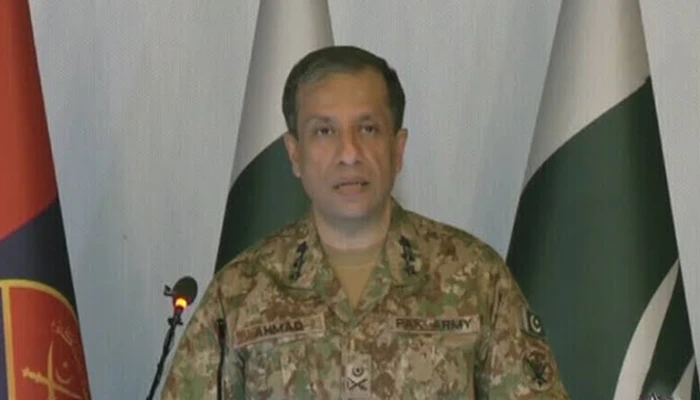
Case Summary
In Pakistan, anti-Hindu remarks were made by the country's military establishment, which referred to India, a Hindu-majority country, as "kafirs" (infidels) and stated that Muslims should not befriend them. During an official press conference in Rawalpindi, the Director General of Inter-Services Public Relations (DG ISPR), Lieutenant General Ahmed Sharif Chaudhry, invoked an Islamic injunction and stated that any Muslim who befriended 'kafirs' (infidels) would cease to remain a Muslim. The remarks were made while responding to a question regarding comments by a Taliban minister on India and Afghanistan's friendly relations. The controversy arose after Mawlawi Attaullah Omari, the Agriculture Minister in Afghanistan's Taliban government, visited India and stated that India and Afghanistan shared the "same DNA" while describing the close ties between the two countries. In response, Lieutenant General Ahmed Sharif Chaudhry cited a verse from the Quran and stated, "Allah has made it clear that Muslims should not make kafirs (infidels) their friends. If anyone does so, he no longer remains among the Muslims." He further mocked Omari's remarks, stating, "The Maulvi became emotional. Their DNA may be the same, but the relationship between them is that of a master and a slave." Chaudhry further stated that the BJP, RSS and Taliban regime had a "master-slave" relationship, describing the Taliban regime as a servant of the BJP-RSS. He also targeted the RSS and the concept of a Hindu Rashtra, stating that they were oppressing Muslims and Kashmiris and accusing the Taliban regime of serving the same agenda. Questioning the Taliban's conduct, he stated, "What kind of Islam is this? They are causing even greater harm." He additionally questioned whether the Taliban regime's treatment of women and children, as well as its issuing of fatwas and declaring the bloodshed of Muslims permissible, reflected Islamic values. The press conference primarily focused on Pakistan's counter-terrorism operations, the situation in Balochistan, Pakistan-Afghanistan relations, and Pakistan's accusations that India supported terrorism. Pakistan reiterated its longstanding accusations against India during the briefing, although India has consistently rejected such claims. According to intelligence sources cited in media reports, Lieutenant General Ahmed Sharif Chaudhry's remarks were viewed as an attempt to divert attention from Pakistan's growing domestic challenges, including escalating violence in Khyber Pakhtunkhwa and Balochistan, concerns surrounding the security of China-Pakistan Economic Corridor (CPEC) projects, and increasing internal instability. The reports further stated that Pakistan had failed to produce credible evidence before the international community to substantiate its claims of Indian involvement in terrorism. The sources added that such statements formed part of a broader strategy to shift responsibility for Pakistan's internal problems onto external actors. Intelligence sources also stated that terms such as "Fitna al-Hindustan" were being employed to construct a political and legal narrative capable of justifying action against domestic critics while portraying India and Afghanistan as responsible for Pakistan's internal security challenges. Notably, "Fitna al-Hindustan" was a political and religious term used by Pakistan to officially label and describe militant and separatist groups operating within its borders, such as the Balochistan Liberation Army (BLA), while falsely claiming that they were proxies backed by India.
Why it is Hate Crime ?
This case was added under the primary category: Hate Speech against Hindus. The subcategory selected is: Anti-Hindu slurs, mocking faith. Anti-Hindu slurs and the deliberate mocking of the Hindu faith owing to religious animosity involve the usage of derogatory terms, stereotypes, or offensive references to religious practices, symbols, or figures. One of the common anti-Hindu slurs used against Hindus is “cow-worshipper” and “cow piss drinker”. The intention of using this term is to demean and mock Hindus as a group and their religious beliefs since Hindus consider the cow holy. Additionally, some symbols and the slurs attached to them have a historical context that exacerbates the insult, hate, stereotyping, dehumanisation and oppression against Hindus. Cow worship has been used for centuries to denigrate Hindus, insult their faith and oppress Hindus specifically as a religious group. There has been overwhelming documentation about how cow slaughter has been used to persecute Hindus, with cow meat being thrown in temples and places of worship. There has also been overwhelming documentation where cow meat (beef) has been force-fed to Hindus to either forcefully convert them to Islam or denigrate their faith. Apart from cow worship, the Swastika – which holds deep religious significance for the Hindus – has also been misinterpreted and distorted to use as a slur against Hindus. Similarly, the worship of the Shivling has been used by supremacist ideologies and religions to denigrate Hindus owing to religious animosity. Such slurs and denigration stem from inherent animosity and hate towards Hindus and their faith; therefore, it is categorised as hate speech targeted at Hindus specifically owing to their religious identity. This case was included in the Hinduphobia Tracker because the use of the religiously loaded term "kafir (infidel)" showed that the remarks went beyond criticism of India-Afghanistan relations as a geopolitical issue. The term was used to describe India and its people in explicitly religious terms, thereby targeting India as a Hindu collective. "Kafir" is a derogatory religious expression used in Islamic discourse to describe non-believers, including Hindus, and carries connotations of religious exclusion, contempt and disdain. Its use in this context therefore made the religious identity of the people being targeted central to the remarks, rather than incidental to a discussion of foreign policy. The perpetrator not only referred to India as a "Kafir" but also stated that Muslims should not befriend kafirs, creating an explicit religious divide between Muslims and non-Muslims. In the context of India, where Hindus constitute the overwhelming majority of the population, referring to the country and its people in this manner directly implicated the Hindu community. The statement did not identify a particular Indian policy, political decision or government action as the basis for criticism; instead, it categorised people according to their religious identity and instructed Muslims to regard Hindus as a separate and unacceptable religious out-group. By using a religiously derogatory term against a Hindu-majority country and coupling it with a prohibition on friendship with Hindus described as kafirs, the Pakistani Army general expressed hostility towards the Hindu community on the basis of their faith. The remarks therefore constituted religiously driven anti-Hindu hate speech rather than ordinary geopolitical criticism. The remarks also reflected a broader and recurring pattern of anti-Hindu hostility rather than an isolated expression of prejudice. Similar instances of anti-Hindu rhetoric have repeatedly been displayed by Muslim extremists, including elements of the Pakistani state. This hostility has been expressed through the portrayal of Hindus and India as a religious and civilisational adversary rather than merely as a political or geopolitical rival. These acts are rooted in Muslim extremists harbouring specific animosity towards Hindus and their faith, while also viewing India as a Hindu collectivity. The very basis of the Partition of India and the creation of Pakistan was the belief among Muslims that Islam constituted a nation unto itself that could not survive alongside a Hindu collectivity such as India. Further, Muslims believe in transnational unity, or the Ummah (global Muslim brotherhood), which is the belief that all Muslims across the world constitute a nation unto themselves and, therefore, that loyalty and respect, as far as the nation-state is concerned, lies with the Muslim collectivity rather than with a Hindu collectivity such as India. In this context, calling India "kafir" was rooted in the same hostility towards Hindus and their faith, as it religiously outgrouped the Hindu-majority country while invoking a distinction between a Muslim collectivity and a Hindu collectivity. For that reason, such remarks were anti-Hindu in nature. In this context, "Kafir" directly denigrated Hindus and their religious identity by placing them outside the community of believers and portraying their faith as incompatible with Islam. The term carries theological and historical significance in the treatment of non-Muslims and, when directed at Hindus, has been used within broader narratives portraying Hindu beliefs as false, inferior or deserving of rejection. The use of the term in an official military statement therefore did more than describe a religious distinction; it attached a derogatory religious identity to the Hindu population and presented that identity as a basis for social separation. This transformed a theological expression into a vehicle for denigrating Hindus because of their faith. The accompanying proclamation that "one who befriends a kafir (infidel) is not a Muslim" further intensified the religious hostility by presenting social association with Hindus as incompatible with Muslim identity. The statement effectively established religious identity as a basis for determining whom Muslims should regard as acceptable friends and associates, while placing Hindus on the excluded side of that divide. Such rhetoric did not merely express theological disagreement; it encouraged social separation on the basis of religion and portrayed Hindus as people with whom Muslims should not maintain ordinary social relations. By coupling the term "kafir" with an explicit rejection of friendship with Hindus, the perpetrator reinforced the portrayal of Hindus as religious outsiders and subjected them to collective stigma solely because of their faith. The statements also associated the Rashtriya Swayamsevak Sangh (RSS), a prominent Hindu organisation involved in Hindu cultural, social and civilisational activities, with the Taliban through repeated references to a so-called "master-slave" relationship. By portraying the Taliban regime as a servant or subordinate of the BJP-RSS, the remarks placed the RSS at the centre of a disparaging comparison with a militant Islamist regime and sought to portray a prominent Hindu organisation through a hostile and derogatory narrative. The fact that the RSS was specifically invoked demonstrated that the rhetoric extended beyond criticism of India's foreign policy or political leadership and directly targeted a Hindu organisation and the identity it represented. Rather than addressing any particular action or policy of the RSS, the speaker relied upon a sweeping association between the organisation and the Taliban, thereby attaching a pejorative characterisation to a prominent Hindu institution. The simultaneous criticism of the concept of a Hindu Rashtra further extended the rhetoric to Hindu political and cultural identity. The deliberate denigration of the RSS and the Hindu Rashtra concept therefore reinforced the explicitly anti-Hindu character of the remarks. Overall, the case meets the parameters of anti-Hindu hate speech. Therefore, it is being added to the hate crime database of the Hinduphobia Tracker. Disclaimer: The Hinduphobia Tracker records the incident date based on when the crime occurred rather than when it was reported by the media. However, in this case, media reports did not specify the exact date on which the crime occurred. Henceforth, the date on which the incident was first reported by the media, 1 August 2026, has been selected as the indicative incident date for documentation purposes only.


Case Status
Unknown


Perpetrators Details
Perpetrators
State and Establishment
Perpetrators Range
One Person
Perpetrators Gender
male
 Sources




