Hindu women and Hindu society targeted with objectionable and derogatory remarks in Bijnor, Uttar Pradesh
 Bijnor, Uttar Pradesh, India
  27 July, 2026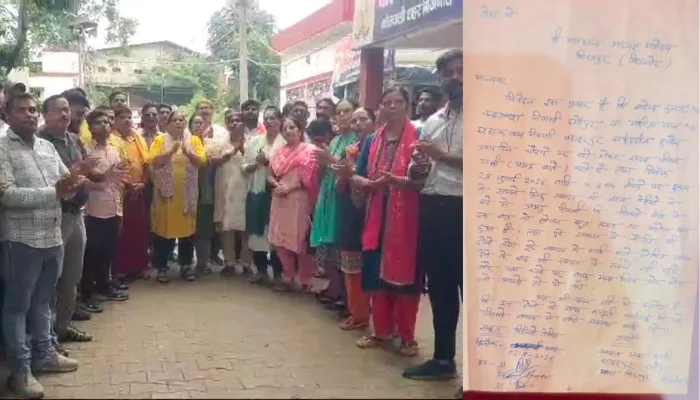
Case Summary
In Dargopur village, under the Kiratpur police station area of Bijnor district, Uttar Pradesh, objectionable and indecent remarks directed at Hindu women and Hindu society sparked outrage among the local Hindu community and hurt their religious sentiments. The accused were identified as Mashita Khan and Narendra Kumar, who made the remarks at a public place while in an intoxicated state, creating tension in the village and provoking widespread anger among local Hindus. According to the complaint submitted by the villagers, both accused frequently gathered at a three-way intersection in an intoxicated condition and used abusive language. On the night of 28 July 2026, at around 10:16 PM, they stood in front of a shop at the intersection and made objectionable comments specifically targeting women of the Hindu community. The remarks deeply offended the Hindu community and disturbed the communal atmosphere in the village. Following the incident, members of the Hindu community attempted to resolve the matter peacefully by giving both accused an opportunity to appear before the village community, acknowledge their conduct, and apologise for their remarks against Hindu women. Despite being given sufficient time, neither appeared before the community. When contacted, both refused to apologise and responded, "Do whatever you want." Subsequently, members of the Hindu community submitted a written complaint to the Kiratpur police station on 2 August 2026, seeking legal action against both individuals for making objectionable remarks against Hindu women and Hindu society. The police stated that the matter would be investigated and appropriate legal action would be taken based on the findings.
Why it is Hate Crime ?
The primary category for this case is: Hate speech against Hindus. The subcategory for this case is: Anti-Hindu slurs, mocking faith. Anti-Hindu slurs and the deliberate mocking of the Hindu faith owing to religious animosity involve the usage of derogatory terms, stereotypes, or offensive references to religious practices, symbols, or figures. One of the common anti-Hindu slurs used against Hindus is “cow-worshipper” and “cow piss drinker”. The intention of using this term is to demean and mock Hindus as a group and their religious beliefs since Hindus consider the cow holy. Additionally, some symbols and the slurs attached to them have a historical context that exacerbates the insult, hate, stereotyping, dehumanisation and oppression against Hindus. Cow worship has been used for centuries to denigrate Hindus, insult their faith and oppress Hindus specifically as a religious group. There has been overwhelming documentation about how cow slaughter has been used to persecute Hindus, with cow meat being thrown in temples and places of worship. There has also been overwhelming documentation where cow meat (beef) has been force-fed to Hindus to either forcefully convert them to Islam or denigrate their faith. Apart from cow worship, the Swastika – which holds deep religious significance for the Hindus – has also been misinterpreted and distorted to use as a slur against Hindus. Similarly, the worship of the Shivling has been used by supremacist ideologies and religions to denigrate Hindus owing to religious animosity. Such slurs and denigration stem from inherent animosity and hate towards Hindus and their faith; therefore, it is categorised as hate speech targeted at Hindus specifically owing to their religious identity. The remarks in this case were directed specifically at Hindu women, making the religious identity of the targeted group central to the abuse. When a community is singled out based on its religious identity and subjected to derogatory public remarks, the conduct transcends ordinary offensive speech and becomes an expression of hostility towards that religious community. The choice to target Hindu women specifically makes the Hindu identity of the victims inseparable from the nature of the offence. The targeting of Hindu women carries significance beyond the individuals concerned because women are an integral part of the Hindu community and its social fabric. Publicly directing derogatory and indecent remarks at Hindu women demeans their dignity, dishonours the community they belong to, and communicates contempt for Hindus through their women. Such conduct is intended to humiliate, degrade, and publicly belittle a religious community by attacking the honour of its women, making it a clear expression of hostility directed at Hindus. In Hinduism, women are revered as embodiments of the Divine Feminine (Shakti), and respect for women forms an integral part of Hindu religious tradition. Consequently, derogatory remarks directed at Hindu women extend beyond personal insults and undermine values that are deeply rooted in the Hindu faith, causing hurt to the wider Hindu community. The conduct also extended beyond remarks directed at individual Hindu women, as the accused were to have made objectionable comments targeting Hindu society as a whole. This broader reference is significant because it demonstrates that the conduct was not limited to a personal dispute or isolated insult but encompassed derogatory expression towards a wider religious community. By directing objectionable remarks at Hindu society in a public setting, the accused subjected Hindus collectively to degrading and offensive speech on the basis of their religious identity, reinforcing the classification of the incident as anti-Hindu hate speech. The conduct of the accused after the incident further reflects their intent. Despite being allowed by the villagers to acknowledge their conduct and apologise, they declined to do so and instead responded, "Do whatever you want." Their refusal to retract the remarks or express remorse demonstrates that the statements were consciously maintained despite the objections raised by the Hindu community, reinforcing the deliberate nature of the conduct. The incident took place in a public setting where the objectionable remarks were made openly before others. Speech of this nature publicly degrades a section of society identified by its religion and undermines the dignity of that community. Directing such comments towards Hindu women attacks not only individual members but also the collective social and cultural identity they represent within the Hindu community. Public remarks that demean Hindu women contribute to an environment in which contempt towards Hindus is normalised in shared spaces. Such incidents extend beyond the immediate individuals involved because they communicate that members of the Hindu community can be publicly targeted on account of their religious identity. For this reason, this case falls within the category of Hate Speech Against Hindus, specifically the subcategory Anti-Hindu Slurs, Mocking Faith. Disclaimer: The available sources identify one accused as Mashita Khan but do not disclose the religious identity of the other accused. Accordingly, no religious identity has been attributed to the second accused in this entry, and the analysis is limited to the facts available in the source material.


Case Status
Complaint registered


Perpetrators Details
Perpetrators
Muslim Extremists
Perpetrators Range
From 2 To 5
Perpetrators Gender
male
 Sources




