Hindu temple targeted, sacred idols of Hindu deities vandalised and thrown into well by miscreants in Madhya Pradesh
 Shivpuri, Madhya Pradesh, India
  1 August, 2026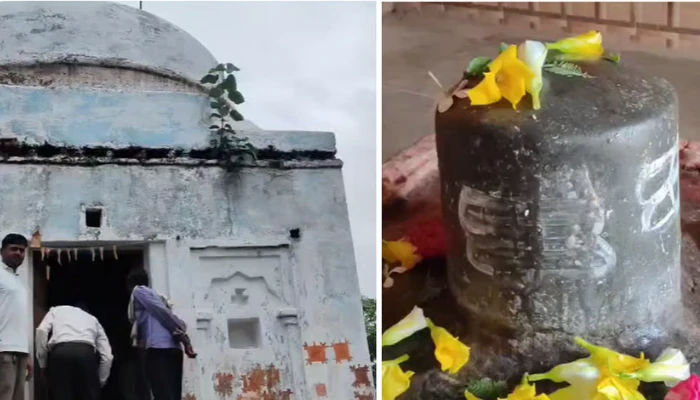
Case Summary
The revered Neelkanth Mahadev Temple in Sinawal Kala village of Madhya Pradesh’s Shivpuri district was targeted by a few unidentified miscreants. The accused vandalised and damaged the sacred idols of Hindu deities and threw them into a nearby well. This act triggered anger among local Hindu devotees and Hindu organisations. According to media reports, the incident took place under the jurisdiction of Khaniyadhana police station on 2 August 2026. According to police, the miscreants attempted to uproot the idol of Lord Shiva at the temple but failed. They, however, vandalised and damaged the idol of Goddess Parvati, uprooted the idols of Nandi Maharaj and Lord Ganesha, and threw them into a nearby well. After receiving information about the desecration of the Hindu temple, police reached the spot, recovered the idols from the well, and initiated an investigation into the incident. The vandalism led to outrage among local Hindus. Members of the Vishwa Hindu Parishad (VHP) and Bajrang Dal reached the Neelkanth Mahadev Temple after learning about the incident and demanded strict action against those responsible. Led by VHP Shivpuri district president Pawan Sharma and Bajrang Dal district convenor Rishabh Soni, members of the organisations submitted a complaint at Khaniyadhana police station, seeking the immediate arrest of the perpetrators. Khaniyadhana police station in-charge Kedar Singh Yadav confirmed that an FIR had been registered against unidentified persons. At the time of writing this report, the police had launched a search for the accused, and further investigation was underway.
Why it is Hate Crime ?
This case has been added to the tracker under the primary category: Attack on Hindu religious representations. The sub-category selected is: Desecration of Hindu religious symbols. Icons and symbols or a religious representation of a spiritual ideal are widely revered in Hinduism. Iconography is of vital significance in the Hindu milieu. It helps connect people’s spiritual beliefs with the real world. Iconography within the Hindu faith takes several shapes and forms. Murtis are of most significance to Hindus, to which daily rituals, prayers and offerings are done. Besides the murtis, there are several other symbols which have deep significance in the Hindu faith – the Om and Swastika for example. Since these Hindu religious symbols hold paramount importance in Hinduism, any desecration of symbols, icons, murtis, religious representations and manifestations is driven by animosity towards the faith itself, which manifests itself through these murtis, icons and symbols. Therefore, any desecration of these Hindu religious symbols and representations is considered religiously motivated hate crimes under this category. The second sub-category selected is: Attack on Temples. In Hinduism, a temple is the abode of the Deity. The Deity in the Temple is consecrated, thereby making it a real, breathing entity. Hindus believe that not just the Deity but the temple premises themselves are sacred to Hindus since Hindus hold the faith that the entire Temple space is an amalgamation of the divine energy of the deity. Given the central significance of Temples in Hindu Dharma, any attack against a Hindu Temple or its peripheral premises is an attack on the faith itself and is born out of animosity towards the faith, of which the Temple is a central tenet. Any manner of attack against a Temple and/or its premises would therefore be considered a religiously motivated hate crime. This case was included in the Hinduphobia Tracker because the Neelkanth Mahadev Temple, a Hindu place of worship, was deliberately targeted and the sacred Hindu idols enshrined within it were desecrated. The incident involved an attempt to uproot the idol of Lord Shiva, damage to the idol of Goddess Parvati, and the desecration of the idols of Nandi Maharaj and Lord Ganesha, which were subsequently thrown into a nearby well. These actions were directed towards sacred religious representations central to Hindu worship and were not merely acts of property damage. In Hinduism, temples are sacred institutions that serve as centres of worship, devotion, and religious life. Following the ritual of Prana Pratishtha, the deities installed within a temple are believed to embody the divine presence and become the focal point of daily prayers, rituals, and offerings. For devotees, a temple is not simply a physical structure but a living sacred space where they establish a spiritual connection with the Divine. Consequently, any deliberate act of desecrating a temple or its deities transcends ordinary vandalism and constitutes an attack on a place that is central to Hindu faith and worship. The idol of Lord Shiva holds immense religious significance as a sacred representation of one of Hinduism's principal deities, revered as the embodiment of cosmic power, transformation, and the destruction of evil. Goddess Parvati is worshipped as the manifestation of Shakti, the divine feminine, while Lord Ganesha is revered as the remover of obstacles and invoked at the beginning of every auspicious undertaking. Nandi Maharaj, the sacred bull and devoted attendant of Lord Shiva, is also an integral part of Hindu worship. The attempt to uproot the idol of Lord Shiva, the damage inflicted upon Goddess Parvati's idol, and the uprooting and disposal of the idols of Lord Ganesha and Nandi Maharaj amounted to the desecration of sacred religious representations that occupy a central place in Hindu belief and ritual practice. The offence was directed not only at the deities but also at the temple itself as a place of worship. By entering the shrine and targeting the sacred idols housed within it, the perpetrators violated a religious space where devotees gather to perform rituals, celebrate festivals, and practise their faith. Such acts disrupt the peaceful exercise of religion, undermine the sanctity of the shrine, and cause profound anguish to the Hindu community for whom the temple serves as both a spiritual and cultural centre. The manner in which the offence was carried out further demonstrates that the religious character of the site was specifically targeted. The perpetrators did not confine themselves to causing damage; they attempted to uproot the principal idol of Lord Shiva, damaged another deity, and removed the remaining idols before throwing them into a nearby well. This sequence of actions reflects an intentional effort to dishonour revered Hindu deities and degrade objects held sacred by devotees. The deliberate targeting of multiple deities within the temple indicates that the act was aimed at desecrating Hindu religious symbols rather than causing indiscriminate property damage. At the time of writing this report, the identities of the perpetrators had not been established. However, the absence of identified accused does not diminish the religious nature of the offence. The deliberate desecration of consecrated Hindu idols and the targeting of a Hindu temple demonstrated hostility towards sacred Hindu religious symbols and places of worship. Therefore, the incident was included in the Hinduphobia Tracker's hate crime database.


Case Status
Complaint filed


Perpetrators Details
Perpetrators
Unknown
Perpetrators Range
Unknown
Perpetrators Gender
unknown
 Sources




