Hindu youth brutally stabbed to death by Muslim man enraged by Instagram photo with sister in Shahjahanpur, Uttar Pradesh
 Shahjahanpur, Uttar Pradesh, India
  11 July, 2026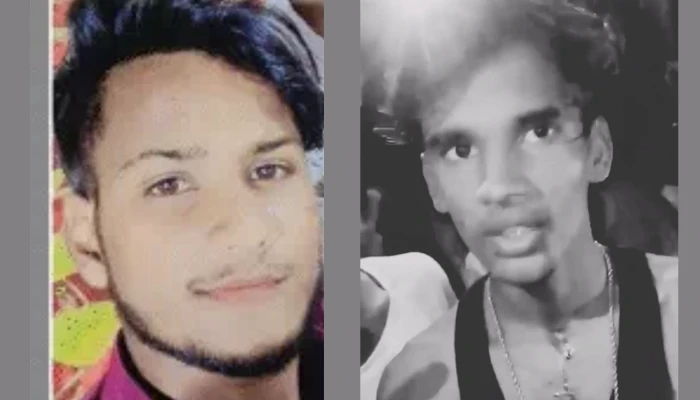
Case Summary
In Kant, Shahjahanpur district of Uttar Pradesh, a 22-year-old Hindu man, Gautam Maurya, was brutally stabbed to death by a Muslim man, Sameer Idrisi and his associates after he uploaded a photograph of himself along with the accused’s cousin sister on Instagram. According to an Indian Express report, Gautam worked at a bicycle repair shop and uploaded a photograph of himself along with the accused's cousin sister on his Instagram account on 12th July 2026. Sameer Idrisi objected to the post and demanded that it be removed. Gautam refused; this led to a dispute between the two. Another confrontation took place on 15th July over the same issue. On the night of 31st July 2026, after closing the shop, Gautam was riding his motorcycle towards the fields when Sameer asked him for a lift. Near Dilawarpur village, around 100 metres before the fields, Sameer attacked Gautam from behind with a knife while three of his associates, who had been lying in wait, joined the assault. Gautam sustained multiple stab wounds to his head, shoulders, abdomen, and back. According to the post-mortem examination, he suffered 16 deep knife wounds. After the attack, the assailants attempted to flee. Villagers managed to apprehend Sameer, while his three associates escaped. A video was circulated on social media, in which the accused stated, “Gautam did something wrong to my sister, so I killed him.” When questioned by villagers, the accused said, “Yes, I killed him.” During questioning, the accused said he was enraged after seeing Gautam post a photo with his cousin sister on Instagram on July 12. The police launched an investigation and took Sameer along with three other accused into custody. During the investigation, police found that Sameer had planned the murder, was aware of Gautam's daily routine, and had positioned his associates at the spot before luring the victim there by asking for a lift. Police also seized Sameer's mobile phone and found that he had posted an Instagram status shortly before the murder, indicating that the killing had been premeditated. While in police custody, Sameer attacked a police constable with the knife recovered during the investigation and attempted to escape. Police shot him in the leg before re-arresting him. He subsequently confessed to the murder during interrogation. The killing triggered widespread outrage among the victim's family and residents, who blocked the Kant–Jalalabad road for several hours while demanding strict action against the accused, demolition of their houses, and financial compensation for the victim's family. Police stated that legal proceedings were initiated against the accused for murder, attacking a police officer, and other relevant offences.
Why it is Hate Crime ?
The first primary category selected in this case is- Men attacked for being associated with non-Hindu women. Within this, the subcategory selected is - Attacked/killed for being associated with or suspected of being associated with a Muslim woman. There have been several cases documented of Hindu men/boys being attacked specifically by Muslim groups/mobs for merely being associated or suspected of being associated with or being seen with a Muslim woman in public. In most such cases, the Hindu man is not in a relationship with the Muslim woman; however, the mob proceeds to threaten and/or assault the Hindu man for merely being associated with the Muslim woman in any capacity. The rise of such crimes stems from a particularly sinister campaign run by several Muslim ideologues and activists. The campaign claims that Hindu men are attempting to ‘lure’ Muslim women into relationships to ensure that Muslim women leave their faith and follow Hinduism. The propaganda has been spearheaded with the help of WhatsApp groups and the extensive use of social media, sans evidence of the same. In many cases, pamphlets were fabricated to lend credence to this campaign. The root of this campaign lies in the fact that several cases of sectarian crimes against Hindu women in relationships with Muslim men have been documented. In such cases, Hindu women have often been forced/pressured to convert to Islam, assaulted, threatened and even murdered owing specifically to their religious identity and their refusal to give up that religious identity to adopt Islam. To delegitimise the suffering of Hindu women when such sectarian crimes are committed against them, the theory of ‘Bhagwa Love Trap’ was floated by sections of the Muslim community. As this theory gained traction, Muslim mobs started targeting Hindu men who were seen with Muslim women. In several such cases, the Hindu man was assaulted merely for offering to drop a Muslim woman in his vehicle or being friends. The differentiating factor between such cases and legitimate cases of Hindu women being targeted while in a relationship with Muslim men is that there is no sectarian violence and no force/pressure to convert. The nature of sectarian violence against Hindu women is not about two adults in a consensual relationship, working together, studying together, or even marrying each other where religious considerations are declared. In this category of crimes, it is pertinent to remember that in none of the cases is there an element of the Hindu man masking his identity or forced religious conversion. Such cases are driven by specific religious motivations and against the religious identity of the victim and are therefore qualified as hate crimes. The other subcategory selected is: Attacked by a non-Hindu partner and/or her family. When Hindu men are in a relationship with non-Hindu women, there are cases where the man is forced to convert to their religion, and upon his refusal to do so, the partner or/and her family attacks the victim. Such relationships may be consensual, with the religious identity of the non-Hindu woman known to the victim. Somewhere along the relationship, the non-Hindu woman or her family starts forcing/pressurizing the Hindu man to convert. In some of these cases, the association could be non-consensual as well, or the religious identity of the non-Hindu woman could be previously unknown to the Hindu victim. In such cases, the Hindu man is first forced/pressurized to change his religion by the non-Hindu woman or her family. The force/pressure could involve threats. The trigger for directing violence against the Hindu man is, in these cases, his refusal to comply and change his religion under threat and/or force. In other cases that have been documented, it is also seen that the Hindu partner is assaulted by the non-Hindu woman or her family simply for his relationship with the non-Hindu woman and by virtue of him following the Hindu faith and not the religion of the non-Hindu woman. In such cases, the relationship is consensual in most cases, and the religion of both partners is known to the other. Often, in such cases, there is no direct force/pressure to convert either; however, the attack is a result of the Hindu man being in a relationship with the non-Hindu partner and not following her religion/following Hinduism specifically. Such cases are driven by specific religious motivations and against the religious identity of the victim and are therefore qualified as hate crimes. The second primary category selected is: Attack resulting in death. The subcategory selected is: Attacked for Hindu identity. In several cases, Hindus are attacked merely for their Hindu identity without any perceived provocation. A classic example of this category of religiously motivated hate crime is a murder in 2016. 7 ISIS terrorists were convicted for shooting a school principal in Kanpur because they got ‘triggered’ seeing the Kalava on his wrist and the tilak that he had put. In this, the Hindu victim had offered no provocation except for his Hindu religious identity. The motivation for the murder was purely religious, driven by religious supremacy. Such cases where Hindus are targeted merely for their religious identity would be documented as hate crimes. Under this category, cases where the attack led to the death of the Hindu victim/s would be documented. This case was added to the Hinduphobia Tracker because a Hindu man was brutally murdered after being associated with a Muslim woman, with the entire sequence of events showing that the association became the trigger for the violence. The victim was singled out, lured to a pre-selected location, and repeatedly stabbed to death. The attack arose from hostility directed at a Hindu man over his perceived association with a Muslim woman, making religion a central element of the crime. The violence was significant because the Hindu victim alone bore the consequences of the dispute. Across several similar cases, where a Hindu man is in a relationship with a Muslim woman, the family of the Muslim woman ends up assaulting or murdering the man because of their disapproval of the relationship. In such cases, the relationship is consensual, and the man and woman are with each other knowing each other’s identity fully well. Such cases are often called ‘honour killings’ and are seen in associations across religions, castes, economic strata, etc. In several cases, the motivations are stated and clear. For example, in some cases, the perpetrators would clearly mention what their main motivation to commit the crime was – whether it was because the partner was economically weaker, from a different caste or religion. In some cases, however, the motives are not stated and/or reported. To determine whether such cases are religiously motivated hate crimes, in the absence of a clearly stated motive, one has to understand what could possibly be the main factor which the perpetrator's family would believe diminishes the family’s ‘honour’, leading to the crime. For the purpose of this tracker, we would only be looking at cases where the determining factor of the crime is religion – which is to say that the man belongs to the Hindu faith and the woman to a non-Hindu faith. In such cases, even if the motivation is not stated, it can be said that the determining factor or at least one of the main considerations leading to the crime, would be the religious identity of the man, especially if the woman in the relationship is a Muslim. In the Islamic faith, a marriage is deemed illegitimate if the non-Muslim partner does not convert to Islam. For those who practice the faith, when their daughter marries or is in a relationship with a Hindu man without the man converting to Islam, the difference in religions followed becomes the main point of disapproval for the family of the Muslim woman. Because of the ingrained element of religious supremacy in Islam, even if the motivations are not explicit, it can reasonably be concluded as one of the determining factors of the assault or murder committed by the Muslim family against the Hindu man. For that reason, such crimes are considered hate crimes and form a part of this database. Disclaimer: The Hinduphobia Tracker records the date on which the victim's ordeal began, rather than the date on which the incident was reported in the media. Accordingly, this case has been dated 12 July 2026, as it was on this day that the victim first became the target of hostility after uploading the Instagram post. This marked the beginning of the chain of events that ultimately culminated in his premeditated murder on 31 July 2026. The perpetrator count was recorded as four because the police identified four accused who acted in concert. The investigation established that, apart from the principal assailant, three associates were already lying in wait at the spot and participated in the planned attack. All four were taken into custody during the investigation, bringing the total number of perpetrators to four.
Victim Details
Total Victim
1
Deceased
1
Gender
- Male 1
- Female 0
- Third Gender 0
- Unknown 0
Caste
- SC/ST 0
- OBC 1
- General 0
- Unknown 0
Age Group
- Minor 0
- Adult 1
- Senior Citizen 0
- Unknown 0


Case Status
Complaint filed


Perpetrators Details
Perpetrators
Muslim Extremists
Perpetrators Range
One Person
Perpetrators Gender
male
 Sources




