Hindu temple vandalised, sacred Shivalinga and consecrated Idols desecrated in Rawatbhata, Rajasthan
 Rawatbhata, Rajasthan, India
  30 July, 2026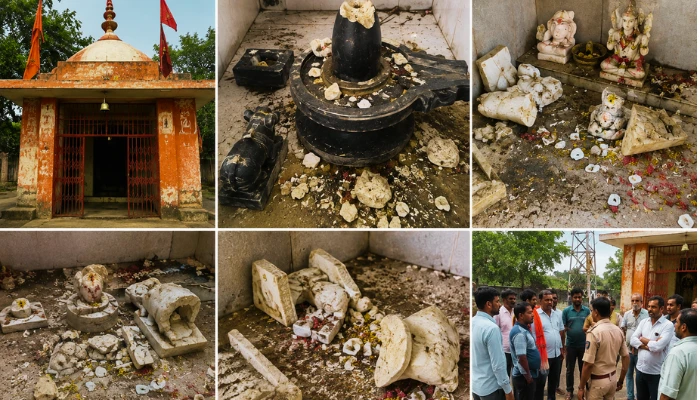
Case Summary
In Rawatbhata, Chittorgarh district, Rajasthan, a Hindu temple was vandalised and the Shivling along with other consecrated idols installed inside the temple were desecrated by unidentified miscreants. The accused entered the temple during the night and damaged the sacred idols, triggering anger among local villagers and members of Hindu organisations. According to reports, devotees had offered prayers at the temple on the evening of 30 July 2026 at around 6 p.m. Thereafter, during the night, unidentified anti-social elements entered the temple and vandalised the Shivling and other idols installed inside the shrine. The incident came to light on the morning of 31 July 2026, when Savra Gurjar, Vikas Dhakad, Pradeep Vaishnav, and Lemon Tailor arrived at the temple for darshan. They found the temple premises in disarray, with the Shivling and other idols lying damaged. They immediately informed other villagers and members of the local Hindu community about the incident. As news of the desecration spread, a large number of villagers and representatives of Hindu organisations gathered at the temple and expressed strong resentment over the attack on the place of worship. They subsequently reached Rawatbhata Police Station and submitted a written complaint seeking registration of an FIR against the unidentified accused and demanding strict legal action. The complainants also urged the police to conduct a fair investigation, identify and arrest those responsible for the desecration, and ensure the restoration or reconstruction of the damaged temple and the desecrated Shivling. The complaint was submitted on behalf of Savra Gurjar, Vikas Dhakad, Pradeep Vaishnav, Lemon Tailor, other villagers, and members of the Sanatan community.
Why it is Hate Crime ?
This case has been added to the tracker under the primary category: Attack on Hindu religious representations and the sub-category: Desecration of Hindu religious symbols. Icons and symbols or a religious representation of a spiritual ideal are widely revered in Hinduism. Iconography is of vital significance in the Hindu milieu. It helps connect people’s spiritual beliefs with the real world. Iconography within the Hindu faith takes several shapes and forms. Murtis are of most significance to Hindus, to which daily rituals, prayers and offerings are done. Besides the murtis, there are several other symbols which have deep significance in the Hindu faith – the Om and Swastika for example. Since these Hindu religious symbols hold paramount importance in Hinduism, any desecration of symbols, icons, murtis, religious representations and manifestations is driven by animosity towards the faith itself, which manifests itself through these murtis, icons and symbols. Therefore, any desecration of these Hindu religious symbols and representations is considered religiously motivated hate crimes under this category. The second sub-category selected is: Attack on Temples. In Hinduism, a temple is the abode of the Deity. The Deity in the Temple is consecrated, thereby making it a real, breathing entity. Hindus believe that not just the Deity but the temple premises themselves are sacred to Hindus since Hindus hold the faith that the entire Temple space is an amalgamation of the divine energy of the deity. Given the central significance of Temples in Hindu Dharma, any attack against a Hindu Temple or its peripheral premises is an attack on the faith itself and is born out of animosity towards the faith, of which the Temple is a central tenet. Any manner of attack against a Temple and/or its premises would therefore be considered a religiously motivated hate crime. This case was included in the Hinduphobia Tracker because a Hindu temple and the consecrated religious representations enshrined within it, including the Shivalinga and other sacred idols, were deliberately desecrated. The perpetrators unlawfully entered a place of worship during the night and vandalised objects that are central to Hindu religious practice and devotion. Such acts extended far beyond ordinary damage to property, striking directly at symbols and spaces that Hindus regard as sacred manifestations of the Divine. For Hindus, a temple is not merely a physical structure but the abode of the deity following the consecration of the idols through Prana Pratishtha. The deity is thereafter worshipped as a living divine presence, and the temple itself becomes a sacred spiritual space. The Shivalinga, in particular, is among the holiest symbols in Hinduism, representing the infinite, formless, and eternal nature of Lord Shiva. Likewise, the other consecrated idols housed within the temple are not regarded as decorative sculptures but as living embodiments of the deities to whom devotees offer daily prayers, rituals, and offerings. Deliberately damaging these sacred religious representations therefore constituted a direct assault on objects of immense religious significance and deeply hurt the religious sentiments of Hindu devotees. Furthermore, the manner in which the incident was carried out demonstrated that the acts were deliberate rather than accidental. The unlawful entry into the temple, the targeting of the Shivalinga and sacred idol, reflected a conscious disregard for the sanctity of the shrine and the religious sentiments of Hindu devotees. The conduct went beyond ordinary theft because it specifically targeted items of religious significance. The perpetrators' actions ultimately revealed contempt towards Hindu religious symbols and places of worship by treating them as objects that could be violated and desecrated without regard for their sacred character. Their conduct reflected prejudice against Hindu faith and its religious traditions, indicating an intention to insult and undermine what Hindus hold sacred. At the time of writing this report, the identities of the perpetrators were not established. However, the absence of identified accused does not diminish the religious nature of the offence. The deliberate targeting of a Hindu temple and the desecration of the Shivalinga and other consecrated idols constituted an attack on sacred religious symbols and a place of worship central to Hindu faith and practice. For these reasons, the incident warranted inclusion in the Hinduphobia Tracker as a religiously motivated hate crime.


Case Status
Complaint filed


Perpetrators Details
Perpetrators
Unknown
Perpetrators Range
Unknown
Perpetrators Gender
unknown
 Sources




