Hindu woman trapped in marriage by Muslim man posing as Hindu; beaten, threatened and pressured to convert to Islam in Muzaffarnagar, Uttar Pradesh
 Muzaffarnagar, Uttar Pradesh, India
  26 July, 2026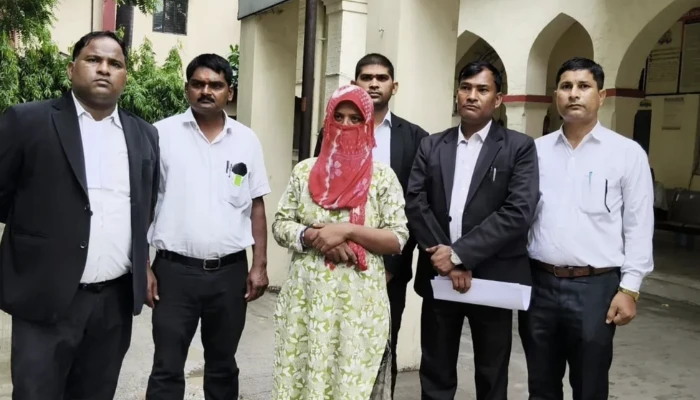
Case Summary
In Muzaffarnagar, Uttar Pradesh, a Hindu woman from Narsinghpur, Madhya Pradesh, was deceived into marriage by a Muslim man who posed as a Hindu and presented himself as Ajay. When the victim discovered that the accused was a Muslim and his name was Azrul Ansari, he assaulted and pressured the victim to convert to Islam, threatened and confined her. Approximately one and a half years before the complaint, in 2025, the victim, Mamta Thakur, who worked at a Kolhu in Umarpani village, came into contact with Azrul Ansari, a resident of Muzaffarnagar. He introduced himself as Ajay alias Ajju and presented himself as a Hindu. Based on this identity, he developed a relationship with the woman and subsequently married her. In February 2026, the accused took the victim to Gurugram, where they married at a temple. Following the marriage, he took her to Delhi, Ghaziabad and Sahibabad and kept her with him in rented accommodation in these areas. On Monday, 27 July 2026, the accused brought the victim to his village, Khampur, where she discovered that he was a Muslim. The woman stated that after his identity was revealed, the accused pressured her to convert to Islam. When she refused, she was beaten and threatened that she would not be allowed to remain in the house. The victim stated in a video that the accused threw her out of the house at midnight and threatened her that only if she read Namaz would she be allowed back inside. She further stated that the accused and his mother said: “Tu ek Hindu ki ladki hai, tujhe ghar par nahi rakhenge” you are a daughter of a Hindu; we will not keep you in this house). The victim further stated that the village head, Aamir, threatened and assaulted her. When she objected to the accused’s conduct, his mother and women from the neighbourhood assaulted her. She was subsequently taken to another house on the pretext of paying the rent for her accommodation and was confined there. On Tuesday morning 28 July 2026, the victim managed to escape from the house during heavy rain and reached Narendra Panwar, convenor of the Hindu Sangharsh Samiti. Members of the Hindu organisation, accompanied by advocates, then took her to the SSP’s office and submitted a complaint. Based on the woman’s complaint, a case was registered at Chhapar Police Station against Azrul Ansari, his mother, Sabir, village head Aamir and 10 unidentified women under various applicable sections, including those relating to assault. Police arrested the main accused. The woman underwent a medical examination. She also accused a police sub-inspector of threatening her. CO Sadar Raju Kumar Saw stated that the woman had been placed at the Rakhi One Stop Centre and that her statement was recorded. He further stated that additional sections could be added to the case after her statement.
Why it is Hate Crime ?
This case has been added to the tracker under the primary category Crimes against women in relationships and other sexual crimes. Within this, the subcategory selected is - Man pretends to be Hindu. Under this, the tertiary category selected is - Name changed, Marries as per Hindu rituals. When a non-Hindu man pretends to be a Hindu to deceive a Hindu woman into a relationship, the act is seen as triggered by malicious intentions. In some cases, the woman eventually accepts the man’s original religious identity and converts after the man’s identity is revealed. These cases could be argued as cases of religious brainwashing and a result of the pressure a woman feels after getting into a relationship with a man. The woman, it can be argued, also changed her religious identity because of the stigma she believes she might face if she chooses to walk out of a deceptive relationship. However, for the purpose of documenting hate crimes, the cases in this subcategory are limited to those where there is explicit violence aimed at religious conversion against the wishes of the victim (force-feeding beef, blackmailing with intimate videos, rape on refusal to convert, etc), or if the woman herself complains of the man’s religious deception. In such cases, it is established that the deception of the non-Hindu man had a specific aim of religious conversion or targeting of the victim due to her Hindu religious identity, therefore, making it a religiously motivated hate crime. The other subcategory selected in this case is: Forced conversion after marriage. In such cases, a non-Hindu man marries a Hindu woman, and the force/pressure to convert to any Abrahamic faith, like Islam, begins after marriage. In such cases, typically, two patterns emerge. First, when the relationship is consensual, and the religious identity of the perpetrator is known to the Hindu woman in the relationship. The marriage could be under the Special Marriages Act, where neither party is required to convert their religion for the marriage to be considered legitimate. While the victim in such cases enters matrimony assuming that religious identity is not a barrier, the non-Hindu man starts to pressure the woman to convert her religion after marriage. The second is when the woman gets into a marriage with the man, pretending to share her faith. Later, when the truth is revealed, the man starts pressuring the woman to convert her religion and give up her religious identity. In both situations, there is application of force by the perpetrator, including the denial of the woman’s religious rights. Some of the means by which the woman is forced/pressured to convert include force-feeding beef, being forced to read the Kalma, being forced to wear a hijab, being forced to undergo Halala, etc. There are several instances where, after marriage, the woman voluntarily converts to Islam. Such cases are often argued to be a result of religious brainwashing; however, for the purpose of documenting religiously motivated hate crimes, in the absence of the victim complaining of forced conversion, such cases do not form a part of the database. Another sub-category for this case is: Assault or threat upon refusal to convert. When Hindu women are in a relationship with non-Hindu men, there are cases where the woman faces threats or assault after she refuses to convert and change her religious identity owing to pressure/force by the non-Hindu man. Such relationships may be consensual, with the religious identity of the non-Hindu man known to the victim. Somewhere along the relationship, the non-Hindu man starts pressurising the Hindu woman to convert to Islam and, upon her refusal, assaults or threatens the victim. Such cases are driven by specific religious motivations and against the religious identity of the victim and are therefore qualified as hate crimes. Cases where the Hindu woman converts to Islam and does not file a complaint about the force or threat are not considered a part of the hate tracker, even though it may be argued that the woman was brainwashed or threatened to convert to Islam. The other subcategory selected is- Leaves Hindu partner upon refusal to convert. When Hindu women are in a relationship with non-Hindu men, there are cases where the woman faces pressure/threats/violence to convert and change her religious identity by the non-Hindu man. However, when the Hindu woman refuses to convert, the non-Hindu man ends the relationship or divorces the woman, as the case might be. Such relationships may be consensual with the religious identity of the non-Hindu man known to the victim. Somewhere along the relationship, the non-Hindu man starts pressuring the Hindu woman to change her religious identity and upon her refusal, ends the relationship. Cases where the Hindu woman converts to Islam and does not file a complaint about the force, or threat after she refuses to convert to Islam, are not considered a part of the hate tracker. This case exhibits multiple religious markers that clearly establish it as a religiously motivated crime specifically targeting a Hindu victim. Firstly, the accused, a Muslim man, deliberately concealed his religious identity to deceive the Hindu woman and also married the woman as per Hindu rituals in a Hindu temple. This act itself demonstrates a clear bias and malicious intent towards the victim’s religion. By hiding his true identity, he manipulated her trust and targeted her under false pretences, indicating a premeditated effort to exploit the woman based on her religious background. Additionally, the marriage conducted according to Hindu rituals in a Hindu temple legitimised the relationship in the eyes of the woman and the wider Hindu community. This constituted a direct violation of her right to informed consent regarding whom she chose to marry, as well as an infringement upon her religious beliefs. Thus, the perpetrator’s deliberate decision to hide his religious identity strongly underscores the religious motive behind this crime. In such instances, identity concealment is not just a deceptive tactic for personal reasons but a calculated strategy rooted in religious profiling and targeting. The accused was aware that the victim, being Hindu, would likely refuse his advances if she knew his real identity, and he circumvented this by lying, which directly points to a religiously driven intent. This deception reflects a larger pattern where Hindu women are specifically singled out using false identities, often with coercion or conversion in mind. Such targeted victimisation based on religion not only demonstrates a fundamental disregard for Hinduism but also exposes a deeper animosity toward Hindus and their beliefs. This is why this case has been included in the tracker, as it exemplifies a clear instance of religiously motivated crime. After the deception was exposed, the woman was subjected to physical assault and coercion, with specific demands to perform namaz, abandon her religion, and convert to Islam. The timing and sequence were significant. By putting her out of the house at night and leaving her in a vulnerable position, the accused created fear, insecurity and dependence before presenting religious conformity as the only route back to shelter. This clearly demonstrates that the Muslim perpetrator deliberately deceived the Hindu woman to pursue his underlying objective of religious conversion. Such actions constitute a violation of the Hindu woman's right to practise her faith and an attempt to strip her of her Hindu identity. These acts reflect deep-seated religious animosity and disdain towards Hindus and Hinduism. Moreover, the statement that she was a Hindu woman and would not be kept in the house made the purpose of this pressure unmistakable. Her exclusion was linked directly to the fact that she remained Hindu, while acceptance back into the household was made conditional upon adopting an Islamic religious practice. Her faith was therefore being treated not as a personal belief to which she retained an independent right, but as an obstacle that had to be removed before she could be accepted within the household. Shockingly, the coercion did not remain confined to the accused. His mother and a large number of women from the neighbourhood also joined in assaulting and intimidating the victim instead of intervening when she was being pressured to surrender her Hindu identity. Their collective participation was particularly significant because it transformed the abuse from an individual act of coercion into a wider social pressure surrounding the victim. Rather than protecting a woman who had been isolated, thrown out of her home and subjected to religious pressure, they reinforced the very method being used to compel her submission. Their conduct therefore showed that the intimidation had gained collective acceptance within the group and was being used to push the victim towards abandoning her Hindu faith. The subsequent confinement reinforced this pattern of control. By isolating the victim after she resisted the religious demand, the perpetrators further restricted her ability to seek help or leave freely. The combination of deception, religious pressure, deprivation of shelter, collective intimidation, violence and confinement therefore functioned as a connected coercive process rather than as unrelated acts of domestic abuse. Taken together, the conduct revealed a conscious disregard for the victim’s right to retain her Hindu identity. The motive reflected through this sequence was to gain access to a Hindu woman through religious deception and, once the relationship had been secured, progressively break her resistance and compel religious conformity. Such acts are carried out by Muslim perpetrators due to indoctrination by Islamic theology, which advocates that all non-Muslims (referred to as kafirs) are inferior and subject to subjugation unless they convert to Islam or live under Islamic rule (dhimmitude). These ideas are not mere abstractions; they manifest in actions where non-Muslims, especially Hindus in India, are seen as targets for religious domination, coercion, or humiliation. This theological framework fosters an "us versus them" mindset, in which any assertion of Hindu identity or religious freedom is seen not only as undesirable but as a threat to Islamic supremacy. As a result, perpetrators who are shaped by such teachings feel justified, even morally obligated, to harass, suppress, or violently attack Hindus, particularly when Hindus assert their religious rights or resist conversion. As a result, Muslim perpetrators invoke such doctrines to justify coercive attempts to convert non-Muslims, particularly Hindus, portraying conversion as a means of abandoning Kufr (a state of disbelief in Islam or disbelief in Islam) and attaining salvation. Such acts, therefore, are not isolated but driven by a broader ideological hostility towards Hindus as non-believers and reflect an attempt to impose religious dominance. Since this case was also not a random isolated incident of grooming of a minor but a premeditated attack motivated by bias and hatred against the Hindu community, which is a defining feature of hate crimes, this has been added to the tracker. Disclaimer: Media reported this incident on July 28, 2026. The exact date on which the accused first came into contact with the Hindu victim was not specified in the available sources. However, the report stated that the victim came into contact with the perpetrator around one and a half years prior to the publication of the article. Since no exact date was mentioned, only the approximate year the victim’s ordeal began could be derived. As the Hinduphobia Tracker records incidents based on when the victim’s ordeal began, an indicative incident date was determined by aligning this 1.5-year timeline with the publication date. Accordingly, 28 January 2025 has been selected for documentation purposes. The First Information Report named four accused persons, including the principal accused, his mother, Sabir and the village head, Aamir. It also mentioned 10 unidentified women as accused in the case. Accordingly, although only four named accused persons had been identified, the total number of perpetrators has been recorded as 14 to account for the 10 unidentified women specifically included in the FIR.
Victim Details
Total Victim
1
Deceased
0
Gender
- Male 0
- Female 1
- Third Gender 0
- Unknown 0
Caste
- SC/ST 0
- OBC 0
- General 0
- Unknown 1
Age Group
- Minor 0
- Adult 1
- Senior Citizen 0
- Unknown 0


Case Status
Arrested


Perpetrators Details
Perpetrators
Muslim Extremists
Perpetrators Range
From 10 to 100
Perpetrators Gender
both
 Sources




