Hindu family brutally assaulted, house vandalised and looted over their ancestral property amid rising anti-Hindu violence in Bangladesh
 Bhola District, Bangladesh
  28 July, 2026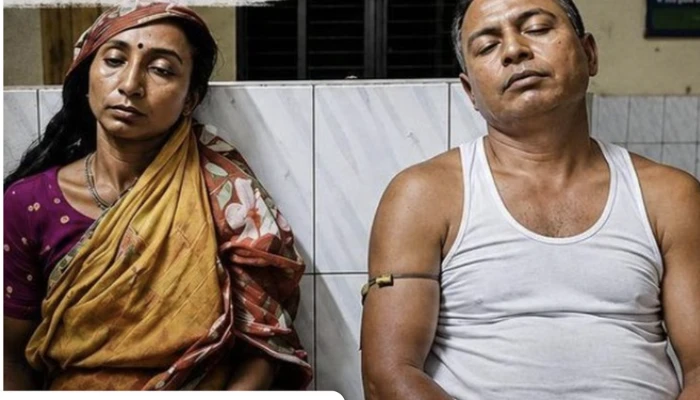
Case Summary
In Lalmohan Upazila of Bhola district, Bangladesh, a Hindu family was subjected to a violent attack over their ancestral property. The Hindu family had secured a court ruling in their favour; despite that, they were regularly harassed over its possession. On the day of the incident, the attackers entered the Hindu family’s home and brutally assaulted Gopal Krishna Das and his wife, Akhi Rani Das. They also subjected the couple’s two daughters and elderly father to further abuse. The house was also vandalised and looted, raising serious concerns over the safety of Hindu families and the protection of their property even after obtaining legal relief. The incident was highlighted by the Awami League on July 29, 2026, amid concerns over increasing attacks against religious minorities in Bangladesh. The party blamed the current Bangladesh Nationalist Party (BNP) government for failing to protect Hindu families who have repeatedly faced attacks during periods of political upheaval. According to the Awami League, the assault was not limited to an attempt to take control of the disputed property. The attackers entered the family home in broad daylight and severely assaulted Gopal Krishna Das and his wife, Akhi Rani Das. Their two daughters were also assaulted and abused. The family’s elderly father was subjected to torture by being submerged in water. The attack took place despite a court ruling in favour of the Hindu family in the land dispute. The vandalism and looting of the Das family’s home further intensified concerns over the ability of ordinary Hindu families to retain possession of their ancestral property and live safely even after obtaining legal protection from the courts. The Awami League further stated that the incident reflected wider insecurity faced by religious minorities in Bangladesh. It referred to attacks on minorities following the 2001 election and accused the BNP, Jamaat-e-Islami and affiliated forces of contributing to insecurity among minority communities during periods in which they exercised direct or indirect political influence. The events occurred against the backdrop of escalating hostility towards Hindus in Bangladesh. The recent escalation unfolded in three distinct phases: following the ouster of Sheikh Hasina’s government in August 2024; after the death of Sharif Osman Bin Hadi in December 2025; and in the immediate aftermath of the 13th National Parliamentary Election in 2026. Following the ouster of Sheikh Hasina, multiple reports documented attacks on Hindu homes, temples and religious institutions, alongside intimidation campaigns, arson and mob assaults targeting minority neighbourhoods. The Hinduphobia Tracker recorded 336 incidents against the Hindu minority during this period. A further escalation occurred following the death of Sharif Osman Bin Hadi, a Muslim political activist and student leader known for his anti-Hindu and anti-India rhetoric. Hadi had been involved in political unrest after the fall of the Hasina government and was killed in Dhaka on 18 December 2025 during clashes. In the aftermath of his death, Hindu communities were blamed and targeted in retaliatory violence. Hindu homes were set ablaze in multiple localities, forcing families to flee and leaving many displaced. Muslim mobs targeted Hindu neighbourhoods, properties and religious symbols. Among the victims was Dipu Chandra Das, who was lynched to death and whose body was set ablaze by a Muslim mob over false blasphemy allegations. The Hinduphobia Tracker documented 51 incidents of anti-Hindu violence following Hadi’s death. Posters and written materials calling for the extermination of Hindus were also displayed in public spaces. Other reported incidents included arson, vandalism, assault, intimidation and organised anti-Hindu mobilisation. The third phase emerged after the 13th National Parliamentary Election in 2026. Within days of the announcement of results, Hindu families in Noakhali, Rangpur, Nilphamari, Sylhet, Thakurgaon and Dinajpur faced attacks involving arson, looting, assault and vandalism of temples and homes. In several instances, Hindu homes were selectively targeted, looted and families were threatened with displacement. As per the Tripura Chronicle report, amid this wider pattern, the Bangladesh Hindu Buddhist Christian Unity Council documented at least 257 incidents of communal violence across Bangladesh during the first half of 2026, resulting in 44 deaths. The 257 incidents included 40 cases resulting in 44 deaths, five incidents of violence against women, including rape and gang rape, and ten cases involving abduction, extortion and torture. The organisation also recorded 42 cases involving attacks, death threats and physical abuse of minorities; 62 attacks on places of worship involving idol vandalism, looting and arson; 15 cases involving the occupation or attempted occupation of land belonging to religious institutions; and 47 incidents targeting homes and business establishments through attacks, vandalism, looting and arson. It further documented nine incidents involving arrests and harassment over blasphemy allegations, 21 cases involving the forcible occupation of homes, land and business properties, and six incidents categorised as other forms of communal violence.
Why it is Hate Crime ?
This case is being added to the tracker under the primary category: Attack not resulting in death. The subcategory selected is: Attacked for Hindu identity. In several cases, Hindus are attacked merely for their Hindu identity without any perceived provocation. A classic example of this category of religiously motivated hate crime is a murder in 2016. 7 ISIS terrorists were convicted for shooting a school principal in Kanpur because they got ‘triggered’ seeing the Kalava on his wrist and the tilak that he had put. In this, the Hindu victim had offered no provocation except for his Hindu religious identity. The motivation for the murder was purely religious, driven by religious supremacy. Such cases where Hindus are targeted merely for their religious identity would be documented as hate crimes under this category. The Hinduphobia Tracker has documented a sustained pattern of attacks on Hindus in the country, particularly following the political instability that emerged after the ouster of Sheikh Hasina in August 2024. Since then, Hindu families have repeatedly faced physical assaults, land grabbing, forced displacement, attacks on places of worship, desecration of idols, sexual violence, and threats intended to drive them from their homes. These incidents reveal a broader pattern in which religious identity has rendered Hindus especially vulnerable to targeted violence and intimidation. Viewed against this backdrop, the attack on this Hindu family cannot be seen in isolation. Rather, they form part of a continuing pattern of hostility directed against the Hindu minority in Bangladesh, reinforcing the religiously motivated nature of the offence. When there is an ongoing ethnic cleansing based on religious identity, every crime in and of itself is assumed to be motivated by the same religious animosity even if there is a lack of a specific religious marker in the immediate crime. During an ongoing ethnic cleansing, the dehumanisation of people based on their religious identity and the normalisation of religious hostility drives the crimes committed against them even when there is a lack of stated religious motive. For the purpose of documenting the 2024 ethnic cleansing of Hindus in Bangladesh, the Hinduphobia Tracker is assuming religious motivation ab initio. If a case is specifically and beyond reasonable doubt proven to be driven by motivations other than religious hostility, it will be removed from the hate crime database post facto. Disclaimer: Hinduphobia Tracker records incident dates based on when the offence occurred rather than when it was reported by the media. However, in this case, the reports do not specify the exact date of the incident. Therefore, 29 July 2026, the date on which the incident was reported in the media, was recorded as the indicative incident date for documentation purposes only.
Victim Details
Total Victim
5
Deceased
0
Gender
- Male 2
- Female 3
- Third Gender 0
- Unknown 0
Caste
- SC/ST 0
- OBC 0
- General 0
- Unknown 5
Age Group
- Minor 0
- Adult 3
- Senior Citizen 0
- Unknown 2


Case Status
Unknown


Perpetrators Details
Perpetrators
Unknown
Perpetrators Range
Unknown
Perpetrators Gender
unknown
 Sources




