Hindu identity and Hindutva portrayed as extremist in Palestine Deep Dive podcast discussion
 Brighton and Hove, United Kingdom
  24 July, 2026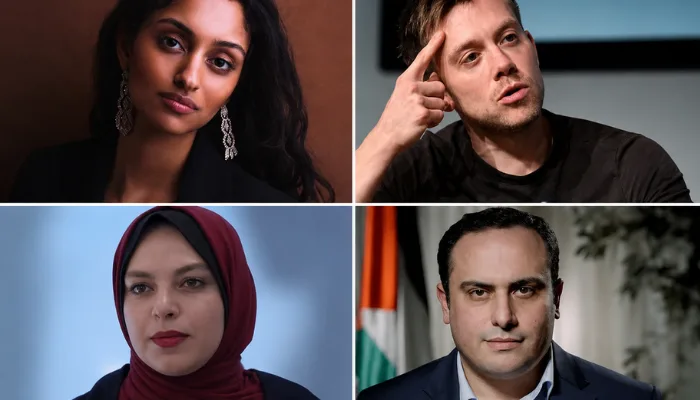
Case Summary
Hindu identity and the broader Hindu community became the subject of a discussion on the Palestine Deep Dive podcast, in which Owen Jones, Hala Hanina, Ahmed Alnaouq, and British journalist and media commentator Karishma Patel repeatedly discussed what Patel described as the "Hindu nationalist project." Throughout the discussion, Hindu nationalists were repeatedly portrayed as religious extremists by associating them with Islamophobia, exclusionary politics, and oppressive majoritarianism, effectively presenting an entire stream of Hindu thought and the broader Hindu community in an inherently negative light. Appearing on an episode of Palestine Deep Dive, Patel claimed that the "Hindu nationalist project and Israel's project have plenty in common." She argued that both were characterised by what she described as "raging Islamophobia," a desire to create hierarchies based on identity where she tried to project the caste system as evil and an intention to establish a monocultural society by excluding people belonging to other religions. She further claimed that these perceived similarities explained the close relationship between India and Israel and referred to India's defence and strategic ties with Israel. During the discussion, Patel also argued that although India had itself experienced colonial rule, structures of colonialism and racism continued after independence. She said that former victims of colonialism could become perpetrators and cited Kashmir as an example. She claimed that those speaking about Kashmir were often accused of "Hinduphobia" by Hindu nationalists and compared this with responses adopted by other countries when criticised internationally. The discussion also focused on the position of Hindus in India. Patel said that Hindu nationalists portray Hindus as an oppressed or heavily marginalised community despite Hindus constituting the majority population and the Bharatiya Janata Party being in power at the national level. Throughout the podcast, references to Hindu nationalism were repeatedly linked with allegations of Islamophobia, majoritarianism, exclusionary politics, and discrimination. The podcast attracted criticism from members of the Hindu community who called these remarks as stereotyping Hindus by repeatedly associating Hindu identity and Hindu political thought with intolerance, oppression, and exclusion. Critics argue that the discussion presented sweeping characterisations of Hindus and contributed to negative perceptions of the Hindu community by linking them to serious allegations without distinguishing between the diverse beliefs and practices of individual Hindus.
Why it is Hate Crime ?
The primary category for this case is: Hate speech against Hindus. The first subcategory for this case is: Anti-Hindu slurs and mocking faith. Anti-Hindu slurs and the deliberate mocking of the Hindu faith owing to religious animosity involve the usage of derogatory terms, stereotypes, or offensive references to religious practices, symbols, or figures. One of the common anti-Hindu slurs used against Hindus is “cow-worshipper” and “cow piss drinker”. The intention of using this term is to demean and mock Hindus as a group and their religious beliefs since Hindus consider the cow holy. Additionally, some symbols and the slurs attached to them have a historical context that exacerbates the insult, hate, stereotyping, dehumanisation and oppression against Hindus. Cow worship has been used for centuries to denigrate Hindus, insult their faith and oppress Hindus specifically as a religious group. There has been overwhelming documentation about how cow slaughter has been used to persecute Hindus, with cow meat being thrown in temples and places of worship. There has also been overwhelming documentation where cow meat (beef) has been force-fed to Hindus to either forcefully convert them to Islam or denigrate their faith. Apart from cow worship, the Swastika – which holds deep religious significance for the Hindus – has also been misinterpreted and distorted to use as a slur against Hindus. Similarly, the worship of the Shivling has been used by supremacist ideologies and religions to denigrate Hindus owing to religious animosity. Such slurs and denigration stem from inherent animosity and hate towards Hindus and their faith; therefore, it is categorised as hate speech targeted at Hindus specifically owing to their religious identity. The next subcategory for this case is: Anti-Hindu subversion and prejudice. Hate speech is defined as any speech, gesture, conduct, writing, or display that is prejudicial against a specific individual and/or group of people, which is leading to or may lead to violence, prejudicial action or hate against that individual and/or group. Media plays a specific and overarching role in perpetuating prejudicial attitudes towards a community owing to unfair, untrue coverage and/or misrepresentation/misinterpretation, selective coverage and/or omission of facts of/about issues affecting a specific religious group. This type of bias can dehumanise the victim group, making it easier for others to justify harmful actions against them, which aligns with the objectives of hate speech laws aimed at preventing such harm. It is often observed that the media takes a prejudicial stand against the Hindu community, driven by their need to shield the aggressor community, which happens to be a numeric minority; however, it is the one perpetrating violence against Hindus. For example, the media is often quick to contextualise religiously motivated crimes against Hindus, omit or misrepresent facts that point towards religiously motivated hate crimes, justify and/or downplay religiously motivated hate crimes, or simply present fake news to stereotype Hindus. Such media bias leads to the denial of persecution and is often used to dehumanise Hindus, leading to justification for violence against them. For example, the media covered several fake allegations of Hindus targeting Muslims and forcing them to chant Jai Shree Ram. Most of these cases were proved false and fabricated after police investigation. These fake news reports were subsequently never retracted or clarified. Such fake news led to the justification of violence and dehumanisation of Hindus based on the argument that since Hindus targeted Muslims and forced them to chant Jai Shree Ram, the dehumanisation of Hindus and violence against them was par for the course and merely a retaliation. Such media bias leads to prejudicial portrayal of Hindus and offers a justification for violence against them and therefore, is considered hate speech under this category. The false claims made in the podcast Palestinian Deep Dive targeted Hindu identity through broad generalisations about Hindu nationalism and, by extension, Hindu political thought. Throughout the discussion, the speakers falsely associated what they described as the "Hindu nationalist project" with Islamophobia, exclusionary politics, ethnic hierarchy, and a desire to create a monocultural society. By consistently linking these attributes to Hindu nationalism without distinguishing between different strands of Hindu political thought or the diversity of Hindu society, the discussion was stereotyping Hindus and portraying their beliefs and identity in an overwhelmingly negative light. Such broad characterisations can contribute to prejudice against the Hindu religious community by reducing complex social and political issues to sweeping descriptions of an entire ideological or cultural tradition. The idea of Hindutva (Hindu nationalism and civilisational movement) and Hinduism is portrayed no differently, as leftist commentators and Islamist groups attempt to conflate Hinduism with Hindutva and present both as synonymous, thereby reducing a diverse religious tradition and its adherents to a single political narrative and reinforcing negative stereotypes about the Hindu community. A central theme of the discussion was the repeated reference to "Hindu nationalism" as a singular project associated with discrimination and exclusion. This framing overlooks the diversity of views among Hindus and presents a simplified narrative that conflates religious identity, cultural identity, and political ideology. Such representations risk encouraging audiences to associate Hindu identity with intolerance or hostility, even though Hinduism is a diverse religion followed by people with a wide range of political, social, and ideological beliefs. From this perspective, the repeated use of sweeping descriptions about Hindus and Hindu political identity reinforces stereotypes rather than promote an informed understanding of Indian society. The portrayal of Hindus as intolerant or as seeking to create a monolithic society ignores the inclusive and pluralistic nature of Hindu civilisation. For centuries, India has been home to people of different religions, cultures, and traditions, and this diversity has largely flourished within a Hindu-majority society. The continued existence of multiple faiths in India reflects a long-standing tradition of coexistence and religious accommodation. Sweeping generalisations that depict Hindus or Hindu thought as inherently exclusionary overlook this broader historical and social reality. The discussion also drew attention to Kashmir, with the speakers claiming that criticism relating to Kashmir is often dismissed through accusations of "Hinduphobia." For Indians, Kashmir is an integral part of the Republic of India under the Constitution, and public debate about the region encompasses questions of national security, constitutional law, terrorism, governance, and human rights. They reduced the whole Kashmir debates to a narrative centred solely on religious prejudice oversimplifies a complex issue and can create the impression that concerns relating to Kashmir are merely expressions of religious hostility rather than matters involving multiple political, legal, and security dimensions. Kashmir has been an inseparable part of India's civilizational, cultural, and spiritual heritage for millennia. According to the ancient Nilamata Purana, the Kashmir Valley is traditionally believed to have been reclaimed by Rishi Kashyap, from whom the region derives its name. The valley became one of the foremost centres of Hindu civilisation, renowned for Kashmir Shaivism, Sanskrit scholarship, philosophy, literature, and learning. Great scholars such as Abhinavagupta and Kalhana made enduring contributions to Indian thought from Kashmir, while ancient temples, sacred pilgrimage sites like the Amarnath Cave, and centuries-old Hindu traditions continue to reflect its deep-rooted Hindu identity. Following the Instrument of Accession in 1947, Jammu and Kashmir legally acceded to India and, under the Constitution of India, remains an integral and inseparable part of the country. Attempts to portray Kashmir as separate from India often disregard its long-standing civilizational links, constitutional status, and historical association with the Indian nation. Critics argue that certain left-wing groups and separatist sympathisers have sought to diminish or ignore Kashmir's ancient Hindu heritage while advancing narratives that question its place within India. From this perspective, denying Kashmir's historical and constitutional connection with India is viewed not only as disregard for its Hindu civilizational legacy but also as opposition to India's sovereignty and territorial integrity. Another aspect that attracted criticism was the repeated linkage between Hindu identity, the electoral success of the Bharatiya Janata Party (BJP), and allegations of majoritarianism. The speakers suggested that Hindu nationalists portray Hindus as an oppressed community despite Hindus being the demographic majority and the BJP being in power nationally. Equating the beliefs of all Hindus with the positions of a political party, or treating the religious majority as a single ideological bloc, risks attributing political characteristics to an entire religious community. Such framing blurs the distinction between religious identity and political affiliation, encouraging generalisations about Hindus as a whole. The tendency of some left-wingers and Muslims to equate all Hindus with the BJP or Hindutva is an oversimplification that overlooks the diversity of Hindu society. Hinduism is a religion followed by people with a wide range of political beliefs, and support for or opposition to any political party varies among Hindus, just as it does within other religious communities. Reducing an entire religious community to a single political identity creates stereotypes and obscures the complexity of both Hindu society and India's democratic landscape. Taken together, the remarks in the podcast generated criticism because they repeatedly connected Hindu identity and Hindu political thought with serious allegations including Islamophobia, exclusion, and discrimination without recognising the diversity of views within the Hindu community. The discussion reinforced a rigid distinction between Hinduism, Hindutva, and Hindus, portraying Hindutva as synonymous with extremism and, in effect, extending that perception to the broader Hindu community. They contended that the repeated opposition to the idea of a Hindu Rashtra, coupled with broad characterisations of Hindutva, contributed to a narrative that presents Hindus as intolerant, exclusionary, or inherently extremist, thereby reinforcing negative stereotypes about Hindus globally.


Case Status
Unknown


Perpetrators Details
Perpetrators
Muslim Extremists
Perpetrators Range
From 2 To 5
Perpetrators Gender
both
 Sources




