Hindu faith insulted; Muslim woman denigrates Lord Shiva temple during a minor dispute in Bhopal, Madhya Pradesh
 Bhopal, Madhya Pradesh, India
  23 July, 2026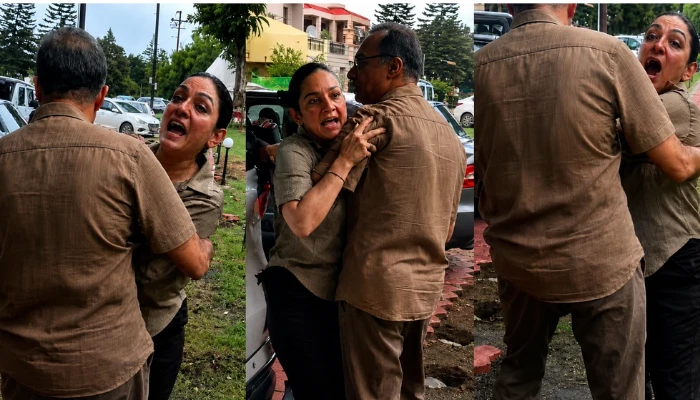
Case Summary
In Bhopal, Madhya Pradesh, a Lord Shiva temple situated within a residential society was subjected to derogatory remarks by a Muslim woman, Uzma Raza, during a dispute over the construction of a pathway leading to the temple. The accused repeatedly referred to the temple as "a bloody thing", hurting the religious sentiments of Hindu residents. According to reports, the incident occurred on 24 July 2026 at Amrapali Enclave, a residential society in the Chunabhatti area of Bhopal. The dispute arose over the construction of a pathway connecting the society park to the Lord Shiva temple situated within the residential premises. The land where the pathway was being constructed was also being used by the accused to park her vehicle. She objected to the construction, asserting that the land belonged to her, while the residents' association maintained that it was common land belonging to the society. During the dispute, the accused engaged in a heated argument with the society office bearers and other residents. When the residents asked her to produce documents supporting her claim over the land, she instead demanded that the society members produce documents establishing their claim. Amid the altercation, she repeatedly referred to the Lord Shiva temple as "a bloody thing". When residents objected to her remarks, she repeated the statement and continued making derogatory comments about the temple. Residents present at the spot stated that the accused had been making objectionable remarks about the temple continuously for the previous three days. They further stated that she had repeatedly referred to the temple as "a bloody thing" and had earlier described it as "a shelter for all the druggies and alcoholics". The residents strongly objected to her remarks, stating that they insulted the temple and hurt the religious sentiments of Hindus. Following these repeated incidents, they submitted a collective complaint to the police seeking legal action against her. Following the incident, residents submitted a collective complaint at Chunabhatti Police Station, demanding that a First Information Report be registered against the accused for hurting the religious sentiments of followers of Sanatan Dharma. The police confirmed that they had received the complaint and stated that the matter was under investigation. They further stated that both parties would be heard before any further action was taken. Notably, during the altercation, the Muslim perpetrator identified herself as Uzma Raza alias Anjali Singh and stated that she was a Muslim by birth and a Hindu through marriage.
Why it is Hate Crime ?
This case has been added to the tracker under the primary category - Hate speech against Hindus. Within this, the subcategory selected for this case is - Anti-Hindu slurs, mocking faith. Anti-Hindu slurs and the deliberate mocking of the Hindu faith owing to religious animosity involve the usage of derogatory terms, stereotypes, or offensive references to religious practices, symbols, or figures. One of the common anti-Hindu slurs used against Hindus is “cow-worshipper” and “cow piss drinker”. The intention of using this term is to demean and mock Hindus as a group and their religious beliefs since Hindus consider the cow holy. Additionally, some symbols and the slurs attached to them have a historical context that exacerbates the insult, hate, stereotyping, dehumanisation and oppression against Hindus. Cow worship has been used for centuries to denigrate Hindus, insult their faith and oppress Hindus specifically as a religious group. There has been overwhelming documentation about how cow slaughter has been used to persecute Hindus, with cow meat being thrown in temples and places of worship. There has also been overwhelming documentation where cow meat (beef) has been force-fed to Hindus to either forcefully convert them to Islam or denigrate their faith. Apart from cow worship, the Swastika – which holds deep religious significance for the Hindus – has also been misinterpreted and distorted to use as a slur against Hindus. Similarly, the worship of the Shivling has been used by supremacist ideologies and religions to denigrate Hindus owing to religious animosity. Such slurs and denigration stem from inherent animosity and hate towards Hindus and their faith; therefore, it is categorised as hate speech targeted at Hindus specifically owing to their religious identity. This case was included in the Hinduphobia Tracker because a Hindu temple and the religious beliefs associated with it were deliberately subjected to derogatory and abusive remarks. The Muslim woman deliberately and repeatedly insulted a Hindu place of worship using offensive language over several days, thereby targeting a sacred symbol of the Hindu faith and hurting the religious sentiments of Hindu devotees. The remarks specifically targeted a Lord Shiva temple, a place of immense religious significance to Hindus. In Hinduism, temples are not merely physical structures but sacred abodes of the deity, where devotees worship consecrated manifestations of the Divine. The sanctity extends beyond the deity to the temple itself, which is regarded as a sacred space worthy of reverence. Describing such a temple as a "bloody thing" and making repeated derogatory remarks about it amounted to the mocking and denigration of a revered Hindu place of worship. Such statements were directed not merely at a building but at the religious beliefs and practices associated with it. Furthermore, the repeated nature of the remarks reinforced their religious character. The objectionable comments were not confined to a single exchange during the dispute but continued over several days and included portraying the temple as a place associated with criminal and undesirable elements. By repeatedly using insulting language to describe a Hindu temple, the accused displayed contempt towards a sacred Hindu institution and sought to demean its religious significance in the presence of other residents. This transformed the conduct from an ordinary disagreement into an attack on Hindu faith and identity. Interestingly, the accused stated that she was "a Muslim by birth and Hindu by marriage." However, this assertion did not diminish or negate the significance of the derogatory remarks she directed at the Lord Shiva temple. Regardless of her marital relationship with a Hindu, she repeatedly referred to the temple as "a bloody thing" over several days and also described it as "a shelter for all the druggies and alcoholics", making the temple and its religious significance the focus of her abusive remarks rather than confining the disagreement to the underlying property dispute. Her conduct reflected hostility towards a revered Hindu place of worship despite her claim of being Hindu by marriage. By repeatedly directing abusive remarks at a Hindu temple, she targeted an institution that holds profound religious significance for Hindus, thereby displaying contempt towards Hinduism and its places of worship. Her assertion that she was Hindu by marriage therefore did not mitigate or excuse her conduct, which remained an act of religious hostility directed against a sacred Hindu site. Her remarks carried an unmistakable hostility toward Hindu religious beliefs, which was not incidental, but structural to how she framed the exchange. In Islamic culture, the children are taught that only their religion is holy and supreme; all other non-believers of Islam are ‘Kafirs (infidels)’ and evil. The language used by the accused perfectly displayed this upbringing. It reflected a worldview in which her own faith was treated as the sole legitimate one, and everything outside it as inferior or false. This mindset is precisely what resulted in her statement, and it is what makes the remark worth documenting: not as an isolated insult, but as an articulation of the belief system behind it. Equally significant, the temple was described as an illegal structure only after the accused had already made the derogatory remarks. Even if, for the sake of argument, questions existed regarding the legality of the structure, such issues were matters for the competent authorities to determine through the due process of law. They did not justify referring to a Hindu temple as "a bloody thing" or repeatedly ridiculing and abusing it. The repeated derogatory remarks directed at the temple bore no reasonable connection to the underlying property dispute and instead amounted to the deliberate denigration of a sacred Hindu place of worship. Taken together, the accused's conduct demonstrated a conscious disregard for the sanctity of a Hindu temple and the religious sentiments of Hindu devotees. Instead of restricting herself to contesting the pathway or asserting her claim over the land, she repeatedly mocked and demeaned the temple over several days, despite objections from the residents. The persistence, nature, and target of her remarks demonstrated that the temple had been deliberately singled out for ridicule because of its religious significance. By directing repeated abusive remarks at a revered Hindu place of worship, the accused exhibited hostility towards Hindu religious beliefs, making this a clear instance of a religiously motivated hate crime. Therefore, it is being added to the hate crime database of the tracker.


Case Status
Complaint filed


Perpetrators Details
Perpetrators
Muslim Extremists
Perpetrators Range
One Person
Perpetrators Gender
female
 Sources




