Minor Hindu girl trapped, sexually exploited, forced to convert to Islam and undergo nikah by multiple Muslim men
 Fatehpur (Barabanki), Uttar Pradesh, India
  22 July, 2024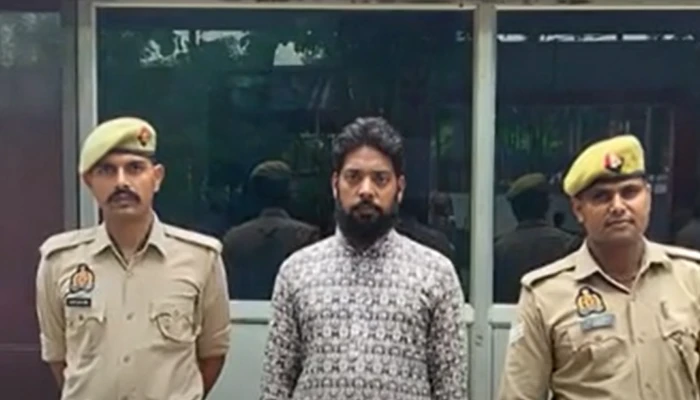
Case Summary
In Fatehpur, Uttar Pradesh, a minor Hindu girl was subjected to forced religious conversion, sexual exploitation, forced abortion, and a forced nikah by Muslim men. The accused included police constable Mohammad Asif, Javed, Maulana Harun Raza Ismaili, Tasim, and several others. According to media reports, the victim's mother lodged a complaint at Fatehpur Kotwali police station on 23 July 2026 against police constable Mohammad Asif, Javed, Maulana Harun Raza Ismaili, Tasim, and eight unidentified persons. In the complaint, she stated that the accused had forcibly converted her minor daughter to Islam, sexually exploited her, compelled her to undergo an abortion, and arranged her nikah. The complaint stated that in 2024, while posted at Fatehpur Kotwali police station, police constable Mohammad Asif established contact with the minor girl through a woman. Thereafter, Javed, a resident of Basara village, trapped the victim and took her near Masauli, where her nikah was solemnised inside a car by Maulana Harun Raza Ismaili. The victim was thereafter subjected to sexual exploitation, forced religious conversion, and abortion. Based on the complaint, the police registered a case under the relevant provisions of the Bharatiya Nyaya Sanhita and the Uttar Pradesh Prohibition of Unlawful Conversion of Religion Act. During the course of the investigation, police arrested Mohammad Asif, Tasim, and Avdhesh and sent them to judicial custody. On 27 July 2026, the Fatehpur Kotwali police arrested Maulana Harun Raza Ismaili, son of Iliyas, a resident of Rahramau village under Safdarganj police station in Barabanki district. Police stated that he had been absconding since the registration of the FIR and was wanted for solemnising the minor victim's forced nikah. Following his arrest, he was produced before the court, which remanded him to judicial custody. Station House Officer Amit Pratap Singh stated that the investigation remained ongoing and that police teams were conducting raids to trace and arrest the remaining absconding accused. Police further stated that additional legal action would be taken based on the facts that emerged during the investigation.
Why it is Hate Crime ?
The primary category selected here is: Predatory Proselytisation, with the subcategory selected: Harassment, threats and coercion for conversion. Harassment covers a wide range of behaviours of an offensive nature. It is commonly understood as behaviour that demeans, humiliates, and intimidates a person, including threats and coercion. Harassment and threats, in this case, find their root in discriminatory grounds which have the effect of nullifying a person’s rights or infringing upon his freedom to exercise his right specifically owing to the victim’s religious identity. Verbal and physical threats and psychological or physical harassment are often used against Hindu victims because they choose to practice their professed religion. Religious harassment also includes forced and involuntary conversions by harassment, threats or coercion. Coercion includes intimidatory tactics like force-feeding a Hindu victim beef to convert to another religion, forceful circumcision, etc. In several cases documented, non-Hindu perpetrators or those who harbour specific animosity towards Hinduism harass victims simply based on their religious identity. Such cases often also include harassment to ensure the Hindu victim abandons his/her professed religion and adopts the religion of the perpetrator. The other subcategory selected is: Proselytisation by grooming, brainwashing, manipulation or subtle indoctrination. Under this, the tertiary categories are: Conversion of a minor and Rape and sexual harassment/assault. Religious brainwashing essentially means the often subtle and forcible indoctrination to induce someone to give up their religious beliefs to accept contrasting, regimented ideas. Religious grooming or brainwashing also involves propaganda and manipulation. It involves the systematic effort, driven by religious malice and indoctrination, to persuade “non-believers’ to accept allegiance, command, or doctrine to and of a contrasting faith. Cases of such grooming or brainwashing are far more nuanced than direct threats, coercion, inducement and violence. In such cases, it is often seen that there is repeated, subtle and continual manipulation of the victim to induce disaffection towards their own faith and acceptance of the contrasting faith of the perpetrator. While subtle indoctrination is widely acknowledged as predatory, an element which is often understated in such conversions or the attempts of such conversion is the role of loyalty and trust which might develop between the perpetrator and the victim. Fiduciary relationships are often abused to affect such religious conversion. For example, an educator transmitting religious doctrine of a competing faith to a Hindu student. The Hindu student is likely to accept what the teacher is transmitting owing to the existence of the fiduciary relationship. The exploitation of the fiduciary relationship to religiously indoctrinate victims would also be included in this category. Since the underlying animosity towards the victim’s faith forms the basis of predatory proselytisation, such cases are considered religiously motivated hate crimes. The other primary category selected is: Crime against women in relationships and other sexual crimes. Within this, the selected subcategory is: Forced conversion before marriage. Within this, the tertiary category selected is: Forced to do Nikah. In such cases, a non-Hindu man is in a relationship with a Hindu woman when the pressure to convert her religion begins to manifest. In such cases, typically, two patterns emerge. First, when the relationship is consensual and the religious identity of the perpetrator is known to the Hindu woman in the relationship, however, at some point during the relationship, the non-Hindu man starts to force the victim to convert her religion and give up her Hindu religious identity. The second is when the woman gets into a marriage with the man pretending to share her faith. Later, when the truth is revealed, the man starts pressuring the woman to convert her religion and give up her religious identity. In both situations, the methods used to force the victim to convert her religion often revolve around force-feeding beef, forcing her to wear hijab, forcing her to read the Kalma or even pressurising the victim to do ‘Nikah’, which is marriage under Islamic law, with a prerequisite being conversion to Islam. Cases where a Hindu woman consensually converts to Islam in a relationship will be left out of the hate crime database, even though it could be argued in several cases that the conversion was a result of religious brainwashing. The other sub-category is - Brainwashed/groomed. The tertiary category included under this is: Rape and sexual assault/harassment and Conversion of a minor. In our database, we have not added incidents where women have converted to another religion of their free will, and no allegations of forced/involuntary conversion have been made. However, there are certain cases of conversion where the consent itself is a result of the brainwashing or grooming of a minor by the non-Hindu perpetrator trying to victimise a woman for her Hindu religious identity. The phenomenon of grooming points to non-Hindu perpetrators identifying their Hindu victims’ vulnerabilities and exploiting them over months and sometimes years, to extract the supposed ‘consent’ to convert their religion. In most cases of grooming, the victims are minors or the grooming started when the victim was a minor. In other cases of grooming, the non-Hindu perpetrator brainwashes and grooms a minor victim to extract their trust and then proceeds to rape them repeatedly with the intent of converting them to their faith. It is pertinent to understand here that when the victim is a minor, the ‘consent’ to convert or enter into a romantic relationship with an adult itself is redundant – addressed by POCSO. While every case of conversion of a minor and incidents of establishing a physical relationship with a minor by an adult is a crime, for this database, a case would be considered a hate crime only if there is a distinct religious angle to the grooming. For example, in the UK, if a Hindu minor is targeted by Pakistani grooming gangs, it would be considered a hate crime because the victims are specifically targeted owing to their non-Muslim religious identity, with the perpetrators being Muslim. In other cases, if a Hindu minor is brainwashed into entering a physical relationship with the non-Hindu adult perpetrator and the family alleges grooming/brainwashing of the minor to convert her religion, it would form a part of this database. If the victim is a Hindu adult, the case would form a part of this database only if the victim herself says that she was brainwashed/groomed to convert her religion. However, if the victim is deceased (murdered or otherwise), the case would form a part of this database if her family/friends provided testimony that the victim was brainwashed/groomed to convert her religion. Since these crimes have a distinct religious angle where the victim is being targeted owing to her Hindu religious identity, these cases are considered hate crimes. This case was classified as a religiously motivated hate crime because a minor Hindu girl was systematically targeted through grooming, sexual exploitation, religious conversion, and nikah. The offences did not remain confined to crimes against a minor but culminated in the replacement of her Hindu religious identity with Islam. The victim's faith was therefore not incidental to the offence but formed one of its central targets, warranting the inclusion of this case in the Hinduphobia Tracker. The sequence of events demonstrated a deliberate and carefully structured process rather than an isolated criminal act. The victim was first approached through an intermediary before establishing a relationship of trust. Once her trust was secured, she was isolated from her family, sexually exploited, and ultimately subjected to religious conversion. The exploitation of a minor's vulnerability and dependence to influence her religious identity deprived her of the ability to exercise a free and informed choice regarding her faith. Such conduct reflected a calculated misuse of trust for the purpose of replacing the victim's existing religious identity. It is also important to mention that since the victim, in this case, was a minor, there was an absence of both consent and a genuine change of conscience. It is a well-established fact that children are more susceptible to manipulation since they are still developing emotionally, cognitively, and socially. Their brains are not fully mature, making them more vulnerable to influence and less capable of critically evaluating information. Consequently, cases involving religious manipulation of minors not only represent an infringement on an individual's religious freedom but also demonstrate a calculated strategy of targeting those who are less able to resist or understand the long-term implications of conversion, making it a significant case of religiously motivated hate crime. The sexual exploitation formed an integral part of this broader pattern. It increased the victim's vulnerability, diminished her ability to resist, and reinforced the process through which she was separated from her existing religious identity. Rather than constituting an isolated offence, it became intertwined with the conversion and nikah, making each act part of a continuous sequence directed towards altering the victim's religious identity. Furthermore, the victim was not merely subjected to sexual exploitation but was also compelled to undergo nikah after being converted to Islam. Marriage under Islamic law following religious conversion was not an independent or incidental event; rather, it represented the culmination of the process through which the victim's Hindu identity was replaced with another faith. By making conversion a precursor to nikah, the accused demonstrated that the objective extended beyond establishing a relationship and instead centred upon altering the victim's religious identity. Such conduct infringed upon the victim's freedom of conscience and her right to continue practising her professed religion. Moreover, the involvement of multiple individuals in facilitating different stages of the process further indicated that the conversion and subsequent nikah were not isolated developments but formed part of a coordinated course of conduct. Taken together, the sequence of grooming, abuse of trust, sexual exploitation, religious conversion, and nikah revealed a deliberate course of conduct directed at replacing the victim's Hindu identity with Islam. The perpetrators' actions demonstrated a conscious disregard for the victim's right to retain her professed faith and practise it freely. For these reasons, the incident constituted a religiously motivated hate crime and has been included in the Hinduphobia Tracker's database. Disclaimer: It is important to clarify that none of the media sources covering this case has specified the exact date when the victim's ordeal began, though it is mentioned that she came into contact with the accused police constable in 2024. Thus, to document this case, we have used an indicative date, 23 July 2024, as a placeholder to represent the beginning of her suffering. While media coverage of the incident emerged on 24 July 2026, the Hinduphobia Tracker records the incident based on when the victim’s ordeal began, not when it was reported. Further, the perpetrator count was recorded as 12(twelve), as the FIR was registered against four named accused and eight unidentified accused, out of which four were arrested.
Victim Details
Total Victim
1
Deceased
0
Gender
- Male 0
- Female 1
- Third Gender 0
- Unknown 0
Caste
- SC/ST 0
- OBC 0
- General 0
- Unknown 1
Age Group
- Minor 1
- Adult 0
- Senior Citizen 0
- Unknown 0


Case Status
Case sub-judice


Perpetrators Details
Perpetrators
Muslim Extremists
Perpetrators Range
From 10 to 100
Perpetrators Gender
male
 Sources




