Hindu sentiments hurt after Indian politician invokes Hindu deities for political rhetoric during interview
 Mumbai, Maharashtra, India
  25 July, 2026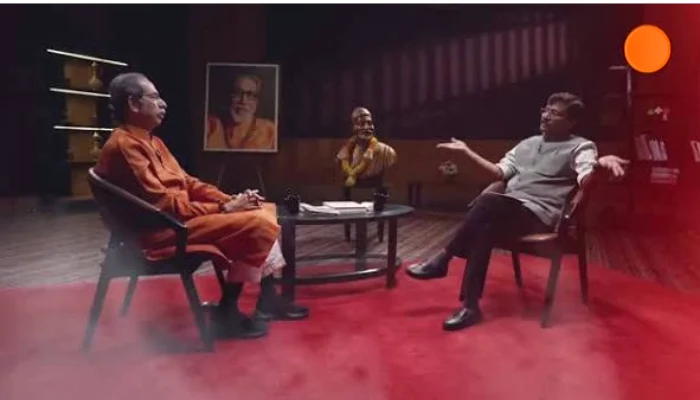
Case Summary
Hindu sentiments were hurt after Uddhav Balasaheb Thackeray, president of the Shiv Sena (Uddhav Balasaheb Thackeray) faction, made repeated references to Hindu deities, Hindu scriptures, and revered Hindu places of worship during an interview. His remarks prompted objections from the Hindu community, who viewed the repeated invocation of sacred Hindu figures and symbols in the political context as disrespectful towards the faith. During the interview, Uddhav Thackeray compared the youth participating in the movement, including self-proclaimed activist Abhijeet Dipke, to an incarnation of Lord Vishnu, stating that "Vishnu has taken an avatar in the form of the people" and describing the movement as "Vishnu's avatar." Later in the address, he again referred to the movement as "this avatar of Vishnu." He also invoked characters from the Mahabharata, including Draupadi and Dhritarashtra, while commenting on contemporary political issues. His political interview and speech should have been limited to politics, but it caused outrage after the insult of Lord Vishnu, whom he referred to in a derogatory manner. Uddhav Thackeray also spoke about the Ram Mandir, stating that it had been "looted" and discussing the alleged misappropriation of donations from the temple. While making these remarks, he questioned whether the Mughals, Pakistan, or Jawaharlal Nehru were responsible before stating that the same temple in whose name votes were sought was now being looted. He further referred to Kedarnath, Badrinath, Ayodhya, and Ujjain in the context of alleged thefts and land-related irregularities. In another portion of the speech, Uddhav Thackeray stated that "protecting Ram is our duty," remarked that "Ram belongs to everyone," described the participants as "Ram Rakshaks" (protectors of Ram), and referred to the present time as "Kaliyug." While speaking about Lord Ram, he also used the expression, "Ram kisi ke baap ka hai?" ("Does Ram belong to anyone's father?"), before stating that Ram belongs to everyone. This wording also drew objections from sections of the Hindu community, who considered it disrespectful when used in reference to a deity revered by millions of Hindus. The repeated references to Lord Vishnu, Lord Ram, the Mahabharata, Ram Mandir, Kedarnath, Badrinath, Ayodhya, and Ujjain in the course of a political speech drew criticism from sections of the Hindu community. Many devotees viewed the comparison of Lord Vishnu with a contemporary individual, the repeated references to sacred Hindu deities and pilgrimage sites, and the language used while referring to Lord Ram as diminishing the sanctity associated with these revered religious figures and places, thereby hurting their religious sentiments.
Why it is Hate Crime ?
The primary category for this case is: Hate speech against Hindus. The subcategory for this case is: Anti-Hindu slurs and mocking faith. Anti-Hindu slurs and the deliberate mocking of the Hindu faith owing to religious animosity involve the usage of derogatory terms, stereotypes, or offensive references to religious practices, symbols, or figures. One of the common anti-Hindu slurs used against Hindus is “cow-worshipper” and “cow piss drinker”. The intention of using this term is to demean and mock Hindus as a group and their religious beliefs since Hindus consider the cow holy. Additionally, some symbols and the slurs attached to them have a historical context that exacerbates the insult, hate, stereotyping, dehumanisation and oppression against Hindus. Cow worship has been used for centuries to denigrate Hindus, insult their faith and oppress Hindus specifically as a religious group. There has been overwhelming documentation about how cow slaughter has been used to persecute Hindus, with cow meat being thrown in temples and places of worship. There has also been overwhelming documentation where cow meat (beef) has been force-fed to Hindus to either forcefully convert them to Islam or denigrate their faith. Apart from cow worship, the Swastika – which holds deep religious significance for the Hindus – has also been misinterpreted and distorted to use as a slur against Hindus. Similarly, the worship of the Shivling has been used by supremacist ideologies and religions to denigrate Hindus owing to religious animosity. Such slurs and denigration stem from inherent animosity and hate towards Hindus and their faith; therefore, it is categorised as hate speech targeted at Hindus specifically owing to their religious identity. The statements made in this case constitute hate speech against Hindus because they repeatedly invoked sacred Hindu deities, revered religious figures, and important Hindu places of worship in a political speech in a manner that many Hindu devotees found disrespectful and demeaning. Lord Vishnu, regarded in Hinduism as the preserver of the universe and one of the principal deities of the Hindu faith, occupies an exalted place in the religious life of millions of Hindus. Comparing Lord Vishnu to a contemporary activist, Abhijeet Dipke, by describing him and the movement as "Vishnu's avatar" departed from the traditional religious understanding of the deity. The speech also repeatedly invoked Lord Ram, a central deity in Hinduism who is worshipped as the embodiment of dharma and righteousness, along with references to Ram Raksha, Kaliyug, and revered characters from the Mahabharata, including Draupadi and Dhritarashtra. Within Hindu theology, the concept of an avatar of Lord Vishnu carries profound religious significance and refers to divine incarnations described in Hindu scriptures. Comparing a contemporary political activist and a political movement with one of Hinduism's most revered deities departed from the traditional religious understanding of the deity and was viewed by many Hindus as trivialising and diminishing Lord Vishnu's sanctity. A particularly contentious aspect of the speech was Uddhav Thackeray's repeated comparison of activist Abhijeet Dipke and the ongoing Cockroach Janata Party (CJP) movement with an incarnation of Lord Vishnu. It is important to note here that the Cockroach Janata Party (CJP) protest that was presented as a movement concerning students' rights and educational reforms. However, the protest platform became a setting where repeated anti-Hindu remarks, derogatory statements, and attacks on Hindu religious symbols were expressed. There were no public statements from Dipke condemning or distancing himself from these incidents. Against this backdrop, portraying Dipke and the movement as an "avatar" of Lord Vishnu was highly inappropriate and derogatory, as it associated one of Hinduism's most revered deities with a movement that was already involved in anti-Hindu activities. The expression "Ram kisi ke baap ka hai?" was used while referring to Lord Ram, a deity worshipped by millions of Hindus as the embodiment of dharma, righteousness, and virtue. Although the statement was followed by the assertion that Lord Ram belongs to everyone, the use of a colloquial and confrontational phrase involving a revered deity was objectionable in nature. Within Hindu tradition, deities are accorded the highest degree of reverence, and references to them are generally expected to reflect dignity and respect. Employing such language in the course of a political speech was therefore diminishing the sanctity and reverence associated with Lord Ram by reducing a sacred religious figure to a rhetorical device in partisan political discourse. The overall nature of the speech shows that Hindu religious symbols and beliefs were repeatedly brought into a political discussion instead of confining the criticism to political actors, institutions, or government policies. The references were not limited to a single religious figure but extended across multiple sacred aspects of the Hindu faith, including Lord Vishnu, Lord Ram, the Mahabharata, the concept of Kaliyug, and some of Hinduism's most revered pilgrimage sites. Incidents of this nature are significant because Hindu deities, epics, and places of worship occupy a sacred place in the religious lives of millions of devotees. When revered figures such as Lord Vishnu and Lord Ram, characters from the Mahabharata, or temples like Ram Mandir, Kedarnath, and Badrinath become the subject of contentious political rhetoric, it is diminishing the sanctity associated with their faith. Such incidents contribute to a sense of grievance among devotees who believe that their religious beliefs and sacred symbols should be treated with dignity and not become vehicles for political messaging or public controversy.


Case Status
Unknown


Perpetrators Details
Perpetrators
Others
Perpetrators Range
One Person
Perpetrators Gender
male
 Sources




