Hinduphobia on display; Muslim man abuses Hindu deities in viral video from Muzaffarnagar, Uttar Pradesh
 Muzaffarnagar, Uttar Pradesh, India
  25 July, 2026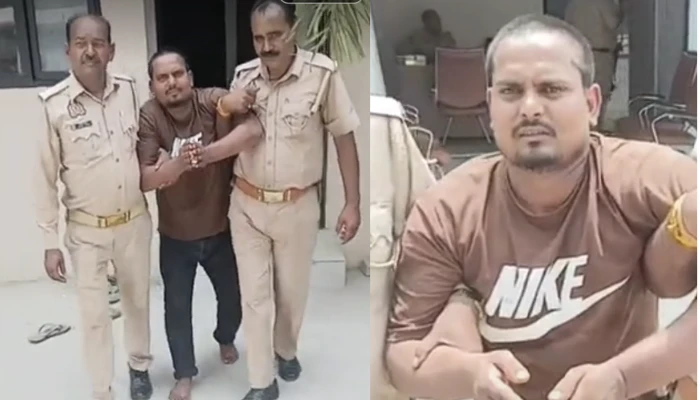
Case Summary
Hindu religious sentiments were hurt in Jaula village under Budhana Police Station in Muzaffarnagar district of Uttar Pradesh after a Muslim man named Talib, son of Gulfam, circulated a video on social media abusing revered Hindu deities. The offensive content targeted Hindu beliefs and, according to the police, had the potential to inflame religious tensions and adversely affect law and order. Following the circulation of the video, the police initiated an inquiry into the matter. During the investigation, the authorities concluded that the content had the potential to incite religious sentiments and disturb communal harmony. Acting on the findings of the inquiry, a police team led by Garhi Police Station in-charge Neeraj Bhati arrested the accused, Talib. A case was registered against the accused under the relevant legal provisions for posting content that hurt Hindu religious sentiments and threatened communal harmony. After completing the necessary legal formalities, the police produced him before a court, which remanded him to judicial custody and sent him to jail. The accused later appeared in a video apologising for his actions and stating that he would not post any such content in the future. Following the arrest, the police administration reiterated that strict legal action would be taken against individuals who posted or circulated provocative, objectionable, or hate-filled content on social media. The authorities stated that no person would be permitted to disturb public peace or communal harmony through online platforms. The administration also appealed to the public not to believe or circulate rumours or misleading messages without verification. Citizens were urged to immediately inform the police if they came across suspicious persons, objectionable activities, or inflammatory content so that timely action could be taken to maintain peace and communal harmony.
Why it is Hate Crime ?
The primary category selected in this case is: Hate Speech against Hindus. The subcategory selected is: Anti-Hindu slurs, mocking faith. Anti-Hindu slurs and the deliberate mocking of the Hindu faith owing to religious animosity involve the usage of derogatory terms, stereotypes, or offensive references to religious practices, symbols, or figures. One of the common anti-Hindu slurs used against Hindus is “cow-worshipper” and “cow piss drinker”. The intention of using this term is to demean and mock Hindus as a group and their religious beliefs since Hindus consider the cow holy. Additionally, some symbols and the slurs attached to them have a historical context that exacerbates the insult, hate, stereotyping, dehumanisation and oppression against Hindus. Cow worship has been used for centuries to denigrate Hindus, insult their faith and oppress Hindus specifically as a religious group. There has been overwhelming documentation about how cow slaughter has been used to persecute Hindus, with cow meat being thrown in temples and places of worship. There has also been overwhelming documentation where cow meat (beef) has been force-fed to Hindus to either forcefully convert them to Islam or denigrate their faith. Apart from cow worship, the Swastika – which holds deep religious significance for the Hindus – has also been misinterpreted and distorted to use as a slur against Hindus. Similarly, the worship of the Shivling has been used by supremacist ideologies and religions to denigrate Hindus owing to religious animosity. Such slurs and denigration stem from inherent animosity and hate towards Hindus and their faith; therefore, it is categorised as hate speech targeted at Hindus specifically owing to their religious identity. This case qualified as a religiously motivated hate crime because the accused, Talib, deliberately circulated a video on social media containing abusive and derogatory remarks directed at revered Hindu deities. The content was not merely offensive in nature but specifically targeted sacred figures central to the Hindu faith, thereby attacking the religious beliefs and identity of the Hindu community. To understand the seriousness of this offence, it is important to recognise the central place Hindu deities occupy within Hinduism. Hindu deities are regarded as sacred manifestations of the divine and embody spiritual ideals, moral values, and objects of worship for more than a billion Hindus across the world. They form an integral part of Hindu religious life and are venerated through daily prayers, rituals, festivals, and other acts of devotion. Consequently, abusive or derogatory remarks directed against Hindu deities transcend the realm of mere insult and amount to an attack on the religious identity, beliefs, and dignity of the Hindu community. Such remarks are deliberately made to hurt the religious sentiments of the Hindu community, making it a hate-driven offence. The deliberate circulation of the objectionable video on social media further aggravated the offence. By choosing a public platform capable of reaching a vast audience, the accused significantly amplified the impact of the abusive content. The widespread dissemination of material insulting Hindu deities increased its capacity to offend the religious sentiments of Hindus, spread anti-Hindu hostility, and create communal discord. As recognised by the police during their investigation, the content had the potential to inflame religious sentiments and adversely affect law and order, demonstrating the broader societal consequences of such acts. This incident satisfied the parameters of a religiously motivated anti-Hindu hate crime because the abuse was directed specifically at revered Hindu deities, who constitute the most sacred objects of worship in Hinduism. The act was inherently aimed at denigrating Hindu beliefs and causing offence to members of the Hindu community on account of their religion. Accordingly, this case has been documented in the Hinduphobia Tracker's Hate Crime Database as an instance of religiously motivated hostility directed against Hinduism and its adherents. Disclaimer: The Hinduphobia Tracker records the date of an incident based on when the offence occurred rather than when it was reported by the media. In this case, the exact date on which the objectionable video was uploaded or circulated has not been specified in media reports. Accordingly, the date on which the incident was reported by the media, 26 July 2026, has been selected as the indicative incident date for documentation purposes only.


Case Status
Arrested


Perpetrators Details
Perpetrators
Muslim Extremists
Perpetrators Range
One Person
Perpetrators Gender
male
 Sources




