Hindu school girl goes missing during continuing of anti-Hindu violence in Bangladesh
 Sylhet District, Bangladesh
  22 July, 2026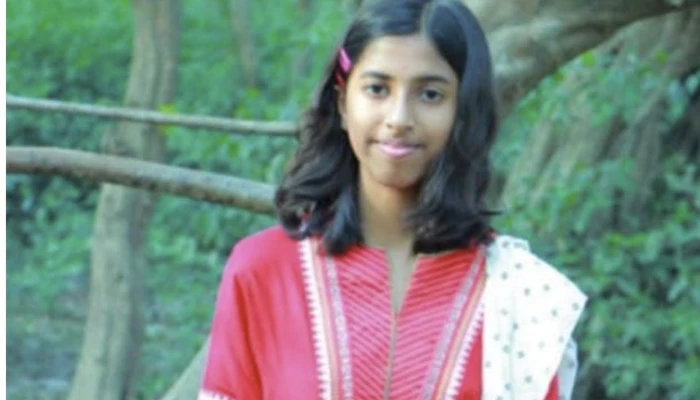
Case Summary
In Sylhet city, Bangladesh, a Hindu girl named Bipasha De Diya went missing on the afternoon of 23 July 2026 after leaving her residence for an exam. The missing teenager had appeared for the 2026 Secondary School Certificate (SSC) examination from Sylhet Government Agragami Girls' High School. She was the daughter of advocate Biplab Kanti De Madhab and a resident of Paittapara (Shibbari) under Ward No. 27 in Sylhet city. According to her family members, Bipasha left her home at approximately 1:30 pm on 23 July 2026. However, she did not return. After her disappearance, her relatives searched for her at all possible locations, but no trace of her was found. Following the unsuccessful search, the family informed the police and lodged a General Diary (GD) at Moglabazar Police Station regarding her disappearance. The investigation into the General Diary was assigned to Sub-Inspector (SI) Md. Mizanur Rahman of Moglabazar Police Station. The investigating officer stated that police were continuing efforts to trace the missing girl. He further said that locating her had become more difficult because she was not carrying a mobile phone at the time of her disappearance. At the time she went missing, Bipasha was wearing a green kameez with brown sleeves. She was approximately 5 feet 5 inches tall, had a bright wheatish complexion, a slim build, and braces on her teeth, which could assist in identifying her. Appealing for public assistance, the family requested anyone with information regarding Bipasha's whereabouts to come forward immediately. They urged that if anyone had seen Bipasha De Diya or possessed any information about her location, they should contact the family without delay. The family also appealed to the wider public to circulate the information extensively to assist in locating the missing teenager. This escalation of violence against Hindus in Bangladesh has unfolded in three distinct phases: first, following the ouster of Sheikh Hasina's government in August 2024; second, after the death of Sharif Osman Bin Hadi in December 2025; and third, in the immediate aftermath of the 13th National Parliamentary Election 2026. Following the ouster of Sheikh Hasina, multiple reports documented attacks on Hindu homes, temples, and religious institutions, alongside intimidation campaigns, arson, and mob assaults targeting minority neighbourhoods. The Hinduphobia Tracker has recorded 336 such incidents against the Hindu minority, underscoring the scale and persistence of anti-Hindu violence during this period. A further escalation occurred following the death of Sharif Osman Bin Hadi, a Muslim political activist and student leader known for his anti-Hindu and anti-India rhetoric. Hadi had been involved in political unrest after the fall of the Hasina government and was killed in Dhaka on 18 December 2025 during clashes. In the aftermath of his death, Hindu communities were blamed and subsequently targeted in retaliatory violence.
Why it is Hate Crime ?
This case was added to the tracker under the primary category- Attack not resulting in death. The subcategory selected is- Attacked for Hindu identity. In several cases, Hindus are attacked merely for their Hindu identity without any perceived provocation. A classic example of this category of religiously motivated hate crime is a murder in 2016. 7 ISIS terrorists were convicted for shooting a school principal in Kanpur because they got ‘triggered’ seeing the Kalava on his wrist and tilak that he had put. In this, the Hindu victim had offered no provocation except for his Hindu religious identity. The motivation for the murder was purely religious, driven by religious supremacy. Such cases where Hindus are targeted merely for their religious identity would be documented as a hate crime under this category. In this case, a Hindu teenage girl named Bipasha De Diya went missing in Sylhet city, Bangladesh. In the prevailing environment of vulnerability faced by Hindu minorities in Bangladesh, the incident aligns with the broader pattern of insecurity and concern experienced by Hindu families in the country. While some may argue that the available details do not establish a religious motive behind the disappearance, the broader context of anti-Hindu hostility, persecution, and insecurity in Bangladesh remains relevant for classification. During periods marked by sustained violence, intimidation, and targeting of Hindus based on their religious identity, the Hinduphobia Tracker applies a contextual presumption that incidents involving Hindu victims may be faith-targeted, even when the immediate circumstances remain unclear and no explicit religious motive has been established. In such circumstances, the vulnerability of Hindu communities and the normalisation of hostility towards religious minorities can contribute to incidents occurring without perpetrators openly expressing religious intent. For the purpose of documenting the 2024 to 2026 ethnic cleansing of Hindus in Bangladesh and the subsequent persecution following the political exile of Sheikh Hasina, the death of Sharif Osman Hadi, and the 13th National Parliamentary Election 2026, the Hinduphobia Tracker records such incidents as likely religiously motivated at the point of entry. If any case is later established through credible investigation or court findings to stem from motivations other than religious hostility, it will be revised or removed from the hate crime database.
Victim Details
Total Victim
1
Deceased
0
Gender
- Male 0
- Female 1
- Third Gender 0
- Unknown 0
Caste
- SC/ST 0
- OBC 0
- General 0
- Unknown 1
Age Group
- Minor 0
- Adult 0
- Senior Citizen 0
- Unknown 1


Case Status
Complaint filed


Perpetrators Details
Perpetrators
Unknown
Perpetrators Range
Unknown
Perpetrators Gender
unknown
 Sources




