Hindu faith and Hindu religious leader denigrated by Christian missionaries during public meeting in Jashpur, Chhattisgrah
 Jashpur, Chhattisgarh, India
  26 February, 2024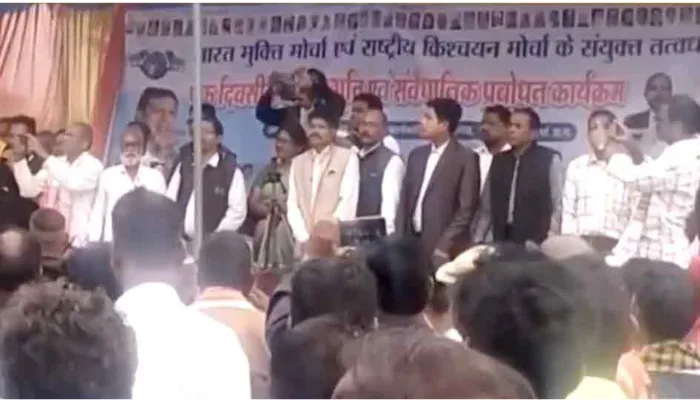
Case Summary
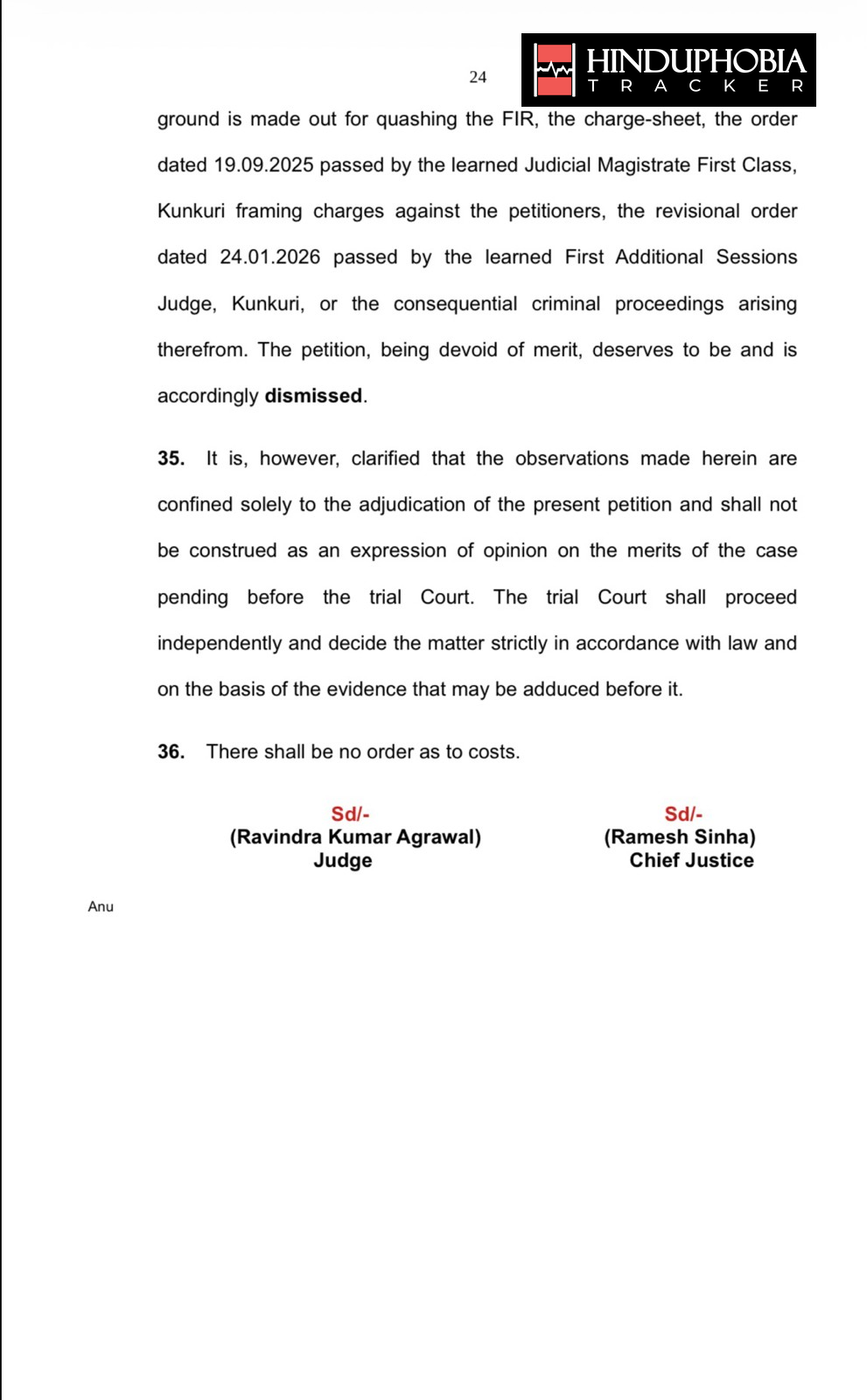
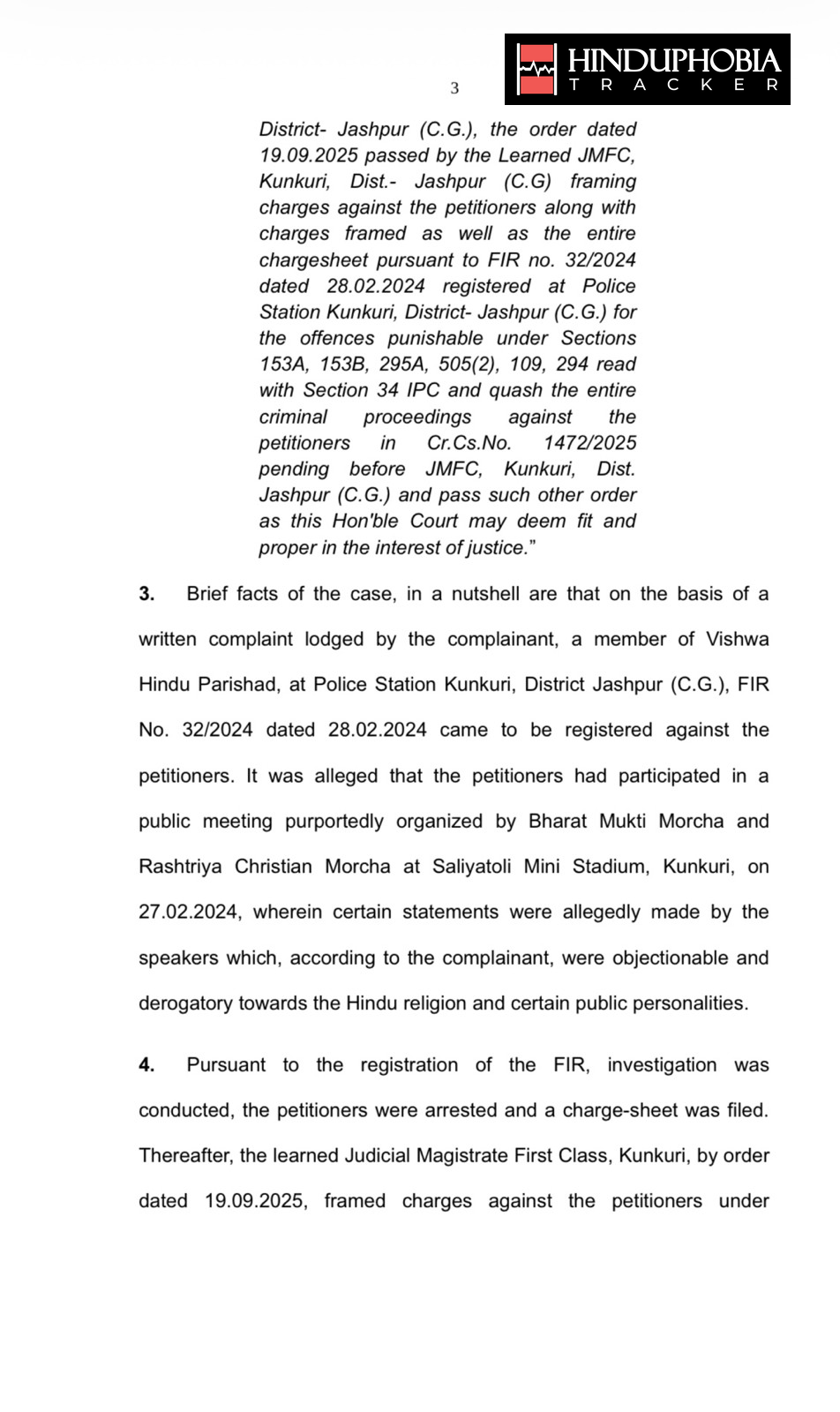
In Jashpur, Chhattisgarh, on 27 February 2024, the religious sentiments of Hindus were hurt by Christian missionary members during a public meeting held at Saliyatoli Mini Stadium in Kunkuri, organised by the Bharat Mukti Morcha and Rashtriya Christian Morcha. During the gathering, speakers described the word "Hindu" as meaning "thief, dacoit, robber and slave" and declared that "Hindu is not a religion but an abuse." The speakers also made derogatory remarks against Hindu religious preacher Dhirendra Krishna Shastri (Dhirendra Shastri), criticised the Chief Minister of Chhattisgarh, and called upon the audience to break Electronic Voting Machines (EVMs) and oppose elections conducted through them. The remarks directed at the Hindu religion, Hindu religious figures and the Hindu community deeply hurt the religious sentiments of Hindus. On 28 February 2024, Karnail Singh, District President of the Vishva Hindu Parishad (VHP), Jashpur, lodged a complaint at Kunkuri Police Station, stating that Hindu Gods and Goddesses had been insulted, the Hindu and Brahmin communities had been offended, and strict legal action should be taken against those responsible. Based on the complaint, police registered an FIR on 4 March 2024 against 12 individuals. Following the investigation, a chargesheet was filed against the accused, and the Judicial Magistrate First Class, Kunkuri, framed charges under Sections 153A, 153B, 295A, 505(2), 294 and 34 of the Indian Penal Code. The First Additional Sessions Judge, Kunkuri, subsequently upheld the order framing charges. Among the twelve persons named in the FIR, Roopnarayan Ekka did not join the later petition seeking quashing of the criminal proceedings. The petition seeking to quash the FIR, chargesheet and criminal proceedings was filed before the Chhattisgarh High Court by Sunil Kumar Xalxo, Sanjay Saxena, Remish Terkey, Shyam Sundar Maravi, Arvind Kachhap, Paulus Kujur, Harsh Kujur, Dharmu Ekka, Dinesh Bhagat, Meera Tirkry and Blaciyus Tigga. They sought quashing of the FIR, the chargesheet, the order dated 19 September 2025 framing charges, the revisional order dated 24 January 2026, and all consequential criminal proceedings. They contended that they worked for socially and economically weaker sections, that their statements were part of discussions on social, political and religious issues, that their speech was protected under Article 19(1)(a) of the Constitution, was linked to the constitutional duty under Article 51A(h) to promote scientific temper and social reform, and that they had no intention to hurt religious feelings or promote enmity. On 11 July 2026, a Division Bench of the Chhattisgarh High Court comprising Chief Justice Ramesh Sinha and Justice Ravindra Kumar Agrawal dismissed the petition and refused to quash the criminal proceedings. The Court held that the question of whether the statements constituted legitimate criticism or amounted to offences under the penal provisions invoked by the prosecution could only be determined after a full trial based on evidence. The Court observed that the investigation had collected witness statements, pamphlets, videography of the public meeting accompanied by a Section 65-B Evidence Act certificate, and other material supporting the prosecution. It further held that the absence of any actual communal violence or public disorder was not, by itself, a ground to terminate the prosecution at the threshold. The High Court therefore declined to quash the FIR, chargesheet and all consequential proceedings, while clarifying that its observations were limited to deciding the quashing petition and that the trial court would independently determine the case based on the evidence presented before it.
Case Images
Why it is Hate Crime ?
The primary category for this case is: Hate speech against Hindus. The subcategory for this case is: Anti-Hindu slurs and mocking faith. Anti-Hindu slurs and the deliberate mocking of the Hindu faith owing to religious animosity involve the usage of derogatory terms, stereotypes, or offensive references to religious practices, symbols, or figures. One of the common anti-Hindu slurs used against Hindus is “cow-worshipper” and “cow piss drinker”. The intention of using this term is to demean and mock Hindus as a group and their religious beliefs since Hindus consider the cow holy. Additionally, some symbols and the slurs attached to them have a historical context that exacerbates the insult, hate, stereotyping, dehumanisation and oppression against Hindus. Cow worship has been used for centuries to denigrate Hindus, insult their faith and oppress Hindus specifically as a religious group. There has been overwhelming documentation about how cow slaughter has been used to persecute Hindus, with cow meat being thrown in temples and places of worship. There has also been overwhelming documentation where cow meat (beef) has been force-fed to Hindus to either forcefully convert them to Islam or denigrate their faith. Apart from cow worship, the Swastika – which holds deep religious significance for the Hindus – has also been misinterpreted and distorted to use as a slur against Hindus. Similarly, the worship of the Shivling has been used by supremacist ideologies and religions to denigrate Hindus owing to religious animosity. Such slurs and denigration stem from inherent animosity and hate towards Hindus and their faith; therefore, it is categorised as hate speech targeted at Hindus specifically owing to their religious identity. The next subcategory for this case is: Mocking/denigrating Hindu leaders. Anti-Hindu slurs and the deliberate mocking of the Hindu faith owing to religious animosity involve the usage of derogatory terms, stereotypes, or offensive references to religious practices, symbols, or figures. One of the common anti-Hindu slurs used against Hindus is “cow-worshipper” and “cow piss drinker”. The intention of using this term is to demean and mock Hindus as a group and their religious beliefs since Hindus consider the cow holy. Additionally, some symbols and the slurs attached to them have a historical context that exacerbates the insult, hate, stereotyping, dehumanisation and oppression against Hindus. Cow worship has been used for centuries to denigrate Hindus, insult their faith and oppress Hindus specifically as a religious group. There has been overwhelming documentation about how cow slaughter has been used to persecute Hindus, with cow meat being thrown in temples and places of worship. There has also been overwhelming documentation where cow meat (beef) has been force-fed to Hindus to either forcefully convert them to Islam or denigrate their faith. Apart from cow worship, the Swastika – which holds deep religious significance for the Hindus – has also been misinterpreted and distorted to use as a slur against Hindus. Similarly, the worship of the Shivling has been used by supremacist ideologies and religions to denigrate Hindus owing to religious animosity. Such slurs and denigration stem from inherent animosity and hate towards Hindus and their faith; therefore, it is categorised as hate speech targeted at Hindus specifically owing to their religious identity. This incident goes beyond criticism, debate, or disagreement with religious beliefs because the reported statements were directed not at specific practices or doctrines but at the collective identity of Hindus as a religious community. During a public gathering organised by the Bharat Mukti Morcha and Rashtriya Christian Morcha, speakers allegedly described the word “Hindu” itself as synonymous with terms such as “thief,” “dacoit,” “robber,” and “slave,” and further stated that “Hindu is not a religion but an abuse.” Such remarks attribute negative and criminal characteristics to an entire religious group and reduce a deeply held religious identity to a term of ridicule. Publicly associating a community’s religious identity with criminality and derogatory stereotypes can be viewed as demeaning and insulting by members of that community, particularly when such statements are made before a large audience. The reported remarks therefore extended beyond criticism of ideas and became allegations of speech directed at the dignity, identity, and social standing of Hindus as a whole. For millions of Hindus, the term “Hindu” represents not merely a label but a civilisational, cultural, and spiritual identity rooted in religious traditions, sacred texts, customs, places of worship, and shared historical memory. Statements that portray the very word “Hindu” as an abusive expression are perceived by many believers as an attack on the legitimacy and respectability of their faith. Equating Hindu identity with criminality or social degradation can cause offence not only to individual adherents but also to the broader Hindu community, as it challenges the dignity attached to their religion and its followers. The reported derogatory remarks against Hindu religious preacher Dhirendra Krishna Shastri further intensified the controversy, as he is regarded by many devotees as an important religious figure. Public disparagement of a religious leader who commands a substantial following can contribute to feelings that the faith and its representatives are being mocked or denigrated. The context in which these statements were made is also significant. The remarks were delivered during a public gathering attended by members of different communities, thereby increasing their potential reach and impact. Public speeches that portray a religious community in derogatory terms may contribute to an atmosphere in which prejudicial attitudes, stereotypes, or hostility towards that community become normalised. Such expressions can affect inter-community relations by weakening mutual respect and fostering perceptions of exclusion or contempt towards the targeted group.


Case Status
Perpetrator held guilty by court


Perpetrators Details
Perpetrators
Christian Extremists
Perpetrators Range
From 10 to 100
Perpetrators Gender
male
 Sources




