Hindu temple vandalised, idol desecrated by unknown miscreants in Kanpur, Uttar Pradesh
 Kanpur, Uttar Pradesh, India
  23 July, 2026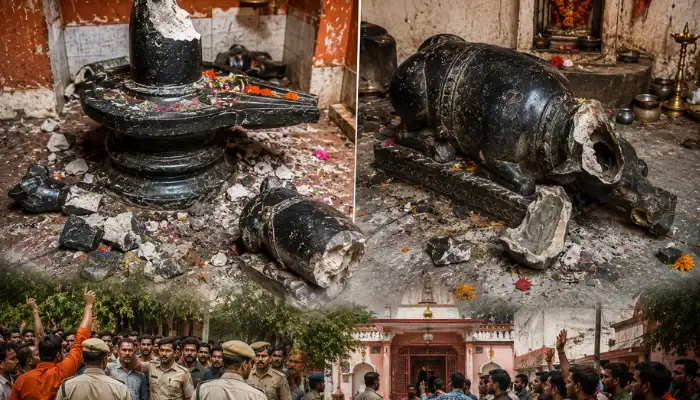
Case Summary
On 24 July 2026, in Bithoor, Kanpur, Uttar Pradesh, two ancient Shiva temples were vandalised by unknown miscreants, causing deep hurt to the religious sentiments of the local Hindu community. The Shivlings and Nandi idols, consecrated idols of the Hindu temples, were desecrated at two temples situated approximately 10 metres apart, with their broken fragments found scattered outside the temple premises. The incident was discovered during routine morning prayers by local councillor Surav Savita, leaving devotees shocked and distressed. The desecration of these Hindu places of worship sparked widespread outrage among local Hindus, who gathered at the temples and demanded strict legal action against those responsible. Both temples are over 40 years old and have long served as important centres of worship for the surrounding Hindu community. Police reached the spot, secured the area, and examined CCTV footage from the vicinity. Based on the investigation, Nemchand alias Maidani, a resident of Bithoor, was taken into custody. During questioning, he confessed to vandalising the temples. Police stated that the investigation is continuing and that further legal action is underway. Heavy police deployment remained in the area following the incident, as the desecration of the sacred Hindu temples deeply hurt the religious sentiments of Hindu devotees.
Why it is Hate Crime ?
The primary category for this case is: Attack on Hindu religious representations. The first subcategory for this case is: Attack on Temples. In Hinduism, a temple is the abode of the Deity. The Deity in the Temple is consecrated, thereby making it a real, breathing entity. Hindus believe that not just the Deity but the temple premises themselves are sacred to Hindus since Hindus hold the faith that the entire Temple space is an amalgamation of the divine energy of the deity. Given the central significance of Temples in Hindu Dharma, any attack against a Hindu Temple or its peripheral premises is an attack on the faith itself and is born out of animosity towards the faith, of which the Temple is a central tenet. Any manner of attack against a Temple and/or its premises would therefore be considered a religiously motivated hate crime. The other subcategory for this case is: Desecration of Hindu religious symbol. Icons and symbols or a religious representation of a spiritual ideal are widely revered in Hinduism. Iconography is of vital significance in the Hindu milieu. It helps connect people’s spiritual beliefs with the real world. Iconography within the Hindu faith takes several shapes and forms. Murtis are of most significance to Hindus, to which daily rituals, prayers and offerings are done. Besides the murtis, there are several other symbols which have deep significance in the Hindu faith – the Om and Swastika for example. Since these Hindu religious symbols hold paramount importance in Hinduism, any desecration of symbols, icons, murtis, religious representations and manifestations, is driven by animosity towards the faith itself which manifests itself through these murtis, icons and symbols. Therefore, any desecration of these Hindu religious symbols and representations is considered religiously motivated hate crimes under this category. The vandalism of the two ancient Shiva temples in Bithoor was not merely an act of damage to physical property; it was an attack on sacred Hindu religious symbols and a direct assault on the religious sentiments of the Hindu community. In Hinduism, the Shivling is the holiest representation of Lord Shiva, while Nandi symbolises unwavering devotion and stands as the divine guardian of Shiva. A Hindu temple is itself regarded as a sacred space imbued with divine presence. The deliberate desecration of these consecrated idols inside places of worship deeply wounded the faith and dignity of Hindu devotees. The actions of the accused demonstrate a conscious disregard for the sanctity of Hindu places of worship. In Hinduism, Temples are not just ordinary structures; they occupy a central place in Hindu religious life as sacred spaces where devotees worship the consecrated deity and participate in religious rituals. Likewise, devotees have deep reverence for their deities, considering them sacrosanct. Therefore, an attack on such a place of worship directly interferes with the community's ability to practise and express their faith while violating the sanctity attached to the temple and its deity. The destruction of consecrated Shivlings and Nandi idols required direct interference with objects that are central to Hindu worship, reflecting disrespect and animosity towards symbols held sacred by millions of Hindus. Such acts inflict not only physical damage but also emotional and spiritual harm upon the Hindu community by violating spaces that devotees regard as holy and inviolable. These incidents are not random acts of vandalism, but premeditated attacks directed at the Hindu community and its sacred places of worship. Such attacks leave Hindu devotees feeling vulnerable, marginalised, and insecure. Acts of temple vandalism and deliberate idol desecration, as demonstrated in this case, are seen as deeply offensive and sacrilegious. Such actions often stem from entrenched animosity and an intent to insult the faith. This clear attack on religious sentiments exemplifies hate and justifies its inclusion in the tracker. It is important to mention here that though the last update was that the miscreants were unknown, regardless, the action stemmed from hatred against Hinduism and resulted in the desecration of the sacred temple and would therefore be considered a religiously motivated hate crime.


Case Status
Complaint filed


Perpetrators Details
Perpetrators
Unknown
Perpetrators Range
Unknown
Perpetrators Gender
unknown
 Sources




