Hindu sentiments hurt by derogatory remarks made against Hindu gods and goddesses in Kushinagar, Uttar Pradesh
 Kushinagar, Uttar Pradesh, India
  19 July, 2026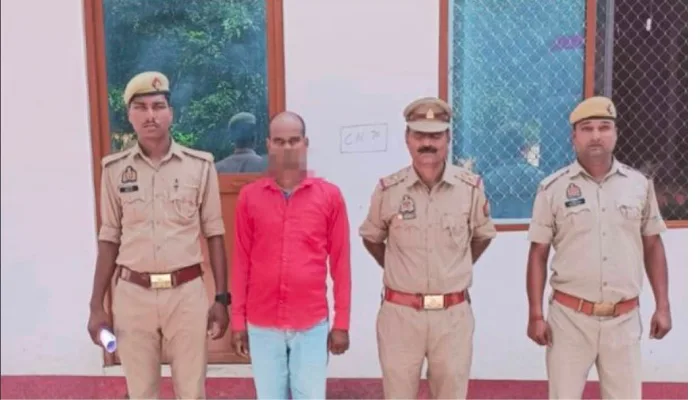
Case Summary
In the Vishunpura Police Station limits of Kushinagar district, Uttar Pradesh, Hindu religious sentiments were hurt after objectionable remarks targeting Lord Shri Ram and other Hindu gods and goddesses were circulated on social media. Following complaints from members of Hindu organisations, Vishunpura Police registered an FIR, initiated an investigation, and arrested Tuntun Kumar under the Bharatiya Nyaya Sanhita (BNS) and the Information Technology Act in connection with the social media content. According to a press note issued by Vishunpura Police, a social media post containing objectionable remarks against Hindu gods and goddesses came to the notice of the police. Taking cognisance of the matter, Crime No. 209/2026 was registered at Vishunpura Police Station. The accused was identified as Tuntun Kumar, son of Suraj Kumar, a resident of Bengali Patti under the jurisdiction of Vishunpura Police Station in Kushinagar district. A few days before the arrest, office-bearers of the Rashtriya Bajrang Dal submitted a written complaint (tahrir) at Vishunpura Police Station seeking legal action against Tuntun Kumar. The complaint stated that he had uploaded a video on social media containing objectionable language directed at Lord Shri Ram and other Hindu gods and goddesses. It further stated that the content had hurt the religious sentiments of the Hindu community and posed a threat to communal harmony in the locality. The complaint was submitted by District President Vinay Kumar Yadav, District Vice President Jwala Patel, Block President Madhusudan Chauhan, Block Vice President Mangu Kushwaha, Block General Secretary Jayprakash Kushwaha, Block Secretary Vivek Kushwaha, Block Cow Protection Head Santosh Yadav, International Hindu Parishad Block President Rajan Singh, City Vice President Nandu Jaiswal, Arpit Rai, Rajesh, Ramu, Ankush Patel, and other office-bearers. Following receipt of the complaint, Vishunpura Police initiated an investigation into the social media content. After the investigation, Vishunpura Police arrested Tuntun Kumar to maintain peace and public order. He was booked under Sections 299 and 353(2) of the Bharatiya Nyaya Sanhita (BNS) and Section 67 of the Information Technology Act. The arrest was carried out under the supervision of Station House Officer (SHO) Shani Kumar Jawla, with Sub-Inspector Ajati Kumar and Constable Surendra Yadav forming part of the arresting team. SHO Shani Kumar Jawla stated that the police had acted on the complaint received, conducted an investigation into the matter, and taken legal action in accordance with the provisions of the Bharatiya Nyaya Sanhita and the Information Technology Act.
Why it is Hate Crime ?
The primary category is: Hate speech against Hindus. The subcategory for this case is: Anti-Hindu slurs and mocking faith. Anti-Hindu slurs and the deliberate mocking of the Hindu faith owing to religious animosity involve the usage of derogatory terms, stereotypes, or offensive references to religious practices, symbols, or figures. One of the common anti-Hindu slurs used against Hindus is “cow-worshipper” and “cow piss drinker”. The intention of using this term is to demean and mock Hindus as a group and their religious beliefs since Hindus consider the cow holy. Additionally, some symbols and the slurs attached to them have a historical context that exacerbates the insult, hate, stereotyping, dehumanisation and oppression against Hindus. Cow worship has been used for centuries to denigrate Hindus, insult their faith and oppress Hindus specifically as a religious group. There has been overwhelming documentation about how cow slaughter has been used to persecute Hindus, with cow meat being thrown in temples and places of worship. There has also been overwhelming documentation where cow meat (beef) has been force-fed to Hindus to either forcefully convert them to Islam or denigrate their faith. Apart from cow worship, the Swastika – which holds deep religious significance for the Hindus – has also been misinterpreted and distorted to use as a slur against Hindus. Similarly, the worship of the Shivling has been used by supremacist ideologies and religions to denigrate Hindus owing to religious animosity. Such slurs and denigration stem from inherent animosity and hate towards Hindus and their faith; therefore, it is categorised as hate speech targeted at Hindus specifically owing to their religious identity. The social media content in this case constitutes hate speech because it was directed against Lord Shri Ram and other Hindu gods and goddesses, who are sacred to the Hindu faith. Speech that uses derogatory or insulting language to mock, demean, or abuse revered religious figures targets the beliefs and identity of the community that worships them. Such expression goes beyond disagreement or criticism of a religion and instead attacks the religious symbols and objects of veneration that are central to the faith, thereby offending the religious sentiments of Hindu devotees. Lord Shri Ram is one of the most revered deities in Hinduism and is worshipped by millions of Hindus as the embodiment of dharma (righteousness), truth, justice, sacrifice, and ideal conduct. Likewise, other Hindu gods and goddesses occupy a sacred position within Hindu religious practice and are integral to the spiritual, cultural, and devotional lives of Hindus. Insulting or using derogatory language against these deities is therefore perceived not merely as an insult to individual believers but as an affront to the Hindu faith itself and to the religious identity of those who worship them. Individuals who publicly direct derogatory remarks at Hindu religious figures or sacred symbols seek to demean and ridicule the religious beliefs of the community that venerates them. Such conduct attacks not only the religious figures themselves but also the identity and dignity of their followers, fostering hostility, reinforcing negative stereotypes, and deepening communal divisions. The public dissemination of such content, particularly through social media, amplifies its impact by exposing a wider audience to material capable of insulting, provoking, and denigrating a religious community. By choosing to direct objectionable remarks specifically at Lord Shri Ram and other Hindu deities, the content focused on symbols that are held sacred by Hindus. The selection of these religious figures as the object of ridicule demonstrates that the speech was directed at the Hindu religion rather than at any specific individual or secular issue. The offensive nature of the content derived from its focus on revered Hindu deities, making the Hindu faith itself the subject of mockery. Such incidents often reflect deep-seated hostility towards Hindus and Hinduism, with perpetrators expressing that hostility by mocking, insulting, or denigrating beliefs, deities, scriptures, symbols, and religious practices that are held sacred by Hindus. By directing offensive content at revered figures of the Hindu faith, such acts seek not only to hurt the religious sentiments of individual devotees but also to demean the collective religious identity of the Hindu community. This form of expression extends beyond mere criticism or disagreement and instead serves to ridicule the faith, undermine its sanctity, and portray it as worthy of contempt. In many instances, such conduct also reinforces narratives of religious superiority by disparaging Hindu beliefs and traditions, thereby fostering prejudice, hostility, and disrespect towards Hindus and their faith. The public dissemination of such content, particularly through social media, further amplifies its impact by enabling the denigration of sacred religious figures before a wider audience, increasing the potential for communal discord and normalising hostility towards Hinduism. Disclaimer: The Hinduphobia Tracker has recorded 20 July 2026 as the date of this incident, as this is the date on which the complaint regarding the objectionable social media video was lodged with the police. Although the arrest and media reports were published on 23 July 2026, the exact date on which the video was created or uploaded is not available in the public domain. Accordingly, the date of the first officially documented complaint has been used for the purpose of recording this incident.


Case Status
Arrested


Perpetrators Details
Perpetrators
Others
Perpetrators Range
One Person
Perpetrators Gender
male
 Sources




