Hindu deities mocked, denigrated by former Cockroach Janta Party spokesperson
 Delhi, Delhi, India
  9 June, 2017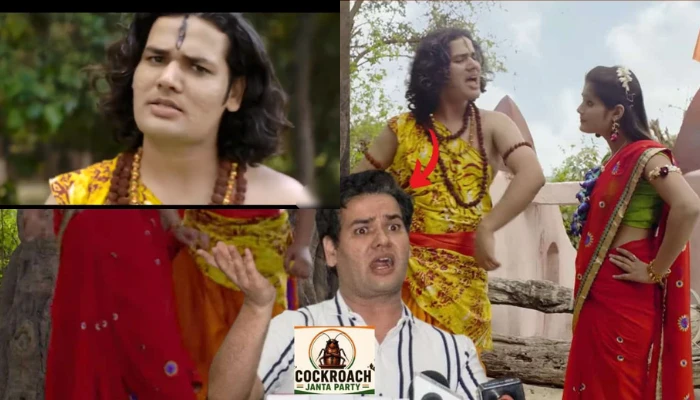
Case Summary
Hindu religious sentiments were hurt after Vijeta Dahiya, one of the founding members of the Cockroach Janata Party (CJP), was found to have produced and featured in a music video that mocked and insulted Hindu deities. The video depicted Lord Shiva and Goddess Parvati in a derogatory and demeaning manner. Although the video had been released earlier, it resurfaced and gained widespread attention after Dahiya emerged as a prominent face of the CJP, leading to widespread outrage among Hindus over his disparaging portrayal of revered Hindu gods and goddesses. The matter came to light after a Haryanvi music video, Bhole Cutting Kara Le, produced in 2017 by Dahiya's production house, Unmaad Artworks, in collaboration with Mor Studio, went viral. The video featured Vijeta Dahiya portraying Lord Shiva conversing with Goddess Parvati. In one scene, Goddess Parvati asked Lord Shiva, "You smoke a chillum. Who will consider you a god?" to which the character portraying Lord Shiva replied, "I can't do anything about people who say 'Bam' and smoke a chillum. Being Sanghi is not a crime." The video showed Lord Shiva and Goddess Parvati in a satirical setting and included a political reference in the dialogue attributed to the character portraying Lord Shiva. Following its circulation, many Hindus criticised the portrayal, saying it mocked Hindu deities and mixed political messaging with religious figures. The controversy also drew attention to Dahiya's professional background. Before becoming a spokesperson for the Cockroach Janata Party (CJP), he had worked as the chief researcher and scriptwriter for YouTuber Dhruv Rathee. Dahiya was responsible for researching and scripting content for Rathee's videos before joining the political movement. He was also the owner of Unmaad Artworks and had directed the Haryanvi films Dararen and Opri Parai. Dhruv Rathee is an infamous YouTuber known for his anti- Hindu and anti-India content, frequently focusing on Hinduism, Hindutva, the BJP, the RSS, and Hindu religious and social issues. Over the years, he had repeatedly portrayed Hindu beliefs, traditions, religious practices, and organisations in a negative light. Dahiya's earlier association with Rathee came under renewed scrutiny following the resurfacing of the music video and his past remarks concerning Hindu deities and religious figures. The resurfacing of the video also brought renewed attention to Dahiya's earlier public remarks. Videos circulating on social media showed him calling Jagadguru Adi Shankaracharya a "hypocrite," claiming that Lord Ram consumed meat, and making derogatory remarks about Pandits. Along with the 2017 music video, these remarks form part of a repeated pattern of disparaging Hindu deities, religious figures, and core elements of the Hindu faith. During the Cockroach Janata Party's protest at Jantar Mantar on 6 June 2026, Dahiya was confronted by a group of protesters over his past remarks targeting Hindu deities and religious traditions. Videos of the exchange circulated widely on social media, showing protesters questioning him over his statements about Lord Ram, Jagadguru Adi Shankaracharya, and Brahmanism, while accusing him of repeatedly making anti-Hindu remarks. Although the Cockroach Janata Party claimed that the confrontation was an attempt to divert attention from its education-focused campaign, Dahiya's past statements remained closely associated with the movement. The episode highlighted the contradiction between the CJP's stated objective of advocating educational reforms and the repeated targeting of Hindu deities, religious figures, and traditions by one of its founding members and principal public faces. The controversy surrounding Vijeta Dahiya also drew attention to the broader activities of the Cockroach Janata Party (CJP). Although the movement presented itself as a youth-led campaign seeking educational reforms, accountability for examination irregularities, and transparency in governance, several controversies involving its leaders, spokespersons, and participants centred on remarks concerning Hindu deities, religious traditions, and sacred symbols. Notably, the Cockroach Janata Party (CJP) emerged in mid-May 2026 as a satirical, youth-led online movement that rapidly transformed into a mass mobilisation platform for students and unemployed graduates through social media engagement. It was founded by Abhijeet Dipke, a member of the Aam Aadmi Party (AAP), who repurposed a controversial public remark comparing unemployed youth to "cockroaches" as a symbol of collective identity and protest. While Dipke initially portrayed the CJP movement as a genuine, non-partisan, and constitutionally aligned initiative demanding educational reforms, accountability for the National Eligibility cum Entrance Test (NEET) examination paper leak, and the resignation of officials, including the Union Education Minister, the movement later became associated with several controversies involving remarks about Hindu deities, religious slogans, and religious identity. Its co-founders, spokespersons, and participants made derogatory remarks about Hindu deities and religious slogans such as "Jai Shri Ram", abused members of the Hindu community, raised slogans such as "Naam rahega Allah ka" and "Naara-e-Taqbeer, Allahu Akbar", and frequently directed criticism towards Hindu organisations, activists, and the government, which they described as a "Hindutva-led government". By the time it held its first major street-level protest at Jantar Mantar on 6 June 2026, the movement had expanded beyond its original campaign on educational issues. On 6 June 2026, Dipke flew in from the United States to lead the protest. AAP-aligned figures attended the event while presenting themselves as neutral, anti-establishment voices. However, alongside demands relating to education, the protest also became associated with several controversies involving remarks about Hindu religious beliefs and symbols. Dahiya's controversial videos and remarks mocking Hindu deities and religious figures were already in the public domain before the Cockroach Janata Party (CJP) was formed. Despite this, the party appointed him as one of its official spokespersons, indicating that his past record did not prevent him from becoming one of the movement's principal public representatives. It was only on 21 July 2026, following the viral burger video during the party's hunger strike, that Dahiya was removed from his position as spokesperson.
Why it is Hate Crime ?
This case is being added to the tracker under the primary category: Hate Speech against Hindus. The subcategory selected is: Anti-Hindu slurs, mocking faith. Anti-Hindu slurs and the deliberate mocking of the Hindu faith owing to religious animosity involve the usage of derogatory terms, stereotypes, or offensive references to religious practices, symbols, or figures. One of the common anti-Hindu slurs used against Hindus is “cow-worshipper” and “cow piss drinker”. The intention of using this term is to demean and mock Hindus as a group and their religious beliefs since Hindus consider the cow holy. Additionally, some symbols and the slurs attached to them have a historical context that exacerbates the insult, hate, stereotyping, dehumanisation and oppression against Hindus. Cow worship has been used for centuries to denigrate Hindus, insult their faith and oppress Hindus specifically as a religious group. There has been overwhelming documentation about how cow slaughter has been used to persecute Hindus, with cow meat being thrown in temples and places of worship. There has also been overwhelming documentation where cow meat (beef) has been force-fed to Hindus to either forcefully convert them to Islam or denigrate their faith. Apart from cow worship, the Swastika – which holds deep religious significance for the Hindus – has also been misinterpreted and distorted to use as a slur against Hindus. Similarly, the worship of the Shivling has been used by supremacist ideologies and religions to denigrate Hindus owing to religious animosity. Such slurs and denigration stem from inherent animosity and hate towards Hindus and their faith; therefore, it is categorised as hate speech targeted at Hindus specifically owing to their religious identity. The depiction of Lord Shiva and Goddess Parvati in this case goes beyond satire or political commentary. Both deities occupy an exalted position in Hinduism and are worshipped by millions of devotees across the world. Deliberately portraying them in a demeaning and irreverent manner targets figures that are central to Hindu faith and worship. Such representations do not merely comment on religion but ridicule sacred objects of devotion, making Hindu religious identity itself the subject of mockery. The context of the video further reinforces its religious character. The dialogue attributed to the character portraying Lord Shiva trivialised the deity through references to drug consumption while simultaneously introducing contemporary political messaging. By placing a revered Hindu deity in such a setting, the video used a sacred religious figure as a vehicle for ridicule and political commentary. The resulting mockery was directed not at an institution or ideology but at one of Hinduism's most revered gods. The significance of this incident is further strengthened by Dahiya's broader public record. The resurfacing of the music video also brought renewed attention to his earlier remarks, in which he described Jagadguru Adi Shankaracharya as a "hypocrite", claimed that Lord Ram consumed meat, and made derogatory remarks about Pandits. Viewed alongside the 2017 video, these statements reveal a repeated pattern of targeting Hindu deities, revered religious figures, and core elements of the Hindu faith rather than an isolated or inadvertent act. The chronology of events is also significant. Dahiya's videos and public remarks mocking Hindu deities and religious figures were already in the public domain before the Cockroach Janata Party (CJP) was formed. Despite this, the party appointed him as one of its official spokespersons and principal public representatives. His earlier record of disparaging Hindu beliefs did not prevent him from assuming a leadership role within the movement. It was only after the controversy surrounding the viral burger video during the party's hunger strike that he was removed from his position, while his repeated remarks targeting Hindu deities and religious traditions had not attracted any disciplinary action. For these reasons, the incident is documented as a Hate Crime. The video deliberately mocked revered Hindu deities, while Dahiya's subsequent public statements and his continued elevation within the CJP demonstrate that the incident formed part of a broader pattern of disparaging Hindu religious beliefs rather than an isolated expression. This sustained targeting of sacred Hindu figures makes hostility towards Hinduism central to the incident. Disclaimer: The Hinduphobia Tracker records the date when the victim's ordeal began rather than when it was reported. Here, since the exact date was not available, we recorded this case using both the year of origin and the date of reporting for documentation purposes. The music video at the centre of the controversy was produced in 2017, while the report bringing renewed attention to it was published on 10 June 2026. Since the case concerns the resurfacing of earlier content, both dates have been considered to accurately reflect the origin of the material and the timeline of the controversy. Therefore, 10 June 2017 was added as the date of the incident.


Case Status
Unknown


Perpetrators Details
Perpetrators
Others
Perpetrators Range
One Person
Perpetrators Gender
male
 Sources




