Sacre Hindu deity Khatushyam Baba mocked and insulted by renowned preacher in Ajmer, Rajasthan
 Ajmer, Rajasthan, India
  20 July, 2026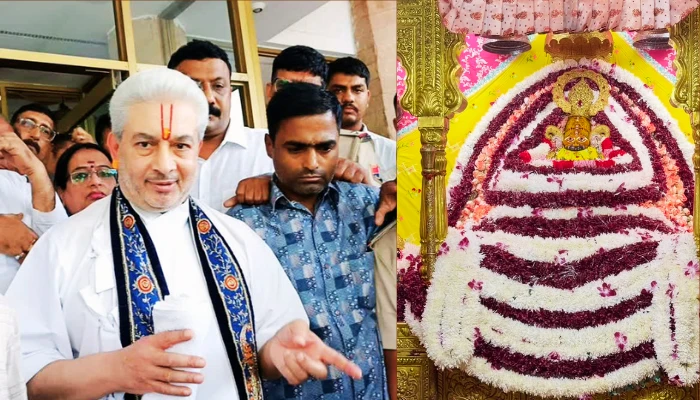
Case Summary
In Ajmer, Rajasthan, a revered Hindu deity, Lord Khatu Shyam Ji, was insulted and derogatory remarks were passed against the Hindu deity by a renowned preacher during a religious discourse. The religious sentiments of Hindu devotees were hurt when renowned preacher and National Saint Kirit Bhai called Lord Khatu Shyam Ji the "son of a devil". He further claimed that Lord Khatu Shyam Ji had no mention in any Hindu religious scripture, questioned the deity's existence, and questioned why devotees worshipped him. The remarks triggered widespread outrage among Khatu Shyam devotees. The incident occurred on Tuesday, 21 July 2026, during a religious discourse organised at Jawahar Rangmanch in Ajmer. During the discourse, Kirit Bhai made the controversial remarks about Lord Khatu Shyam Ji before a gathering of devotees. According to those present at the event, he questioned the existence and mention of Lord Khatu Shyam Ji and referred to the deity as the "son of a devil". The remarks immediately sparked outrage among the audience, and news of the incident quickly spread among Khatu Shyam devotees and followers, leading to widespread resentment. Notably, Khatu Shyam Ji is a highly revered Hindu deity worshipped as an incarnation of Barbarika, the grandson of the Pandava prince Bhima, a powerful figure in regional Indian folklore. He is regarded by millions of devotees as "Shyam Baba". The Khatu Shyam temple in Rajasthan is one of Hinduism's most prominent pilgrimage sites, attracting lakhs of devotees every year who worship the deity with deep faith and reverence. Following the programme, a large number of Khatu Shyam devotees gathered outside the private hotel where Kirit Bhai was staying and staged a protest. The protesters demanded that he issue a public apology, arguing that since the controversial remarks were made from a public stage, the apology should also be delivered publicly. Police reached the spot to maintain law and order as devotees continued their protest outside the hotel. As the protests intensified, Kirit Bhai apologised and admitted that he was mistaken. He stated that if his words had hurt the religious sentiments of any Shyam devotee or Baba Shyam, he sincerely sought forgiveness from both the devotees and the deity. However, many protesters maintained that a private apology was insufficient and insisted that he apologise publicly from the same platform where the remarks had been made. Several Khatu Shyam organisations also expressed their displeasure over the incident.
Why it is Hate Crime ?
This case is being added to the tracker under the primary category: Hate Speech against Hindus. The subcategory selected is Anti-Hindu slurs, mocking faith. Anti-Hindu slurs and the deliberate mocking of the Hindu faith owing to religious animosity involve the usage of derogatory terms, stereotypes, or offensive references to religious practices, symbols, or figures. One of the common anti-Hindu slurs used against Hindus is “cow-worshipper” and “cow piss drinker”. The intention of using this term is to demean and mock Hindus as a group and their religious beliefs since Hindus consider the cow holy. Additionally, some symbols and the slurs attached to them have a historical context that exacerbates the insult, hate, stereotyping, dehumanisation and oppression against Hindus. Cow worship has been used for centuries to denigrate Hindus, insult their faith and oppress Hindus specifically as a religious group. There has been overwhelming documentation about how cow slaughter has been used to persecute Hindus, with cow meat being thrown in temples and places of worship. There has also been overwhelming documentation where cow meat (beef) has been force-fed to Hindus to either forcefully convert them to Islam or denigrate their faith. Apart from cow worship, the Swastika – which holds deep religious significance for the Hindus – has also been misinterpreted and distorted to use as a slur against Hindus. Similarly, the worship of the Shivling has been used by supremacist ideologies and religions to denigrate Hindus owing to religious animosity. Such slurs and denigration stem from inherent animosity and hate towards Hindus and their faith; therefore, it is categorised as hate speech targeted at Hindus specifically owing to their religious identity. The other sub-category selected is - Subversion of scriptures. Subverting the religious scriptures of Hindus has particularly devastating consequences. Subversion of the scriptures of Hindus is often done to justify or promote hatred, discrimination, or violence against specific individuals or groups of Hindus. Religious scriptures are often nuanced and those who harbour religious animosity towards Hindus often misquote or misrepresent the scripture to legitimise their animosity and hate towards the faith and its adherents. Any such misquoting of scriptures or subversion to justify hate, violence and discrimination against Hindus owing to religious animosity is hate speech and is categorised as such. The case was included in the Hinduphobia Tracker because a revered Hindu deity was publicly insulted during a religious discourse, hurting the religious sentiments of Hindu devotees. Lord Khatu Shyam Ji is worshipped by millions of Hindus with deep faith and reverence and questioning the deity's legitimacy while using abusive language against him directly targeted an important object of Hindu worship. The religious trigger in this case was not a personal disagreement but a public attack on a sacred Hindu deity. By referring to the deity with a derogatory expression and questioning his place within Hindu tradition, the speaker went beyond expressing a theological opinion. The remarks demeaned a deity held sacred by millions and ridiculed the religious beliefs of devotees. Such conduct sought to undermine the legitimacy of Hindu worship and conveyed disrespect towards a central aspect of Hindu faith, making religion the direct target of the act. Furthermore, the remarks were made from the stage of a religious discourse, where devotees had assembled with the expectation of receiving spiritual guidance and religious teachings. Instead of respecting the sanctity of that setting, the platform was used to insult a revered Hindu deity. This aggravated the offence because the derogatory remarks were delivered in a religious environment where reverence for Hindu beliefs was expected, demonstrating a conscious disregard for the faith and the religious sentiments of the devotees present. Additionally, the speaker's assertion that Lord Khatu Shyam Ji has no mention in Hindu scriptures was not merely a theological observation but amounted to a public denial of a deity revered by millions of Hindus. Within Hinduism, traditions of worship draw upon a wide range of scriptural, regional, and devotional sources that extend beyond a single religious text. By dismissing the deity's legitimacy on the grounds of an alleged lack of scriptural mention, the speaker sought to undermine established Hindu religious traditions and the beliefs of devotees. Such remarks distorted the understanding of Hindu religious traditions and denigrated a long-standing object of Hindu worship, thereby contributing to the insult directed at the faith and its followers. Significantly, the remarks cannot be treated as spontaneous or uninformed. As an established preacher who delivered discourses on Hindu scriptures and spiritual traditions, the perpetrator was expected to possess a thorough understanding of Hindu deities and the religious beliefs associated with them. Remarks made by such a figure carried greater credibility and influence among devotees, making the insult far more serious than if it had come from an ordinary individual. The statements were therefore made with full awareness of their likely impact and had a greater capacity to demean a revered Hindu deity and hurt the religious sentiments of devotees. Although he later apologised, claiming that he had been unaware, the apology followed widespread public outrage and did not negate the fact that the insulting remarks had already been made publicly from a religious platform. Finally, the nature, setting, and content of the remarks demonstrated that they were deliberate rather than inadvertent. By publicly demeaning Lord Khatu Shyam Ji before a gathering of devotees, the perpetrator displayed contempt for a revered Hindu deity and disregard for the religious sentiments of his followers. His conduct reflected prejudice towards Hindu beliefs and transformed a religious discourse into a platform for insulting a sacred figure of the Hindu faith. For these reasons, the incident constituted a religiously motivated act of hate directed against Hinduism and its followers.


Case Status
Unknown


Perpetrators Details
Perpetrators
Others
Perpetrators Range
One Person
Perpetrators Gender
male
 Sources




