Hindu women subjected to harassment and pressure for religious conversion by village chief and his son in Chandauli, Uttar Pradesh
 Chandauli District, Uttar Pradesh, India
  14 July, 2026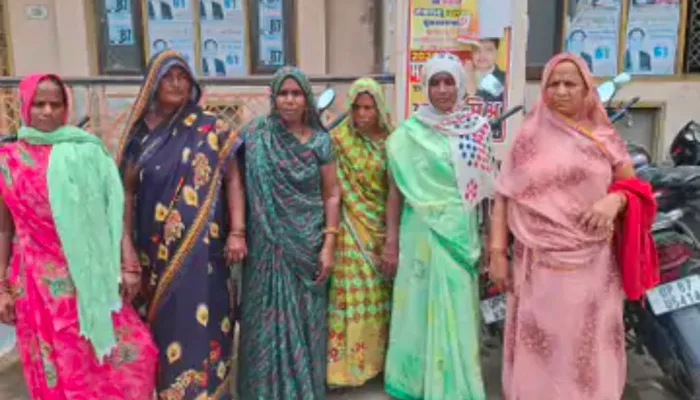
Case Summary
In Gopalapur village, located in the Mughalsarai (Deen Dayal Upadhyay Nagar) tehsil of Chandauli district, Uttar Pradesh, several Hindu women were subjected to harassment and pressured by the village pradhan and his son to convert their religion. They were also threatened with eviction from the land on which their families had been residing for nearly three generations if they refused to abandon their faith. On 15 July 2026, the Hindu women approached the Sub-Divisional Magistrate (SDM) and submitted a written complaint detailing the harassment, coercion to convert, and threats of eviction. The complainants, Kaushalya Devi, Hiravati Devi, Tetra Devi, Babbo Devi, Sharda Devi, Rajmani and Gyanti, submitted a written complaint to the Sub-Divisional Magistrate (SDM), stating that the village pradhan and his son had been telling them to either convert their religion or vacate the land. They stated that their families possessed a 52-biswa patta (land lease) for the property and had lived there for generations. According to the complaint submitted to the Sub-Divisional Magistrate, the pressure to convert was linked to an ongoing dispute over the land, where a Panchayat Bhawan had been proposed for construction. Rajmani stated that the village pradhan had instructed her to either change her religion or vacate the land. The women further stated that they were subjected to continuous threats and intimidation in an attempt to force them to comply with these demands. Gyanti stated that her father-in-law had excavated a pond on the land several years earlier for fish farming and that her family had been residing there ever since. She further stated that the accused repeatedly attempted to demolish the boundary wall surrounding the property. She also said that the village pradhan's son threatened to kill her while brandishing a country-made pistol. The women stated that their families depended on daily wage labour for their livelihood and that the repeated threats had created an atmosphere of fear and insecurity. Seeking protection and legal action, the Hindu women submitted a written complaint to Sub-Divisional Magistrate Rajeev Mohan Saxena, requesting security for their families, protection of their land and homes, and the freedom to practise their religion without coercion. The Sub-Divisional Magistrate confirmed receipt of the complaint and stated that an inquiry would be conducted and appropriate action would be taken in accordance with the law.
Why it is Hate Crime ?
The primary category for this case is: Predatory Proselytisation. The subcategory for this case is: Harassment, threats, coercion for conversion. Harassment covers a wide range of behaviours of an offensive nature. It is commonly understood as behaviour that demeans, humiliates, and intimidates a person, including threats and coercion. Harassment and threats, in this case, find their root in discriminatory grounds which have the effect of nullifying a person’s rights or infringing upon his freedom to exercise his right specifically owing to the victim’s religious identity. Verbal and physical threats and psychological or physical harassment are often used against Hindu victims because they choose to practice their professed religion. Religious harassment also includes forced and involuntary conversions by harassment, threats or coercion. Coercion includes intimidatory tactics like force-feeding a Hindu victim beef to convert to another religion, forceful circumcision, etc. In several cases documented, non-Hindu perpetrators or those who harbour specific animosity towards Hinduism harass victims simply based on their religious identity. Such cases often also include harassment to ensure the Hindu victim abandons his/her professed religion and adopts the religion of the perpetrator. Such cases where Hindu victims are harassed to convert to the perpetrator’s religion are rooted in animosity towards the victim’s religious identity and are therefore documented as religiously motivated hate crimes. This case has been classified as a religiously motivated hate crime because Hindu women were subjected to sustained pressure to abandon their faith while facing threats, intimidation and the prospect of losing the land on which their families had been residing for nearly three generations. They were told to either convert their religion or vacate the land. The demand for religious conversion was therefore accompanied by coercive measures rather than being left to the victims' free and voluntary choice. Such conduct goes beyond religious persuasion and amounts to coercion intended to compel the victims to renounce their professed faith. For Hindus, religion is inseparable from their identity, traditions, customs and way of life. Every individual has the fundamental right to profess, practise and preserve their religion without fear, coercion or intimidation. Forcing or pressuring Hindu women to abandon their faith directly violates their religious autonomy by denying them the freedom to decide their beliefs according to their own conscience. Rather than respecting the victims' right to continue practising Hinduism, the perpetrators sought to impose another religion upon them by linking conversion with threats affecting their homes, security and livelihood. Such coercion strikes at the very core of religious freedom and makes religion central to the offence. The women were repeatedly threatened and intimidated in support of the demand for conversion. Rajmani was told to either change her religion or vacate the land. Gyanti stated that the perpetrators repeatedly attempted to demolish the boundary wall surrounding the property and that the village pradhan's son threatened to kill her while brandishing a country-made pistol. The women further stated that their families depended on daily wage labour and had been living in fear because of the repeated threats. The combination of threats of eviction, repeated intimidation, attempts to damage their property, and threats to their lives created circumstances in which the demand for religious conversion was inseparable from fear and coercion. Rather than allowing the women to exercise their faith freely, these actions sought to pressure them into abandoning their Hindu identity by making their continued residence, safety and security contingent upon accepting another religion. Taken together, the sustained pressure to abandon Hinduism, coupled with repeated threats, intimidation and fear, demonstrates a clear disregard for the victims' right to preserve their Hindu identity and freely practise their religion. Conversion secured through coercion or the threat of adverse consequences undermines the principle of free religious choice and amounts to an attempt to impose another faith upon the victims against their will. For these reasons, this case has been documented by the Hinduphobia Tracker as a religiously motivated hate crime. Disclaimer: The available reports do not mention the religious identity of the perpetrator. Therefore, the perpetrator's religious identity has been recorded as "Unknown" for documentation purposes only. The Hinduphobia Tracker records incident dates based on when the victims' ordeal begins rather than when it is reported in the media. However, in this case, the media reports did not specify the exact date on which the victims' ordeal began. The only date mentioned was 15 July 2026, when the victims submitted their complaint to the authorities. Accordingly, 15 July 2026 has been recorded as the indicative incident date for documentation purposes only.
Victim Details
Total Victim
7
Deceased
0
Gender
- Male 0
- Female 7
- Third Gender 0
- Unknown 0
Caste
- SC/ST 0
- OBC 0
- General 0
- Unknown 7
Age Group
- Minor 0
- Adult 7
- Senior Citizen 0
- Unknown 0


Case Status
Complaint filed


Perpetrators Details
Perpetrators
Unknown
Perpetrators Range
From 2 To 5
Perpetrators Gender
male
 Sources




