Hindu religious sentiments outraged as a local youth abuses Hindu community and their faith in Raebareli, Uttar Pradesh
 Raebareli, Uttar Pradesh, India
  10 July, 2026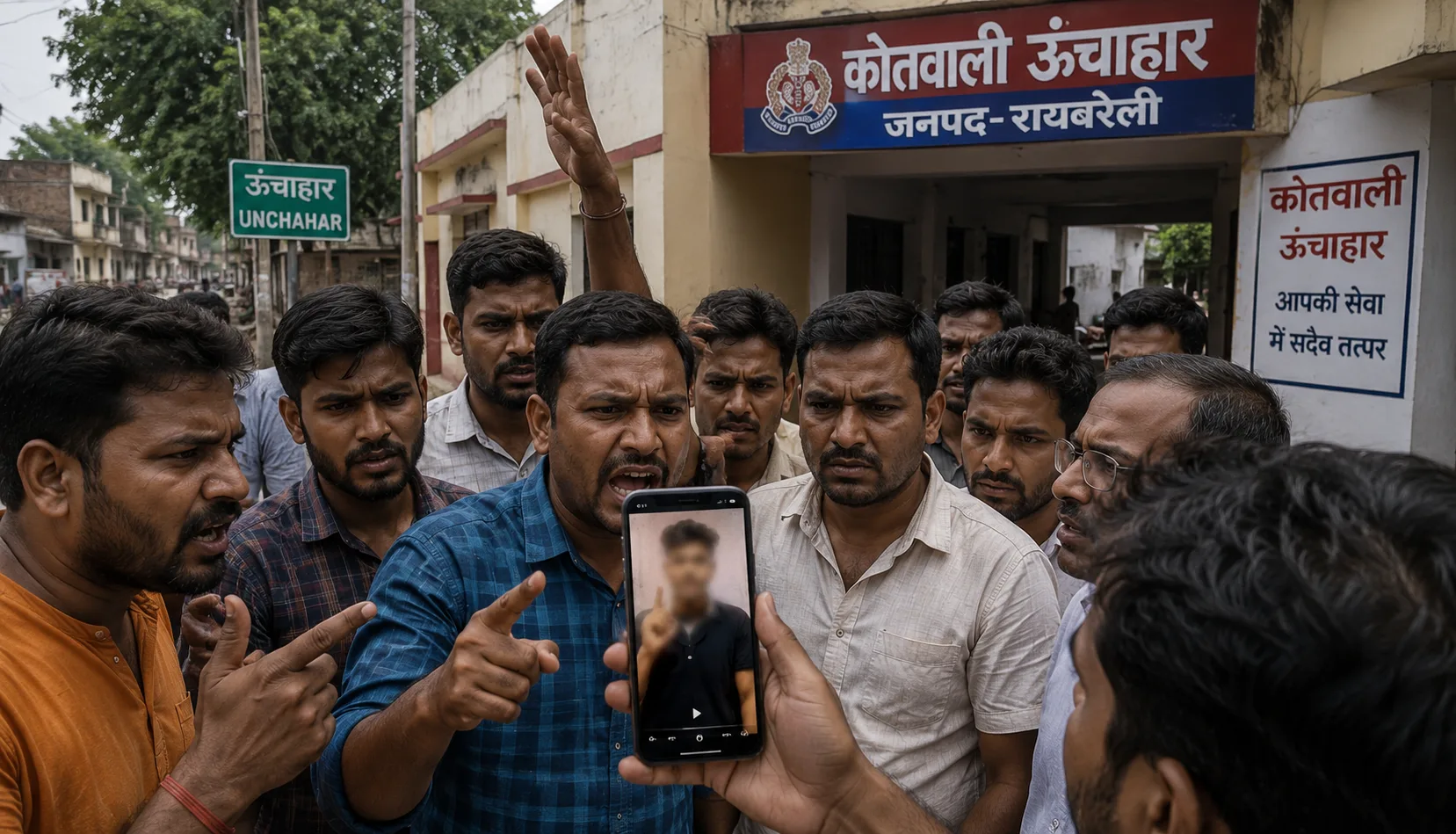
Case Summary
In Raebareli, Uttar Pradesh, Hindu religious sentiments were hurt when a local youth uploaded and circulated a video on social media containing abusive language and derogatory remarks targeting Hindus and Hinduism. This occurred in Jamunapur Chauraha on Suchi Road in the Unchahar area of Raebareli district. In the video, he referred to Hindus as "gaddar" (traitors) and associated them with serious criminal offences. He also made objectionable remarks against the Hindu faith. The video sparked widespread outrage among local residents and Hindu organisations, who stated that the remarks had deeply hurt Hindu religious sentiments and had the potential to disturb communal harmony and public peace. Members of the Hindu community condemned the video and demanded immediate legal action against the accused. After the video went viral, the Unchahar Police took cognisance of the matter and initiated an investigation. Kotwal Om Prakash Rai stated that the police were probing the viral video and that further legal action would be taken based on the findings of the investigation.
Why it is Hate Crime ?
In this case, the primary category is: Hate speech against Hindus. The subcategory for this case is: Anti-Hindu slurs, mocking faith. Anti-Hindu slurs and the deliberate mocking of the Hindu faith owing to religious animosity involve the usage of derogatory terms, stereotypes, or offensive references to religious practices, symbols, or figures. One of the common anti-Hindu slurs used against Hindus is “cow-worshipper” and “cow piss drinker”. The intention of using this term is to demean and mock Hindus as a group and their religious beliefs since Hindus consider the cow holy. Additionally, some symbols and the slurs attached to them have a historical context that exacerbates the insult, hate, stereotyping, dehumanisation and oppression against Hindus. Cow worship has been used for centuries to denigrate Hindus, insult their faith and oppress Hindus specifically as a religious group. There has been overwhelming documentation about how cow slaughter has been used to persecute Hindus, with cow meat being thrown in temples and places of worship. There has also been overwhelming documentation where cow meat (beef) has been force-fed to Hindus to either forcefully convert them to Islam or denigrate their faith. Apart from cow worship, the Swastika – which holds deep religious significance for the Hindus – has also been misinterpreted and distorted to use as a slur against Hindus. Similarly, the worship of the Shivling has been used by supremacist ideologies and religions to denigrate Hindus owing to religious animosity. Such slurs and denigration stem from inherent animosity and hate towards Hindus and their faith; therefore, it is categorised as hate speech targeted at Hindus specifically owing to their religious identity. This case is a clear example of a religiously motivated hate crime because the perpetrator deliberately targeted both the Hindu community and the Hindu faith through abusive and derogatory remarks. In the video, he referred to Hindus as "gaddar" (traitors), associated them with serious criminal offences, and made objectionable remarks against Hinduism. These statements were not directed at any individual's conduct but at an entire religious community and its faith. By vilifying Hindus on the basis of their religious identity and insulting a religion revered by millions, the accused's actions transcend the realm of personal opinion or criticism and constitute anti-Hindu hate speech rooted in religious hostility. By branding the entire Hindu community as traitors and associating them with criminality, the accused sought to malign a religious group through sweeping and derogatory generalisations. Such rhetoric demonises Hindus collectively, portraying them as inherently suspect or disloyal solely because of their religious identity. This type of speech fosters prejudice against the community, reinforces negative stereotypes, and encourages hostility towards Hindus as a group rather than targeting any specific individual for their actions. The deliberate targeting of an entire religious community in this manner amounts to a hate crime rooted in anti-Hindu hostility, as it seeks to demean and stigmatise people on the basis of their faith. The derogatory remarks directed at Hinduism further underscore the religious motivation behind the offence. Hinduism is a faith held sacred by millions of devotees, and insulting or denigrating it is not merely an attack on a set of beliefs but also on the identity, dignity and deeply held convictions of those who follow it. By making objectionable remarks against the Hindu faith, the accused demonstrated clear contempt towards a religion and its adherents. This reveals a deep-seated hostility towards Hinduism itself, making the religious motivation behind the offence unmistakable and reinforcing that this is a clear case of a religiously motivated hate crime. The manner in which the accused committed the offence further highlights its deliberate and malicious nature. Rather than making these remarks in a private setting, he recorded them in a video and uploaded them on social media, ensuring that the hateful content could reach a wide audience. This demonstrates an apparent intention to maximise the dissemination of the offensive statements and amplify the insult to Hindu religious sentiments. By using social media as a vehicle to spread derogatory remarks against Hindus and Hinduism, the accused sought to broadcast his hostility beyond an isolated audience, increasing the potential for communal discord and normalising hatred against the Hindu community. The public dissemination of such content reflects the calculated and religiously motivated nature of the offence, making it a clear case of a hate crime rooted in an anti-Hindu mindset. Since this incident meets the parameters of a religiously motivated hate crime, involving the deliberate targeting of Hindus and Hinduism through abusive and derogatory speech intended for wide public dissemination, it is being included in the Hinduphobia Tracker's hate crime database as a documented case of anti-Hindu hate. Disclaimer: Hinduphobia Tracker records incident dates based on when an offence occurs rather than when it is reported by the media. However, in this case, the reports do not specify the exact date of the incident. Therefore, 11 July 2026, the date on which the incident was reported in the media, has been recorded as the indicative incident date for documentation purposes only.


Case Status
Complaint registered


Perpetrators Details
Perpetrators
Unknown
Perpetrators Range
One Person
Perpetrators Gender
male
 Sources




