Anti-Hindu hate speech: Dravidian activist makes casteist remarks against Hindus belonging to Brahmin community and mocks sacred thread
 Tamil Nadu, India
  18 July, 2026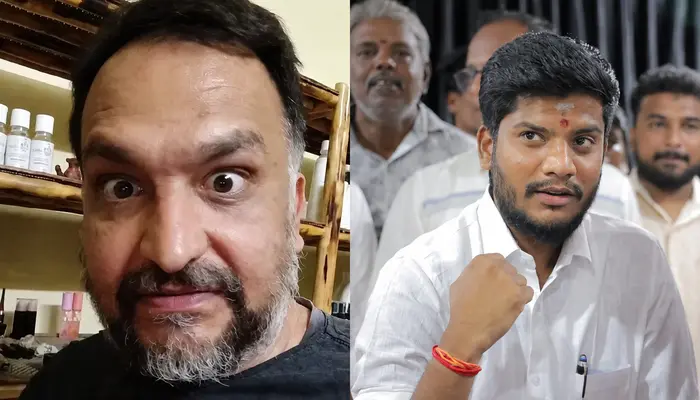
Case Summary
Hindu sentiments were outraged after DMK (Dravida Munnetra Kazhagam) supporter and so-called activist Piyush Manush posted an Instagram video in which he made casteist remarks targeting Hindus belonging to the Brahmin community. He made those remarks while criticising Tamilaga Vettri Kazhagam (TVK) MLA and HR&CE Minister Ramesh over the Palani temple land issue in Tamil Nadu. In the video, he used the derogatory Tamil expression "AAVA; AAVA BUDDHI AH KAMICHUTA; NOOLU", a caste-based slur directed at Brahmins that mocked the sacred thread traditionally worn by Brahmins as well as some other Hindu communities. Referring to the minister's purported "Brahmin colours" and "Brahmin brain", he portrayed Brahmin identity as inherently linked to corruption and asserted that temple administration should never be entrusted to Brahmins, describing such a situation as "dangerous". His remarks framed Brahmin identity itself as a disqualifying factor for holding positions connected with Hindu temples and associated the community with dishonesty and misuse of authority. Furthermore, this was not an isolated incident; Piyush Manush had a history of making caste-based remarks targeting Brahmins. Previous instances included abusive comments directed at the Podu Dikshitar Brahmin community of Chidambaram in September 2024, casteist remarks against individuals associated with Auroville and IIT Madras in July 2026, abuse targeting Justice G. R. Swaminathan on caste lines in December 2025, and a Facebook post in January 2026 in which he referred to Kizhakku News founder Badri Seshadri using a derogatory caste-based epithet while making sweeping remarks against Brahmins. Despite these repeated incidents, no action had reportedly been taken against him at the time of reporting.
Why it is Hate Crime ?
The primary category for this case is: Hate speech against Hindus. The subcategory for this case is: Anti-Hindu slurs, mocking faiths. Anti-Hindu slurs and the deliberate mocking of the Hindu faith owing to religious animosity involve the usage of derogatory terms, stereotypes, or offensive references to religious practices, symbols, or figures. One of the common anti-Hindu slurs used against Hindus is “cow-worshipper” and “cow piss drinker”. The intention of using this term is to demean and mock Hindus as a group and their religious beliefs since Hindus consider the cow holy. Additionally, some symbols and the slurs attached to them have a historical context that exacerbates the insult, hate, stereotyping, dehumanisation and oppression against Hindus. Cow worship has been used for centuries to denigrate Hindus, insult their faith and oppress Hindus specifically as a religious group. There has been overwhelming documentation about how cow slaughter has been used to persecute Hindus, with cow meat being thrown in temples and places of worship. There has also been overwhelming documentation where cow meat (beef) has been force-fed to Hindus to either forcefully convert them to Islam or denigrate their faith. Apart from cow worship, the Swastika – which holds deep religious significance for the Hindus – has also been misinterpreted and distorted to be used as a slur against Hindus. Similarly, the worship of the Shivling has been used by supremacist ideologies and religions to denigrate Hindus owing to religious animosity. Such slurs and denigration stem from inherent animosity and hate towards Hindus and their faith; therefore, it is categorised as hate speech targeted at Hindus specifically owing to their religious identity. At first glance, this incident may appear to concern only a caste-based attack directed at Brahmins rather than an instance of anti-Hindu hate speech. However, such an interpretation overlooks the fact that the accused did not merely criticise the actions of an individual office-holder or express disagreement over a public policy issue. Instead, he repeatedly invoked the minister's Brahmin identity as the basis for his criticism, portraying Brahmins as inherently unfit to administer Hindu temples and explicitly saying that their caste identity itself made them dangerous. The remarks, therefore, shifted the focus from the Palani temple land dispute to the religious identity of an entire community closely associated with Hindu religious institutions. Hindus belonging to the Brahmin community have historically been associated with the preservation and transmission of Hindu scriptures, temple rituals, religious philosophy, and priestly traditions. While Brahmins constitute only one among many Hindu communities, they remain closely linked with the functioning of Hindu temples and the continuity of Hindu religious practices. Consequently, when the accused described Brahmins as inherently dangerous in the context of temple administration and ridiculed the sacred thread ("nool"), he was not merely attacking a social category but denigrating a community whose identity is inseparable from Hindu religious life. The sacred thread itself is a revered religious symbol in several Hindu traditions, and mocking it in a derogatory manner constitutes ridicule of a Hindu religious marker. The context of the remarks further demonstrates that they were motivated by hostility towards a religious community rather than legitimate criticism of governance. If the accused had concerns regarding the Palani temple land issue or the conduct of Minister Ramesh, he could have confined his criticism to the specific decisions or actions under dispute. Instead, he attributed the alleged wrongdoing to the minister's Brahmin identity, referred to his supposed "Brahmin brain" and "Brahmin colours", and argued that Brahmins should never be entrusted with temple administration. This transformed what could have been political criticism into sweeping condemnation of an entire Hindu community on the basis of its religious identity. The accused's use of caste-based slurs such as "Aava" and his mockery of the sacred thread also reinforced this hostility. Such expressions were not employed as part of an academic or social discussion on caste but as pejorative labels intended to demean Brahmins because of their identity. By ridiculing symbols and identities closely associated with Hindu religious traditions, the remarks went beyond criticism of an individual and normalised contempt towards a section of the Hindu community. The incident also formed part of a broader and repeated pattern of conduct. Reports highlighted several previous occasions on which the accused had targeted Brahmins through abusive language, derogatory stereotypes, and caste-based insults directed at religious figures, members of the Podu Dikshitar community, judicial authorities, and public personalities. This recurring pattern indicates that the present remarks were not an isolated outburst but part of sustained hostility directed at a community closely associated with Hindu religious institutions and practices. Some may argue that the remarks were merely anti-Brahmin rather than anti-Hindu. However, such a distinction is artificial in the present context. Brahmin identity derives its meaning from the broader framework of Hindu religious tradition, and the accused's comments specifically targeted Brahmins in relation to Hindu temples, temple administration, and Hindu religious symbols. The hostility was therefore directed at a constituent community of Hindus because of its religious identity and traditional association with Hindu worship and institutions. For these reasons, this incident constitutes a form of anti-Hindu hate speech and has been included in the Hinduphobia Tracker. Disclaimer: The Hinduphobia Tracker records incidents based on when an event occurred or when the victim's ordeal began. It is important to clarify that none of the media sources covering this case has specified the exact date when the accused made those comments. Therefore, for documentation purposes, we have recorded the date based on when the incident was reported in the media, 19 July 2026.


Case Status
Unknown


Perpetrators Details
Perpetrators
Others
Perpetrators Range
One Person
Perpetrators Gender
male
 Sources




