Hindu sentiments hurt; Muslim cleric claims revered Hindu deities as Muslims who offer namaz five times a day
 Jharkhand, India
  15 July, 2026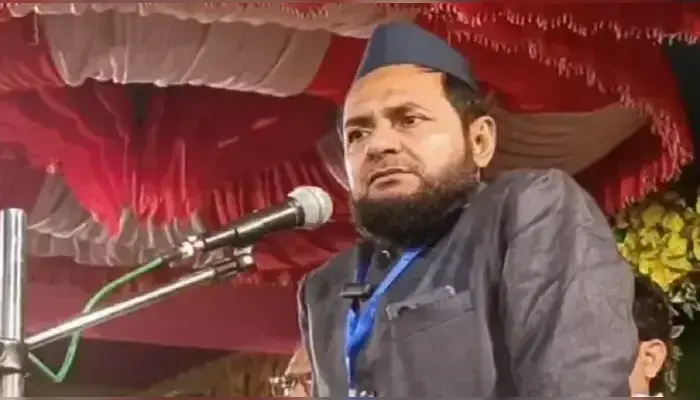
Case Summary
Hindu religious sentiments were outraged after a Muslim cleric, Maulana Jarjis Ansari, of Etawah, Uttar Pradesh, made derogatory remarks on social media claiming that Lord Shri Krishna was a Muslim who offered namaz five times a day and further alleged that Lord Shri Ram was also a namazi. Although the video was reported to be old and had been recorded during a religious event in Jharkhand, it went viral again, triggering strong reactions from Hindu organisations, saints and religious leaders, particularly in Mathura, Uttar Pradesh. Leaders of several Hindu organisations condemned the remarks, stating that they deeply hurt the religious sentiments of millions of Hindus and amounted to an insult to the Hindu faith. Mahendra Pratap Singh, president of the Shri Krishna Janmabhoomi Mukti Nyas, criticised the comments as a direct attack on Hindu beliefs and pointed out that Lord Shri Krishna had lived thousands of years before the advent of Islam. He also stated that the Maulana lacked knowledge of the Shrimad Bhagavad Gita and demanded that he apologise to the Hindu community. Vrindavan-based kathavachak Mridul Kant Shastri also condemned the remarks, describing them as a grave insult to Sanatan Dharma and saying that such statements had the potential to disturb communal harmony. He called for legal action against the cleric. The controversy prompted protests and demands for strict action from various Hindu organisations and saints. The Vishwa Hindu Sena demanded that stringent legal provisions, including the National Security Act, be invoked against the Maulana. The Vishwa Hindu Parishad's Braj Pradesh leadership also described the remarks as serious and warned that such attempts to reinterpret revered Hindu deities could create unnecessary social tension. Separately, Hindu Mahasabha members protested outside a police station after an FIR was registered against the cleric over the remarks. Several saints in Mathura also expressed strong opposition to the statement. Sant Priya Dasi criticised the remarks, stating that Sanatan Dharma predated Islam by several millennia and that describing Lord Shri Krishna as a Muslim was historically and religiously untenable. Sant Dinesh Sharma Falahari wrote to Uttar Pradesh Chief Minister Yogi Adityanath seeking stringent legal action, stating that the remarks had hurt the sentiments of crores of Hindus and members of the saint community. Hindu organisations and religious leaders collectively demanded the Maulana's arrest and legal proceedings against him, maintaining that the remarks had insulted one of Hinduism's most revered deities and offended the faith of millions of devotees.
Why it is Hate Crime ?
This case is being added to the tracker under the primary category: Hate Speech against Hindus. The subcategory selected is: Anti-Hindu slurs, mocking faith. Anti-Hindu slurs and the deliberate mocking of the Hindu faith owing to religious animosity involve the usage of derogatory terms, stereotypes, or offensive references to religious practices, symbols, or figures. One of the common anti-Hindu slurs used against Hindus is “cow-worshipper” and “cow piss drinker”. The intention of using this term is to demean and mock Hindus as a group and their religious beliefs since Hindus consider the cow holy. Additionally, some symbols and the slurs attached to them have a historical context that exacerbates the insult, hate, stereotyping, dehumanisation and oppression against Hindus. Cow worship has been used for centuries to denigrate Hindus, insult their faith and oppress Hindus specifically as a religious group. There has been overwhelming documentation about how cow slaughter has been used to persecute Hindus with cow meat being thrown in temples and places of worship. There has also been overwhelming documentation where cow meat (beef) has been force-fed to Hindus to either forcefully convert them to Islam or denigrate their faith. Apart from cow worship, the Swastika – which holds deep religious significance for the Hindus – has also been misinterpreted and distorted to use as a slur against Hindus. Similarly, the worship of the Shivling has been used by supremacist ideologies and religions to denigrate Hindus owing to religious animosity. Such slurs and denigration stem out of inherent animosity and hate towards Hindus and their faith, therefore, it is categorised as hate speech targeted at Hindus specifically owing to their religious identity. This case has been included in the hate crime database because the statements made by Maulana Jarjis Ansari targeted one of Hinduism's most revered deities in a manner that was undermining and appropriating their religious beliefs. Lord Shri Krishna is worshipped by millions of Hindus as a central figure in Sanatan Dharma, and portraying him as a Muslim who offered namaz five times a day and recited the Islamic kalma amounted to attributing an Islamic religious identity and practices to a deity whose significance is rooted entirely within the Hindu tradition. Such remarks did not constitute a neutral theological comparison or an academic discussion of religious similarities. Instead, they reinterpreted a sacred Hindu figure through an Islamic framework, thereby disregarding and distorting the beliefs held by Hindu devotees regarding the identity, teachings and historical context of Lord Krishna. The remarks also extended to Lord Shri Ram, another principal deity in Hinduism, by describing him as a namazi. By attributing Islamic religious practices to multiple revered Hindu deities, the statements affected not merely an individual belief but core aspects of Hindu religious identity. Such assertions challenged the fundamental understanding of these deities as they are worshipped within Hinduism and were widely perceived as insulting and dismissive of the distinct theological traditions of the faith. For practising Hindus, these figures are objects of profound reverence, and publicly recasting them as followers of another religion was capable of causing deep offence to their religious sentiments. The comments were particularly provocative because they ignored the historical and theological context of Hinduism. Hindu religious leaders pointed out that Lord Krishna is traditionally believed to have lived thousands of years before the emergence of Islam. Presenting him as someone who performed Islamic rituals was therefore viewed not simply as a factual inaccuracy but as an attempt to overwrite Hindu religious history and assimilate a central Hindu deity into another religious tradition. Such reinterpretation of sacred figures without acceptance by the faith community can be perceived as an act of symbolic erasure of that community's religious identity. The impact of the remarks was amplified by their public dissemination through a viral video, enabling the statements to reach a wide audience and generating widespread outrage among Hindu organisations, saints and devotees. Public statements that ridicule, distort or redefine the sacred figures of a religious community have the potential to foster hostility, inflame communal tensions and create an atmosphere in which the targeted community feels that its beliefs are being deliberately disrespected. The widespread protests, demands for legal action and expressions of hurt from Hindu religious leaders reflected the extent to which the remarks were perceived as an attack on the dignity of the Hindu faith rather than as a legitimate exercise in theological discourse. For these reasons, the incident was categorised as a hate incident targeting Hindus. The statements directly concerned revered Hindu deities, attributed to them a religious identity contrary to established Hindu belief, and publicly undermined the theological foundations of the Hindu faith in a manner that was perceived as insulting by a substantial section of the Hindu community. The incident therefore met the threshold for inclusion in the database under hate speech directed against Hindu religious beliefs and revered religious figures. Disclaimer: The location of the incident has been recorded as Jharkhand because available reports stated that the remarks were made during a religious event held in the state. Although the video later resurfaced and generated widespread outrage in Uttar Pradesh and elsewhere, the original incident was reported to have taken place in Jharkhand. Disclaimer: The Hinduphobia Tracker records incidents based on when an event occurred or when the victim's ordeal began. It is important to clarify that none of the media sources covering this case has specified the exact date when the accused made those statements. Therefore, for documentation purposes, we have recorded the date based on when the incident was reported in the media, 16 July 2026.


Case Status
Unknown


Perpetrators Details
Perpetrators
Muslim Extremists
Perpetrators Range
One Person
Perpetrators Gender
male
 Sources




