400 year old Shiva temple targeted; idols vandalised, cross erected, attempt made to replace Lingamalai's Hindu identity with Christian missionary St. Francis Xavier's name
 Pudukkottai, Tamil Nadu, India
  13 July, 2026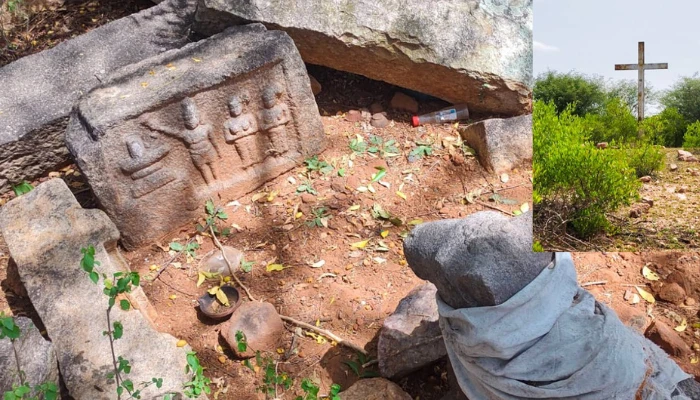
Case Summary
In Tamil Nadu, an ancient hill housing a 400-year-old Shiva temple was encroached upon through the installation of a Christian cross on the temple premises by Christian missionaries. The perpetrators threatened the Hindu devotees visiting the temple, vandalised the idols and also attempted to rename the hill, historically known as Lingamalai in Viralimalai taluk, as “Saveriyar Malai.” Lingamalai derives its name from the Shiva Linga and has historically been associated with Shaivite worship for centuries. The hill is home to a 400-year-old Shiva temple and has long been regarded as a sacred Hindu religious site. The attempt to rename it as "Saveriyar Malai", meaning "St. Xavier's Hill", is significant because "Saveriyar" is the Tamil name for St. Francis Xavier, the 16th-century Jesuit missionary. The matter came to light when the Hindu Munnani organisation submitted a petition to the Pudukkottai District Collector stating that the centuries-old Hindu temple and its surrounding lands were under sustained encroachment. The petition stated that Lingamalai, located in Malampatti village under Viralimalai Union in Pudukkottai district, is home to a 400-year-old Shiva temple, which historical accounts attributed to King Azhagiya Manavala Devan. The organisation stated that the temple owned approximately 300 acres of land, which remained under the Forest Department's control in the temple's name. However, the temple land was illegally transferred through pattas, encroached upon, and converted into plots for sale by Christians. They further stated that the idols of Lord Shiva and Goddess Amman inside the temple were vandalised and broken into pieces by anti-Hindu elements. The Hindus who visited the temple for worship were threatened and intimidated by the perpetrators. It further stated that for the past ten years, Christians installed a cross atop Lingamalai and referred to the hill as “Saveriyar Malai.” They stated that these developments had the potential to trigger communal tensions in the region. The issue earlier created tensions between Hindus and Christians, resulting in criminal cases being registered against Hindus, which remained pending. While deciding the issue, the Madurai Bench of the Madras High Court directed that no maintenance work be carried out on the cross erected atop the hill, yet Christians continued to maintain the structure in violation of the court's order. Seeking official intervention, local Hindus urged Hindu Munnani to help restore Lingamalai and the Shiva temple to the Hindu community, ensure protection of the temple lands, and facilitate unhindered worship at the shrine. Acting on these representations, Hindu Munnani submitted a formal petition to the Pudukkottai District Collector, demanding action against the encroachments, protection of the temple property, and implementation of the existing court orders.
Why it is Hate Crime ?
In this case, the first primary category selected is: Attack on Hindu religious representations. Within this, the subcategory selected is - Attack on temples. In Hinduism, a temple is the abode of the Deity. The Deity in the Temple is consecrated, thereby making it a real, breathing entity. Hindus believe that not just the Deity but the temple premises themselves are sacred to Hindus since Hindus hold the faith that the entire Temple space is an amalgamation of the divine energy of the deity. Given the central significance of Temples in Hindu Dharma, any attack against a Hindu Temple or its peripheral premises is an attack on the faith itself and is born out of animosity towards the faith, of which the Temple is a central tenet. Any manner of attack against a Temple and/or its premises would therefore be considered a religiously motivated hate crime. The other sub-category selected is - Encroachment or illicit takeover of temple land/land near temple. In Hinduism, a temple is the abode of the Deity. The Deity in the Temple is consecrated, thereby making it a real, breathing entity. Hindus believe that not just the Deity but the temple premises themselves are sacred to Hindus since Hindus hold the faith that the entire Temple space is an amalgamation of the divine energy of the deity. Not only the Temple but the Temple premises in their entirety are considered sacred by Hindus. In several cases, the premises of the Temple and/or religious centre are illicitly taken over by institutions belonging to other faiths – like the Waqf board or the Church. Other times, the temple property, land or the property of religious centres are illicitly encroached upon by non-Hindu groups. Any illicit takeover or encroachment is a crime an initio; however, when non-Hindu groups illicitly take over or encroach the sacred land of Hindus, it is an affront to the Hindu community and is therefore classified as a religiously motivated hate crime under this category. The other sub-category selected is - Desecration of Hindu religious symbols. Icons and symbols or a religious representation of a spiritual ideal are widely revered in Hinduism. Iconography is of vital significance in the Hindu milieu. It helps connect people’s spiritual beliefs with the real world. Iconography within the Hindu faith takes several shapes and forms. Murtis are of most significance to Hindus, to which daily rituals, prayers and offerings are done. Besides the murtis, there are several other symbols which have deep significance in the Hindu faith – the Om and Swastika, for example. Since these Hindu religious symbols hold paramount importance in Hinduism, any desecration of symbols, icons, murtis, religious representations and manifestations is driven by animosity towards the faith itself, which manifests itself through these murtis, icons and symbols. Therefore, any desecration of these Hindu religious symbols and representations is considered a religiously motivated hate crime under this category. The other subcategory selected is: Breaking rules of place of worship. Sanatan Dharma is not a religion of one book, which is to say that while it has religious scriptures that form the central tenets of the faith, there are several traditions followed through thousands of years, mostly passed from generation to generation orally. One of these oral traditions or written traditions is the rules of specific temples. Certain temples have rules which are traditional rules, dependent on the worship of the presiding deities. These rules and traditions have been followed for thousands of years whether they find scriptural mention or not. Such traditions are based on the nature and rules of worship of the presiding deity of that temple. Any non-compliance of these traditions owing to animosity towards the faith or for the sake of activism stems not only from the lack of faith in the presiding deity but also disregard for the faith of the devotees of that deity/temple and implicit bias against the faith, the tradition and the deity itself. Since these specific traditions are central to the faith of the devotees of that specific temple and presiding deity, any non-compliance with these traditional rules would be considered a religiously motivated hate crime. This case was included in the Hinduphobia Tracker because a centuries-old Shiva temple, its sacred hill, and the religious rights of Hindu devotees were systematically targeted through encroachment, desecration, and intimidation. The acts were directed against a Hindu place of worship and sought to alter its religious identity, thereby directly affecting the ability of Hindus to preserve and practise their faith. The perpetrators specifically targeted a 400-year-old Shiva temple, a site of immense religious and historical significance to Hindus. In Hinduism, temples are not merely physical structures but sacred abodes of the deity, where consecrated idols are revered as living manifestations of the Divine. The sanctity extends beyond the shrine to the entire temple premises and the surrounding sacred landscape. Consequently, encroaching upon the temple land, installing a symbol of another faith within its sacred precincts, and vandalising the consecrated idols amounted to a direct attack on a revered Hindu place of worship and the religious beliefs associated with it. Such acts struck at the spiritual identity of the temple and the faith of the devotees who worshipped there. Furthermore, the vandalism of the idols inside the temple constituted a direct attack on Hindu religious symbols. For Hindus, consecrated idols are living manifestations of the deity and are central to worship. Damaging them amounted to an act of desecration directed at the faith itself. At the same time, threatening and intimidating Hindu devotees interfered with their ability to worship freely and created fear around the exercise of their religious rights, making the victims' Hindu identity central to the offence. Another religious marker here is the installation and continued maintenance of a Christian cross on the temple hill. Religious symbols carry profound spiritual and cultural significance, particularly when placed at sites traditionally associated with another faith. In this case, the installation of a Christian cross on land historically associated with a Shiva temple represented more than the erection of a religious monument. Coupled with the encroachment of temple land, it amounted to an attempt to alter the religious character of a historically Hindu sacred space by introducing a competing religious identity onto the site. This objective is further reinforced by the attempt to rename the hill from "Lingamalai" to "Saveriyar Malai." The name "Lingamalai" itself reflects the hill's centuries-old association with Lord Shiva, while "Saveriyar Malai" refers to St. Francis Xavier, a prominent Christian missionary. Renaming a sacred Hindu site after a Christian religious figure is significant because it seeks to replace its long-established Hindu identity with a Christian one. Such a change goes beyond nomenclature and represents an attempt to redefine the historical, religious, and cultural character of the site itself. Taken together, the perpetrators' actions reveal a deliberate attempt to erase the Hindu character of a centuries-old sacred site and replace it with a competing religious identity. Such conduct reflects a mindset that viewed the continued existence of a prominent Hindu place of worship as something to be altered, appropriated, and subordinated to another faith. Rather than respecting the sanctity of an ancient Hindu shrine, the perpetrators sought to transform its identity, weaken its association with Hinduism, and discourage its devotees from freely practising their faith. This demonstrates religious hostility towards Hindu places of worship and the Hindu community itself, making the incident a religiously motivated hate crime against Hindus. Disclaimer: The Hinduphobia Tracker records incident dates based on when the victim's ordeal began rather than the date of media reporting. As the available sources do not specify when the encroachment and related acts began, the date the matter was reported to the authorities has been recorded as the incident date for documentation purposes.


Case Status
Complaint filed


Perpetrators Details
Perpetrators
Christian Extremists
Perpetrators Range
Unknown
Perpetrators Gender
unknown
 Sources




