Two minor Hindu girls lured, befriended and targeted for sexual exploitation by four Muslim men posing as Hindus in Barpeta, Assam
 Barpeta, Assam, India
  9 July, 2026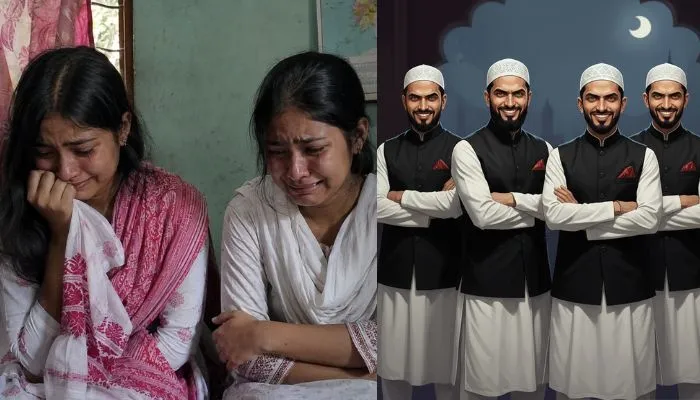
Case Summary
In Howly, located in the Barpeta district of Assam, two minor Hindu girls were lured, befriended, and targeted for sexual exploitation by four Muslim youths who pretended to be Hindus. According to media reports, the victims were young girls, aged 13 and 14. This incident came to light when the victims were rescued from a roadside dhaba in Howly. They had been befriended and lured by the four Muslim youths, who concealed their religious identity by introducing themselves using fake Hindu names. Local Hindu residents grew suspicious of the situation when they witnessed the victims in the company of the accused and intervened. During the intervention, they successfully apprehended one of the accused, identified as 20-year-old Amidur Islam. According to local residents, he was attempting to sexually exploit one of the Hindu girls. Following the incident, the police were alerted and promptly reached the spot. They rescued both Hindu girls and took the apprehended accused into custody. At the time of writing this report, an investigation had been launched into the incident, and efforts were underway to trace the remaining three Muslim perpetrators.
Why it is Hate Crime ?
In this case, the primary category selected is: Crimes against women in relationships and other sexual crimes. The subcategory selected is: Man pretends to be Hindu. The tertiary categories selected are: Name Changed, Pattern of targeting Hindu women. When a non-Hindu man pretends to be a Hindu to deceive a Hindu woman into a relationship, the act is seen as triggered by malafide intentions. In some cases, the woman eventually accepts the man’s original religious identity and converts after the man’s identity is revealed. These cases could be argued as cases of religious brainwashing and a result of the pressure a woman feels after getting into a relationship with a man. The woman, it can be argued, also changed her religious identity because of the stigma she believes she might face if she chooses to walk out of a deceptive relationship. However, for the purpose of documenting hate crimes, the cases in this subcategory are limited to those where there is explicit violence aimed at religious conversion against the wishes of the victim (force-feeding beef, blackmailing with intimate videos, rape on refusal to convert, etc), or if the woman herself complains of the man’s religious deception. In such cases, it is established that the deception of the non-Hindu man had a specific aim of religious conversion or targeting of the victim due to her Hindu religious identity, therefore, making it a religiously motivated hate crime. This case is a clear example of a religiously driven hate crime because two minor Hindu girls were lured, befriended and targeted for sexual exploitation by four Muslim men pretending to be Hindus. First, the perpetrators' act of deception by posing as Hindus demonstrated clear bias and malicious intent towards the victims' religion. By hiding their true identities, they manipulated the Hindu girls' trust and targeted them under false pretences, indicating a premeditated effort to exploit them based on their religious background. This constituted a direct violation of their right to informed consent regarding whom they choose to be in a friendship with, as well as an infringement upon their religious beliefs. Thus, the perpetrators' deliberate decision to hide their religious identity strongly underscored the religious motive behind this crime. In such instances, identity concealment is not just a deceptive tactic for personal reasons but a calculated strategy rooted in religious profiling and targeting. The accused knew that the victims, being Hindus, would likely refuse their advances if they knew their real identity. The accused circumvented this by lying, which directly pointed to a religiously driven intent. This deception reflects a larger pattern where Hindu women and minor girls are specifically singled out using false identities by Muslim men. Such targeted victimisation based on religion demonstrates a fundamental disregard for Hinduism and exposes deeper animosity towards Hindu girls and their beliefs, making it a religiously driven hate crime. The involvement of four Muslim perpetrators in this case indicates that the crime was not an isolated act committed by a single individual but a coordinated and premeditated effort. The participation of multiple accused points to planning, collaboration, and a shared intent in targeting and exploiting the Hindu girls. The coordinated nature of the offence strengthens the indication that the victims were deliberately selected on the basis of their religious identity, reflecting a concerted pattern of victimisation rather than a spontaneous criminal act. Second, the act of the perpetrators attempting to sexually assault one of the minor victims explicitly showcases a deep-seated religious animosity, demonstrating that the sexual harassment was directly enabled by the initial religious deception. By deploying fake Hindu identities, the perpetrators engineered a false sense of security, leading the minor victims to believe they were interacting with boys from their own community, only to trap them for sexual exploitation by Muslim men pretending to be Hindu. This intersection of identity fraud and sexual violence establishes that the attempted sexual assault possesses a definitive religious dimension; it cannot be viewed merely as an isolated act of lust, but rather as the direct culmination of targeted profiling based on religious identity. The sexual harassment directed at the victim was specifically calculated to humiliate, violate, and target a Hindu girl precisely because of her faith, transforming the physical violation into an assault on her religious identity itself. Consequently, because the harassment and attempted assault were systematically directed at a Hindu victim through deliberate religious deception and profiling, this act of sexual violence serves as a clear, definitive example of a religiously motivated hate crime. It is also crucial to note that the victims in this case were minor Hindu children, meaning that any element of informed consent was entirely absent from the outset. Due to their youth and inherent vulnerability, minors are highly susceptible to manipulation and coercion, lacking the maturity to recognise or navigate the fraudulent intentions of perpetrators who deliberately exploit them. Because this case exemplifies the use of identity concealment and religious deception to manipulate minor Hindu victims for sexual exploitation, it represents a direct act of targeted exploitation against members of the Hindu community. Since this case meets the parameters of a religiously driven hate crime, it is being added to the hate crime database of the tracker. Disclaimer: The Hinduphobia Tracker records incident dates based on when the victim's ordeal begins rather than when the incident is reported in the media. However, in the present case, media reports do not specify the exact date on which the crime occurred and only mention the date on which it was reported, namely 10 July 2026. Accordingly, 10 July 2026 has been selected as the indicative incident date for documentation purposes only and should not be construed as the confirmed date of the incident.
Victim Details
Total Victim
2
Deceased
0
Gender
- Male 0
- Female 2
- Third Gender 0
- Unknown 0
Caste
- SC/ST 0
- OBC 0
- General 0
- Unknown 2
Age Group
- Minor 2
- Adult 0
- Senior Citizen 0
- Unknown 0


Case Status
Case sub-judice


Perpetrators Details
Perpetrators
Muslim Extremists
Perpetrators Range
From 2 To 5
Perpetrators Gender
male
 Sources




