Four thousand Hindu devotees displaced; four decade old Hindu temple in Birmingham sold off to Muslim organisation
 Birmingham, United Kingdom
  13 February, 2026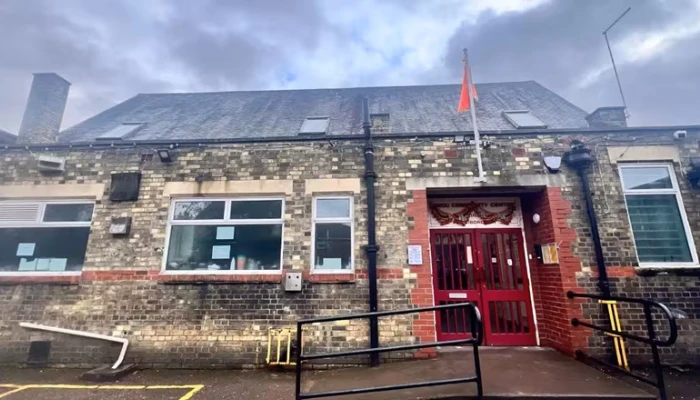
Case Summary
In Birmingham, United Kingdom, a four-decade-old Hindu temple and community centre property in Peterborough was auctioned by Peterborough City Council. It was bought by a Muslim organisation named the United Kingdom Islamic Mission. This is the same complex where Hindus had established and maintained the Bharat Hindu Samaj Temple since 1986. The temple is a major place of worship and cultural centre for thousands of Hindus living in and around the city. Displeased by the decision, the Bharat Hindu Samaj filed a petition in the High Court challenging the sale. Notably, in February 2026, the High Court had issued an interim stay, preventing the council from taking any steps to complete the sale. Despite this, the Council went ahead with selling the four-decade-old temple premises. During the hearing in the High Court, the Bharat Hindu Samaj Sangathan stressed that the council ignored the temple's nearly 40-year-old religious and community role. The temple management further pointed out serious flaws in the auction valuation. The Peterborough Council, in its defence, argued in court that its decision was lawful and did not violate equality rules. The council stated that it was making efforts to provide the Hindu community with alternative accommodation within the city. During the hearing, the judge questioned why an alternative arrangement was needed so soon, given that UKIM had set a target of raising funds for the project by 2035. According to reports, the Muslim organisation bid around £1.4 million (approximately ₹18 crore) and provided proof of available funds of £5.4 million (approximately ₹69 crore). The Bharat Hindu Samaj, on the other hand, had offered a bid of £900,000 (approximately ₹11.5 crore) plus a social contribution of approximately £504,000 (approximately ₹6.4 crore). The council claimed that due to financial constraints, it had to accept the offer with greater financial benefits. However, a large number of Hindu community members present in court disagreed with this claim. The Bharat Hindu Samaj had operated a temple in a portion of the New England Complex since 1986 and had been trying to purchase the property for nearly ten years. The council decided to sell the complex to UKIM in February 2026. The Bharat Hindu Samaj (BHS) argued that the bid evaluation was not conducted fairly, that the scoring process was flawed, and that the council members approved the officials' recommendations without adequate review. The BHS stated that the temple was not just a place of worship, but a major religious, social, and cultural centre for the approximately 4,000 Hindus in and around Peterborough. If the complex were redeveloped and the temple had to be vacated, people would have had to travel to temples in Cambridge (approximately 56 kilometres away) or Leicester (approximately 64 kilometres away) to worship. On this basis, the organisation was seeking a judicial review to overturn the entire decision. The court was to examine the legality of the sale and whether it had been made in accordance with the law and the principles of equality. While this report was being written, the judicial review was pending, examining whether the decision-making process was in accordance with the law.
Why it is Hate Crime ?
This case has been added to the tracker under the primary category of - Restriction/ban on Hindu practices. Within it, the sub-category selected is - Restriction on expression of Hindu identity. An example of the state-affected prejudicial and targeted orders against the Hindu community would be a government denying the right of a Hindu or a group of Hindus to hold a religious procession owing to the animosity of non-Hindu groups. Denial of the religious rights of Hindus to assuage the non-Hindu group, which harbours animosity to a point where it could lead to violence against Hindus, is not only a failure of law and order but is a prejudicial order against Hindus, denying them their fundamental rights to express their religious identity. An example of a hate crime against Hindus by a non-Hindu would be a non-Hindu institution forcing its Hindu employees to abandon religious symbols that a Hindu would wear as an expression of faith owing to inherent prejudice against the faith professed by the victim or a non-Hindu group of people restricting a Hindu group from constructing a place of worship simply because the demography of the area in which the temple is being built is dominated by non-Hindus. Such actions are driven by religious animosity and/or prejudice against Hindus and their faith and would therefore be categorised as a hate crime. The second subcategory selected is - Administration restricting religious practice. In several cases, it is seen that the administration/state disallows a religious practice owing to prejudicial orders and concerns, targeted specifically against the Hindu community. Such restriction/prohibition would be considered documented as a hate crime because the orders are often a result of pressure by groups that harbour animosity towards Hinduism and Hindus. Often, the restriction by the authorities is driven by bias, hostility, or prejudice against the specific community being stopped from holding a religious practice, by pressure groups that harbour animosity towards Hindus, intrinsic to their faith. Since practices are intrinsic to the faith of the Hindus, such prejudicial restriction is considered a curtailing of the fundamental rights of the Hindu community. In several cases, for example, the authorities ban a Hindu religious practice due to pressure from groups opposed to the religion. In other instances the prohibition is selectively enforced against one religious group (Hindus) while others are allowed to proceed. There are still other cases where the authorities preemptively restrict a religious practice by Hindus because those who hold animosity towards Hindus may get “provoked” leading to them being violent, thereby assuaging the sentiments of those who hold animosity towards Hindus by curtailing the religious rights of Hindus. Such acts and orders are prejudiced, indicating discriminatory motives owing to the capitulation to groups that harbour animosity towards Hindus and therefore, would be categorized as a religiously motivated hate crime since the original pressure leading to the order itself is a result of hatred/bias/prejudice/religious hate against Hindus. This case was included in the Hinduphobia Tracker because a Hindu temple and its longstanding place of worship were subjected to an unfair disposal process that disregarded their religious significance. The actions did not merely concern the transfer of a property but affected a sacred space that had served the Hindu community for decades, thereby directly impacting the community's ability to preserve and express its religious identity. A temple in Hinduism is not an ordinary building, and the land on which it stands is not viewed as ordinary property. Through continuous worship, rituals, and religious observances over many years, the temple and its premises become sacred to devotees. Consequently, any decision that ignores this deep religious association and treats such a place as a replaceable commercial asset diminishes the sanctity attached to it and weakens the community's connection with its place of worship. This conscious disregard for the temple's sanctity conveyed that Hindu places of worship could be displaced without any meaningful consideration of the faith and identity they represent. Such conduct reflected the council's deep disregard for Hindus and their religious beliefs, revealing that it viewed their sacred spaces and longstanding spiritual association with the temple as unworthy of respect. By treating a place of worship as expendable despite its profound religious significance, the council demonstrated an attitude that devalued Hindu faith and the rights of Hindu devotees, making this case worthy of inclusion in the Hinduphobia Tracker. Disclaimer: The exact date on which Peterborough City Council decided to sell the property in February 2026 could not be ascertained from publicly available sources. Since only the month of the decision, February 2026, is available, the incident has been recorded as 14 February 2026, derived by combining the date on which it was reported, 14 July 2026, and February 2026, the month in which the council's decision to sell the property was made, for documentation purposes.


Case Status
Case sub-judice


Perpetrators Details
Perpetrators
State and Establishment
Perpetrators Range
Unknown
Perpetrators Gender
unknown
 Sources




