Historic Hindu temple of Lord Murugan targeted; temple land estimated 100 crores, illegally, sold to private individuals for 2 crores in Tamil Nadu
 Palani, Tamil Nadu, India
  26 March, 2026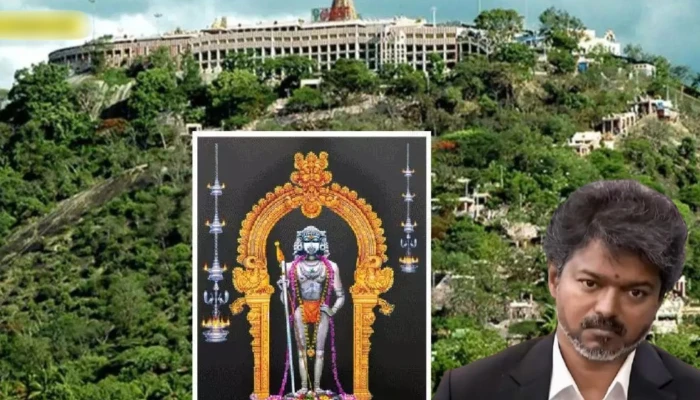
Case Summary
In Palani, Tamil Nadu, the land belonging to the historic Hindu temple, Arulmigu Dhandayuthapani Swamy Temple, was illegally sold to two private individuals by the Joint Sub-Registrar in connivance with the Additional Commissioner of the Hindu Religious and Charitable Endowments (HR&CE), Marimuthu, who was serving as Temple Joint Commissioner when the sale took place. The land was sold despite court orders declaring it a temple endowment. The transaction, involving property estimated at around ₹100 crore, was executed for just ₹2 crore. The temple land in question centres on a 1-acre and 40-cent parcel of land situated at the foothills of the Palani Hills near the Saravana Poigai tonsure centre. The property had been serving as a free parking area for devotees for the past 10 months, after the temple administration took possession of it following a court order. Historically, the temple land was gifted in 1888 by Kuppusamy Maniyakkarar of Balasamudram to Dhandapani through a Dharma Sasanam (charitable endowment deed). The endowment stipulated that the land was to be used to establish a Math (monastery) and to propagate Hindu religious principles associated with the Palani Dhandayuthapani Swamy Temple. Dhandapani maintained the property for nearly fifty years. After his death, the land passed to his legal heirs, but they failed to maintain it. Over time, portions of it were leased out to third parties. One such lessee, V.V.R. Venkatachalam, occupied the property without a written lease agreement. Following repeated demands for money from Dhandapani’s heirs, he insisted on a formal lease; the heirs subsequently executed a written lease. Venkatachalam later initiated legal proceedings before the Palani Principal Sub Court, the Madras High Court, and eventually the Supreme Court, claiming that he had paid the heirs an amount exceeding the property’s value and therefore had acquired ownership rights over the land. However, the courts rejected the claim, holding that the original Dharma Sasanam did not permit the sale, transfer, or encumbrance of the endowed property. The courts declared the land to be a public religious trust property belonging to the temple. Following the judicial orders, Temple Joint Commissioner Marimuthu was appointed as the Thakkar, the official responsible for administering the property. Following a court order dated September 2, 2025, the temple administration issued a newspaper notification announcing that it had taken possession of the property, valued at approximately ₹100 crore. On September 12, 2025, officials cleared thorny vegetation on the land using earth-moving machinery. When Dhandapani’s heirs objected to the temple taking possession, police intervened and removed them from the site. Since then, the property has been used as a free parking facility for devotees visiting the temple. Despite the court orders and the temple administration taking possession of the land, the property was sold to two private individuals, Velladurai and Sethupathi. According to the report in The Commune, the sale agreement was executed on March 27, 2026, while the sale deed was registered on 6 July 2026. The land, worth around ₹100 crore, was sold for just ₹2 crore. The registration process came under scrutiny after it emerged that the Sub-Registrar was on leave on the day the document was registered. Instead, the Joint Sub-Registrar completed the registration. This development raised serious questions over how the registration was permitted despite the temple administration having submitted three separate written petitions to the Sub-Registrar’s office requesting that the land should not be registered in favour of private individuals. Hindu devotees questioned whether the Registration Department failed to verify the legal status of the property and ignored the court orders as well as the objections submitted by the temple administration before completing the registration. The report in Communemag mentioned that the controversy also drew attention to the role of Marimuthu, who was serving as the Temple Joint Commissioner during the period when the sale took place. Notably, Marimuthu was recently promoted to Additional Commissioner of the Hindu Religious and Charitable Endowments (HR&CE) Department and transferred to the department’s headquarters in Chennai. The timing of the promotion further prompted questions, with critics asking how such a transaction could have taken place during his tenure and whether the illegal registration escaped the notice of the temple administration. Reacting to the development, Hindu Tamilar Katchi leader Rama Ravikumar questioned claims that the temple administration was unaware of the registration. He stated that the temple administration itself had sent three letters to the Registration Department instructing officials not to register the property. According to him, if the registration nevertheless proceeded despite written objections and judicial orders of both the High Court and the Supreme Court, it surely pointed to serious corruption within both the Registration Department and the HR&CE Department. Following the revelations, spiritual activists and Hindu organisations demanded the immediate cancellation of the sale deed, restoration of the property to the temple, and a comprehensive investigation to identify and prosecute all officials and individuals involved in the transaction. HR&CE department filed a case seeking cancellation of the sale deed and action against all those responsible for facilitating the registration. It simultaneously recommended disciplinary proceedings against the registering officer and submitted a detailed report, along with supporting documents, to the Inspector General of Registration, the Deputy Inspector General of Registration, Madurai Region, and the Dindigul District Registrar.
Why it is Hate Crime ?
This case has been added to the tracker under the primary category: Attack on Hindu religious representations. Within this, the subcategory selected is : Encroachment or illicit takeover of temple land/land near temple. In Hinduism, a temple is the abode of the Deity. The Deity in the Temple is consecrated, thereby making it a real, breathing entity. Hindus believe that not just the Deity but the temple premises themselves are sacred to Hindus since Hindus hold the faith that the entire Temple space is an amalgamation of the divine energy of the deity. Not only the Temple but the Temple premises in their entirety are considered sacred by Hindus. In several cases, the premises of the Temple and/or religious centre are illicitly taken over by institutions belonging to other faiths – like the Waqf board or the Church. Other times, the temple property, land or the property of religious centres are illicitly encroached upon by non-Hindu groups. Any illicit takeover or encroachment is a crime an initio; however, when non-Hindu groups illicitly take over or encroach the sacred land of Hindus, it is an affront to the Hindu community and is therefore classified as a religiously motivated hate crime under this category. This case was included in the Hinduphobia Tracker because the temple land permanently dedicated to a historic Hindu temple through a religious endowment was unlawfully alienated despite its protected religious status. The act was not merely a dispute over ownership but an assault on property that had been consecrated for the service of the Deity and the Hindu community. By facilitating its transfer in violation of the endowment and binding judicial orders, the perpetrators interfered with the rights of Hindus to preserve and benefit from their religious institution. In Hinduism, a temple is the abode of the Deity, and every part of its premises, including land endowed for its maintenance and religious purposes, is regarded as sacred. Such land is not ordinary immovable property that can be commercially exploited or transferred at will. It exists to support the temple's religious functions, devotees, and associated charitable activities. Alienating land that had been permanently dedicated to the temple therefore amounted to an attack on the temple itself, as it undermined the sanctity, continuity and protection of a sacred Hindu institution. The act became even more significant because the religious character of the property had already been conclusively settled. The endowment expressly prohibited any sale or transfer of the land, while the Madras High Court and the Supreme Court had repeatedly upheld its status as temple property. The temple administration had also taken possession of the land pursuant to judicial orders and had formally objected to any attempt to register it in favour of private individuals. Even then, the perpetrators proceeded with the transfer despite these legal safeguards. This demonstrated a conscious disregard not only for the law but also for the religious purpose for which the property had existed for well over a century. Furthermore, the manner in which the transaction was executed reflected deliberate planning rather than an isolated administrative lapse. The land, valued at around ₹100 crore, was transferred for a mere ₹2 crore despite the existence of binding court orders, official objections and clear title records establishing it as temple property. The registration proceeding under such circumstances indicated that multiple institutional safeguards were ignored to facilitate the alienation of a protected religious endowment. The involvement of officials entrusted with safeguarding temple assets, particularly the Temple Joint Commissioner responsible for administering the property, further raised serious concerns about institutional complicity rather than mere negligence. Moreover, the subsequent promotion of the very official who had overseen the temple administration during the period in which the transaction took place deepened public suspicion regarding the integrity of the entire process. The sequence of events created the appearance that those responsible for protecting temple property failed in their duty while the unlawful transfer proceeded unchecked. Such actions inevitably caused deep anguish among Hindu devotees, as a sacred asset dedicated exclusively to their faith was treated as disposable commercial property despite clear legal, religious and judicial protections. The devotees regarded every part of the temple's endowed property as belonging to the Deity and existing solely for religious purposes and the welfare of pilgrims. Treating this consecrated land as a commodity for private sale conveyed that the sanctity of the temple, the devotion of its worshippers, and their religious sentiments were considered dispensable and carried no value. The incident therefore represented not only an illegal alienation of temple land but also a profound affront to the sanctity of a revered Hindu religious institution and the sentiments of the community that worships there. Disclaimer: In this case, the perpetrator count was recorded as two (2) because the report specifically identified two government officials as being involved in the illegal transfer of the temple property: the Joint Sub-Registrar and Marimuthu, who was serving as the Temple Joint Commissioner at the time of the transaction. Accordingly, only these two named individuals have been included in the count of perpetrators.


Case Status
Complaint filed


Perpetrators Details
Perpetrators
State and Establishment
Perpetrators Range
From 2 To 5
Perpetrators Gender
male
 Sources




