Centuries old Saraswati idol vandalised for the fourth time in 2 years at ASI protected Hindu Temple in Gadag, Karnataka
 Gadag, Karnataka, India
  9 July, 2026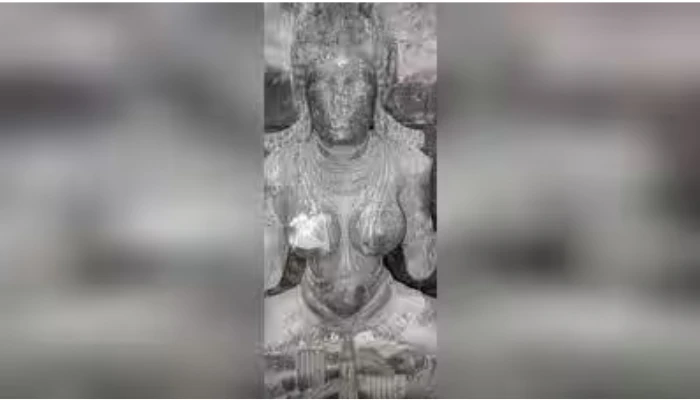
Case Summary
In Gadag, Karnataka, an ancient statue of Goddess Saraswati at the Saraswati temple within the historic Trikuteshwara temple complex was vandalised by unknown miscreants. The Archaeological Survey of India (ASI) officials attempted to conceal the damage by applying black paint over the defaced portion. According to reports, a local, Suryanarayan Nargundkar, living near the Trikuteshwara temple complex, where the Saraswati temple was situated, stated that the statue was found damaged. Furthermore, he also revealed that the Archaeological Survey of India (ASI) officials attempted to conceal the damage by applying black paint over the defaced portion. He further stated that this was the fourth attempt to vandalise the same statue in the preceding two years, since 2024, and that, on this occasion, the attempt had succeeded where earlier attempts had not. Nargundkar noted that while the ASI had deployed a Group D staff member at the site, this staff member was not present on the night of desecration, 10 July 2026, and he called for round-the-clock security at the complex. Right-wing leader Raju Khanappanavar condemned the incident, noting that the temple dated to the 8th century and that historical records indicated it had previously been defaced in the 16th century. He observed that, despite the site being under ASI protection, it had once again been defaced. SP Rohan Jagadeesh told to the media that Gadag Town police had visited the temple and assessed the situation. He noted that since the statues were historical artefacts kept locked under ASI supervision, it was for ASI officials to determine whether the statue had been defaced. He added that police would register a case and launch an investigation upon a formal complaint by the ASI.
Why it is Hate Crime ?
This case has been added to the tracker under the primary category - Attack on Hindu religious representations. Within this, the subcategory selected is - Attack on temples. In Hinduism, a temple is the abode of the Deity. The Deity in the Temple is consecrated, thereby making it a real, breathing entity. Hindus believe that not just the Deity but the temple premises themselves are sacred to Hindus since Hindus hold the faith that the entire Temple space is an amalgamation of the divine energy of the deity. Given the central significance of Temples in Hindu Dharma, any attack against a Hindu Temple or its peripheral premises is an attack on the faith itself and is born out of animosity towards the faith, of which the Temple is a central tenet. Any manner of attack against a Temple and/or its premises would therefore be considered a religiously motivated hate crime. The other sub-category selected is - Desecration of Hindu religious symbols. Icons and symbols or a religious representation of a spiritual ideal are widely revered in Hinduism. Iconography is of vital significance in the Hindu milieu. It helps connect people’s spiritual beliefs with the real world. Iconography within the Hindu faith takes several shapes and forms. Murtis are of most significance to Hindus, to which daily rituals, prayers and offerings are done. Besides the murtis, there are several other symbols which have deep significance in the Hindu faith – the Om and Swastika, for example. Since these Hindu religious symbols hold paramount importance in Hinduism, any desecration of symbols, icons, murtis, religious representations and manifestations is driven by animosity towards the faith itself, which manifests itself through these murtis, icons and symbols. Therefore, any desecration of these Hindu religious symbols and representations is considered religiously motivated hate crimes under this category. This incident was included in the tracker because a consecrated idol of Goddess Saraswati inside a historic Hindu temple was deliberately desecrated. The act directly targeted a sacred object of worship that held immense religious significance for Hindus, making it an attack on the faith itself rather than an act of ordinary vandalism. In Hinduism, idols are not mere works of art or archaeological objects. Through consecration, they become sacred manifestations of the deity and form the centre of daily worship and devotion. Goddess Saraswati is revered as the embodiment of knowledge, wisdom and learning. Deliberately vandalising, damaging or defacing her idol violated a deeply revered religious representation and inflicted emotional and spiritual injury upon the Hindu community. Such an act constituted a hate crime directed at Hindu religious beliefs. Furthermore, the attack occurred within the premises of an ancient Hindu temple. For Hindus, a temple is the abode of the deity, where the sanctity of the entire premises is inseparable from the presence of the consecrated idol. Any deliberate damage to the presiding deity desecrated not only the idol but also the sacred character of the temple itself, disrupting a place dedicated to worship and spiritual practice. The gravity of the incident was compounded by the fact that the desecration occurred while the monument was under the protection of the Archaeological Survey of India (ASI), the statutory body entrusted with preserving and safeguarding India's historically and culturally significant monuments, temples and artefacts. Further, the attempt to conceal the damage by applying black paint, rather than ensuring immediate transparency and accountability, undermined the gravity of the desecration. Such conduct diminished the gravity of an attack on a sacred Hindu idol and raised serious concerns about the protection and preservation of places of immense religious and historical significance. Additionally, the repeated attempts to damage the same idol over a prolonged period demonstrated persistence and clear intent rather than a spontaneous act. The perpetrator deliberately focused on a revered Hindu religious representation, reflecting a conscious effort to insult Hindu beliefs and hurt the religious sentiments of devotees. Such targeted desecration served no purpose other than humiliating the faith and spreading distress among the Hindu community, establishing the attack as one motivated by religious hatred. Therefore, this incident qualified as a religiously motivated hate crime and was included in the tracker.


Case Status
Unknown


Perpetrators Details
Perpetrators
Unknown
Perpetrators Range
Unknown
Perpetrators Gender
unknown
 Sources




