Hindu girl deceived and pressured to convert by Muslim man posing as Hindu; accused's phone contained objectionable videos of multiple women
 Indore, Madhya Pradesh, India
  10 July, 2026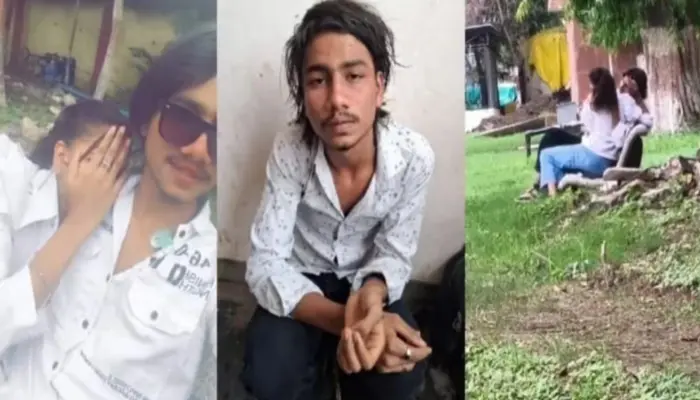
Case Summary
In Indore, Madhya Pradesh, a Hindu girl was deceived into a relationship by a Muslim man named Farhan Shan, who posed as a Hindu. Furthermore, when his real identity was revealed, he pressured the victim to convert to Islam. According to the police complaint, the accused, Farhan, had befriended the Hindu girl on Snapchat while introducing himself as a Hindu man named "Golu Solanki", concealing his Muslim identity. The two later met at Gandhi Hall in Indore, where the victim realised his real identity after he received a phone call in which he was addressed as Farhan. The complaint stated that when she confronted him, he became anxious and subsequently pressured her to convert to Islam. She then sought the assistance of Bajrang Dal office-bearer Tannu Sharma, following which organisation members apprehended Farhan and handed him over to the MG Road police. During the incident, Farhan's mobile phone was examined, and objectionable photographs and videos involving several young women were found. It emerged that he had persuaded multiple women to engage in inappropriate video calls, secretly recorded the interactions, and retained the recordings on his device. Members of the Hindu organisations stated that several women had been deceived in a similar manner. A card resembling a Vishwa Hindu Parishad Bajrang Dal identity card was also recovered from his possession. The card bore the name "Golu Fakir" and identified him as an office-bearer, indicating that he had been presenting himself as a representative of the Hindu organisation while interacting with Hindu women. Following the incident, the police registered a First Information Report (FIR) against Farhan Shah under relevant provisions of the Bharatiya Nyaya Sanhita (BNS) and the Madhya Pradesh Freedom of Religion Act. The police took custody of the accused and initiated an investigation, including the examination of his mobile phone and other digital evidence to ascertain the full extent of his activities and identify any additional victims. Police stated that the investigation would determine whether the case involved a wider pattern of targeting Hindu women through deception and other criminal conduct.
Why it is Hate Crime ?
In this case, the primary category selected is: Crime against Women in a relationship and other sexual crimes. The subcategory in this case is "Man pretends to be Hindu." When a non-Hindu man pretends to be a Hindu to deceive a Hindu woman into a relationship, the act is seen as triggered by mala fide intentions. In some cases, the woman eventually accepts the man’s original religious identity and converts after the man’s identity is revealed. These cases could be argued as cases of religious brainwashing and a result of the pressure a woman feels after getting into a relationship with a man. The woman, it can be argued, also changed her religious identity because of the stigma she believes she might face if she chooses to walk out of a deceptive relationship. However, for the purpose of documenting hate crimes, the cases in this subcategory are limited to those where there is explicit violence aimed at religious conversion against the wishes of the victim (force-feeding beef, blackmailing with intimate videos, rape on refusal to convert, etc), or if the woman herself complains of the man’s religious deception. In such cases, it is established that the deception of the non-Hindu man had a specific aim of religious conversion or targeting of the victim due to her Hindu religious identity, therefore making it a religiously motivated hate crime. The other primary category selected here is - Predatory Proselytisation. Within it, the sub-category selected here is - Harassment, threats, coercion for conversion. Harassment covers a wide range of behaviours of an offensive nature. It is commonly understood as behaviour that demeans, humiliates, and intimidates a person, including threats and coercion. Harassment and threats, in this case, find their root on discriminatory grounds which has the effect of nullifying a person’s rights or infringing upon his freedom to exercise his right specifically owing to the victim’s religious identity. Verbal and physical threats and psychological or physical harassment are often used against Hindu victims because they choose to practice their professed religion. Religious harassment also includes forced and involuntary conversions by harassment, threats or coercion. Coercion includes intimidatory tactics like force-feeding a Hindu victim beef to convert to another religion, forceful circumcision etc. In several cases documented, non-Hindu perpetrators or those who harbour specific animosity towards Hinduism, harass victims simply based on their religious identity. Such cases often also include harassment to ensure the Hindu victim abandons his/her professed religion and adopts the religion of the perpetrator. Such cases where Hindu victims are harassed to convert to the perpetrator’s religion are rooted in animosity towards the victim’s religious identity and are therefore documented as religiously motivated hate crimes. The available facts of this case demonstrated that the offence was not confined to deception within a personal relationship but it was a targeted crime against a Hindu woman on account of her religious identity. The accused concealed his Muslim identity by introducing himself with a Hindu name and further enhanced this deception by presenting himself as an office-bearer of Bajrang Dal through a fabricated identity card. This itself is a clear manifestation of bias and malicious intent towards the victim's religion. By concealing his true identity, he exploited her trust, targeting her under false pretences. This indicates a premeditated intent to manipulate her based on her religious background. In cases like these, the tactic of adopting a false Hindu identity to manipulate and "ensnare" a Hindu individual is not just an act of personal betrayal but can also be interpreted as an expression of disdain or disregard for Hinduism and its customs that reflects a deeper animosity towards Hindus and their beliefs. The deliberate use of symbols, names, and affiliations associated with the Hindu community demonstrates that the victim's religious identity was central to the method employed to facilitate the offence. The attempt to pressure the victim to convert her religion after the deception came to light further strengthens the religious dimension of the case. The sequence of events demonstrated that the concealment of identity was not merely intended to initiate contact but also created circumstances in which the victim could be subjected to religious coercion. When deception is used to establish an intimate relationship and is followed by pressure to abandon that person's religion, the victim's religious identity becomes an integral component of the offence rather than a coincidental characteristic. Furthermore, pressuring a Hindu individual to discard her religious faith and embrace another was a direct attack on her religious identity and dignity. It was not a matter of personal choice; it was coercion rooted in hostility towards the victim's Hindu identity. Such an attempt reflects religious animosity because the act was not simply about personal differences but about erasing the victim’s Hindu faith, making it a religiously motivated crime. Additionally, the material recovered from the accused's mobile phone points towards a broader pattern of conduct rather than an isolated interaction. The presence of objectionable recordings involving multiple women indicates that the methods employed were repeated across several victims. The use of secretly recorded intimate video calls created the possibility of coercion, blackmail, and continued exploitation, substantially increasing the gravity of the offence. Multiple Hindu women were targeted through the same modus operandi of assuming a false Hindu identity and exploiting the trust associated with Hindu organisations, demonstrating a systematic pattern directed at women from Hindu community. The impersonation of a Bajrang Dal office-bearer also carried a wider communal significance. Bajrang Dal is a recognised Hindu organisation, and falsely representing oneself as one of its members would reasonably reassure Hindu women and their families regarding the accused's religious identity and intentions. Such misuse of the name and credibility of a Hindu organisation enabled the accused to exploit the trust placed in shared religious identity. This was not simply an instance of identity fraud for personal gain but involved the appropriation of Hindu religious and organisational identity as an instrument to facilitate the targeting of Hindu women. For these reasons, the case possesses a clear hate crime dimension. Such actions stem from inherent hostility towards the victim's professed faith since Abrahamic faiths believe that any non-adherent to the faith is subject to being dehumanised till they convert. Such acts were not merely personal crimes; they were rooted in a desire to dominate and erase the religious identity of the victim. Since such predatory actions stem from doctrinal animosity towards the Hindu faith and its adherents, this case is being documented as a religiously motivated hate crime. Disclaimer: The Hinduphobia Tracker records incidents based on when an event occurred or when the victim's ordeal began. It is important to clarify that none of the media sources covering this case has specified the exact date when the accused trapped the victim. Therefore, for documentation purposes, we have recorded the date based on when the incident was reported in the media, 11 July 2026.
Victim Details
Total Victim
1
Deceased
0
Gender
- Male 0
- Female 1
- Third Gender 0
- Unknown 0
Caste
- SC/ST 0
- OBC 0
- General 0
- Unknown 1
Age Group
- Minor 0
- Adult -2
- Senior Citizen 0
- Unknown 3


Case Status
Arrested


Perpetrators Details
Perpetrators
Muslim Extremists
Perpetrators Range
One Person
Perpetrators Gender
male
 Sources




