Muslim extremist abuses and calls for mass killing of Hindus in a social media post in Bangladesh
 Bangladesh
  1 July, 2026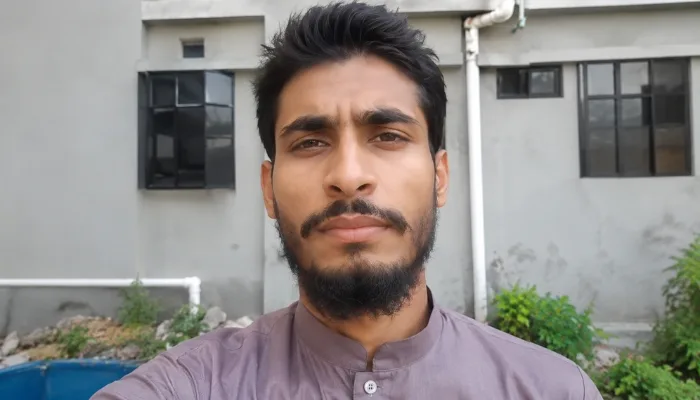
Case Summary
A Muslim extremist posted a video on social media calling upon fellow Muslims to attack and kill Hindus. In the video, he openly incited violence against members of the Hindu community, using language that explicitly encouraged physical attacks. The video has since gone viral on social media. While the exact date of its recording and the original source of the upload could not be independently verified at the time of writing, the content of the video contains a direct call for violence against Hindus. In the video, the individual states, "From today onwards, whenever you come across Hindus, seize the opportunity. Surround them, attack them, and chop them into pieces. Whatever happens afterwards, we'll deal with it." The statement explicitly exhorted members of the Muslim community to target Hindus solely because of their religious identity and advocates physical violence against them. At the time of writing, no public statement or action by the local law enforcement authorities regarding the viral video had been reported. This incident comes against the backdrop of an escalating pattern of threats, intimidation, and violence directed at the Hindu minority in Bangladesh. Since August 2024, Hindus have repeatedly been subjected to targeted attacks on their homes, temples, businesses, and religious gatherings. These incidents have intensified during periods of political instability and communal mobilisation. The escalation of anti-Hindu violence in Bangladesh has unfolded in three distinct phases. The first began following the ouster of Sheikh Hasina's government in August 2024, when Hindu homes, temples, and religious institutions were attacked across multiple districts. The violence included arson, vandalism, looting, intimidation, and mob assaults targeting Hindu localities. The Hinduphobia Tracker has documented 336 incidents from this period, highlighting the scale and persistence of the attacks. The second phase followed the death of Sharif Osman Bin Hadi, a Muslim political activist known for his anti-Hindu and anti-India rhetoric, who was killed during clashes in Dhaka on 18 December 2025. In the aftermath of his death, sections of the Hindu community were blamed and became the targets of retaliatory violence. Hindu homes were selectively set on fire in several localities, forcing families to flee, while Hindu temples and properties were vandalised. Among those killed was Dipu Chandra Das, who was lynched by a Muslim mob over false blasphemy allegations before his body was set ablaze. The Hinduphobia Tracker documented 51 incidents of anti-Hindu violence during this period alone. The period also witnessed the circulation of posters and written material calling for the extermination of Hindus. These public displays of anti-Hindu rhetoric, when viewed alongside incidents of arson, assault, vandalism, and targeted intimidation, reflected an increasingly hostile environment for the Hindu minority. The third phase of violence emerged following the 13th National Parliamentary Election in 2026. Within days of the declaration of results, Hindu families in districts including Noakhali, Rangpur, Nilphamari, Sylhet, Thakurgaon, and Dinajpur reported coordinated attacks involving arson, looting, assaults, and vandalism of homes and temples. In several instances, Hindu properties were selectively targeted, and families were threatened and forced to flee their homes. Taken together, the viral video calling for attacks on Hindus did not emerge in isolation. It forms part of a broader environment in which anti-Hindu rhetoric and calls for violence have increasingly accompanied recurring attacks on the Hindu minority in Bangladesh. Within this context, such public exhortations to attack Hindus carry heightened significance, as they have the potential to further incite violence against an already vulnerable religious community.
Why it is Hate Crime ?
The primary category for this case is: Hate speech against Hindus. The subcategory for this case is: Violent Threats. Violent threats, explicit, implicit or implied, are the most dangerous form of hate speech since it goes beyond discriminatory and prejudicial language to express the intent of causing harm to an individual or a group of people based on their religious identity and faith. There could be several different kinds of threats that are issued to Hindus based on religious animosity. An explicit threat would mean the direct threat of violence towards an individual Hindu, a group of Hindus or Hindus at large. Physical violence, death threats, threats of destruction of property belonging to Hindus and threats of genocide would mean explicit threats against Hindus for their religious identity. Implicit threats may not be direct threats but implied through the use of symbols or actions – for example – in the Nupur Sharma case, other than explicit threats, there were also implicit threats when Islamists took to the streets to burn and beat her effigies. It implies that they want to do the same to Nupur Sharma – thereby, it is considered an implicit threat. Violent threats can be delivered in person, through letters, phone calls, graffiti, or increasingly through social media and other online platforms. It would be important to understand that a threat – explicit or implicit, online or offline – to an individual who happens to be a Hindu does not qualify as a religiously motivated threat. Such a threat, while vile and dangerous, could be owing to non-religious reasons and/or personal animosity. To qualify as a religiously motivated threat, it would need to exhibit an indication that the individual is being targeted for religious reasons and/or owing to his/her religious identity as a Hindu. The violent threats issued to Hindus are to show their ideological supremacy and religious animosity. These are the main effects of deep-seated prejudices and supremacist ideology that view Hindu religious customs and faith as fundamentally invalid or petty. This idea arises from the concept of "Shirk" in Islam, where they view "idol-worshipping" and "polytheism" as unsacred to their beliefs and in that order, they optimise the roots of violence and threats. This case constitutes a clear example of a religiously motivated hate crime because the video contains an explicit and unambiguous call to attack and kill Hindus solely because of their religious identity. The speaker does not advocate violence against a particular individual on account of any personal dispute or criminal act. Instead, he exhorts viewers to target any Hindu they encounter, reducing an entire religious community to legitimate targets of violence. Such statements reflect profound hatred and hostility towards Hindus, portraying them as enemies whose mere religious identity justifies acts of violence against them. What makes the animosity even more explicit is the language used in the video, which leaves little room for ambiguity. The speaker openly calls upon others to attack, assault, and "chop" Hindus wherever they find them. Such statements are not expressions of anger or personal opinion. They are a direct incitement to commit violence against an entire religious community. Public calls of this nature are especially dangerous because they legitimise violence in the minds of those already harbouring similar prejudices and encourage them to act upon those beliefs. This incident also cannot be viewed in isolation. It comes against the backdrop of a sustained pattern of anti-Hindu violence in Bangladesh, where Hindu homes, temples, businesses, and places of worship have repeatedly been attacked in recent years. Hundreds of incidents documented by the Hinduphobia Tracker demonstrate that the Hindu minority has been subjected to recurring intimidation, arson, mob violence, vandalism, and targeted attacks because of their religious identity. In such an environment, public calls to attack Hindus carry far greater significance. They are not empty slogans but have the potential to further inflame communal tensions and embolden those willing to commit violence against an already vulnerable minority. History has repeatedly shown that widespread violence against religious minorities is often preceded by campaigns that dehumanise them and openly encourage attacks against them. Calls such as these help create an atmosphere where hatred becomes socially acceptable, and violence is portrayed as justified. When such rhetoric is directed at a community that has already experienced repeated attacks, it substantially increases the fear, insecurity, and vulnerability of that community. The deliberate call to attack and kill Hindus solely because they are Hindus demonstrates an unmistakable hatred towards the Hindu community. By openly encouraging violence against an entire religious group, the accused sought to incite hatred and provoke acts of violence against Hindus simply because of their faith. It is for this reason that this incident has been documented as a hate crime by the Hinduphobia Tracker. Disclaimer: The Hinduphobia Tracker records incidents based on when an event occurred and not when it was reported by the media. However, it is important to clarify that none of the media sources covering this case has specified the exact date when the hate speech was disseminated. Therefore, for documentation purposes, we have recorded the date as 2nd July 2026, based on when the video was shared by prominent Bangladeshi journalist Salah Uddin Shoaib Choudhury.


Case Status
Unknown


Perpetrators Details
Perpetrators
Muslim Extremists
Perpetrators Range
One Person
Perpetrators Gender
male
 Sources




