Hindu faith targeted: village head makes abusive remarks against Lord Ram and other Hindu deities in Azamgarh district, Uttar Pradesh
 Azamgarh, Uttar Pradesh, India
  7 July, 2026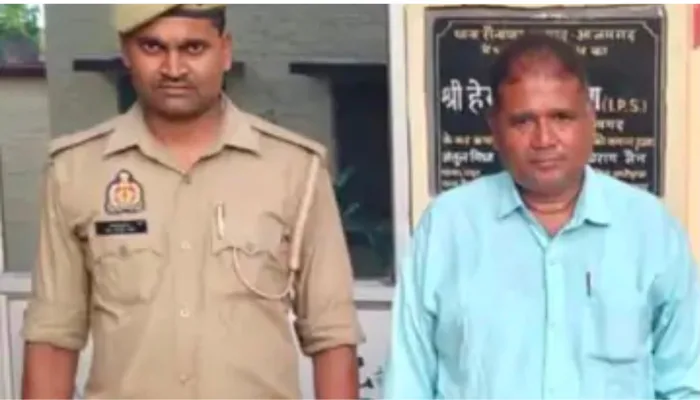
Case Summary
In Azamgarh district, Uttar Pradesh, Hindu religious sentiments were hurt after Jitendra Paswan, the Gram Pradhan of Odhra Salempur village, shared a video on social media in which he made derogatory and insulting remarks about Lord Shree Ram and other Hindu deities. The video was widely circulated online, drawing strong objections from Hindu devotees who viewed the remarks as an insult to their faith and religious beliefs. The incident came to light after the 48-year-old village head, son of Mangru, recorded and shared a video containing objectionable remarks directed at Hindu deities. As the video spread across social media platforms, it generated widespread public criticism and concern among members of the Hindu community. Many devotees stated that the comments were deeply offensive and had hurt their religious sentiments. Following the video's circulation, Mathadhish Ritisagar Bharti, a resident of Rajadur and the head of a local monastery, lodged a formal complaint with Raunapar Police Station. In his complaint, he stated that the video contained insulting remarks directed at Lord Shree Ram and other Hindu deities, thereby hurting the religious sentiments of Hindus and creating the potential to disturb communal harmony. Acting on the complaint, the Raunapar Police registered a First Information Report (FIR) against Jitendra Paswan on 8 July 2026 under the relevant provisions of law. Police stated that the action was taken to prevent any further deterioration of law and order arising from the circulation of the objectionable content. Following the registration of the FIR, a police team led by Station House Officer Sunil Kumar Dubey traced and arrested the accused on the same day. He was booked under the relevant provisions of the Bharatiya Nyaya Sanhita, after which the necessary legal formalities, including medical examination, were completed before he was produced before the competent court. Following the arrest, SHO Sunil Kumar Dubey issued a public statement urging citizens to exercise responsibility when using social media and warned that strict legal action would be taken against anyone found circulating content that insults any religion or its revered figures. At the time of writing this report, further legal proceedings in the matter were underway.
Why it is Hate Crime ?
The primary category for this case is: Hate speech against Hindus. The subcategory for this case is: Anti-Hindu slurs, mocking faith. Anti-Hindu slurs and the deliberate mocking of the Hindu faith owing to religious animosity involve the usage of derogatory terms, stereotypes, or offensive references to religious practices, symbols, or figures. One of the common anti-Hindu slurs used against Hindus is “cow-worshipper” and “cow piss drinker”. The intention of using this term is to demean and mock Hindus as a group and their religious beliefs since Hindus consider the cow holy. Additionally, some symbols and the slurs attached to them have a historical context that exacerbates the insult, hate, stereotyping, dehumanisation and oppression against Hindus. Cow worship has been used for centuries to denigrate Hindus, insult their faith and oppress Hindus specifically as a religious group. There has been overwhelming documentation about how cow slaughter has been used to persecute Hindus, with cow meat being thrown in temples and places of worship. There has also been overwhelming documentation where cow meat (beef) has been force-fed to Hindus to either forcefully convert them to Islam or denigrate their faith. Apart from cow worship, the Swastika – which holds deep religious significance for the Hindus – has also been misinterpreted and distorted to use as a slur against Hindus. Similarly, the worship of the Shivling has been used by supremacist ideologies and religions to denigrate Hindus owing to religious animosity. Such slurs and denigration stem from inherent animosity and hate towards Hindus and their faith; therefore, it is categorised as hate speech targeted at Hindus specifically owing to their religious identity. This incident has been categorised as a hate crime because it involved the deliberate public denigration of Lord Ram and other revered Hindu deities. Hindu deities are not merely symbolic figures but objects of deep faith and devotion. Insulting them in a public forum amounts to ridiculing the beliefs of the millions of devotees who worship them. Such conduct communicates that what Hindus regard as sacred may be mocked and vilified with impunity, thereby creating an atmosphere of hostility towards the community and its religious traditions. In this case, the accused not only recorded the objectionable remarks but deliberately disseminated them on social media, ensuring the insults reached a much wider audience. This transformed the act into a public expression of contempt directed at the Hindu faith rather than just a law-and-order issue. It is also significant that the accused held the office of village head, a position of public trust and influence within the local community. Individuals occupying such positions are expected to promote social harmony and exercise restraint in matters that could inflame communal tensions. Instead, the accused used his public platform to circulate content that openly denigrated revered Hindu deities. Moreover, the accused's conduct reflected the psyche underlying such acts. Deliberately abusing Lord Ram and other Hindu deities in a video intended for public circulation demonstrates that he viewed the religious beliefs of Hindus as worthy of ridicule rather than respect. Such behaviour reveals a deep-seated disregard for the Hindu faith and the religious sentiments of its followers. This disregard does not arise in isolation but stems from animosity towards Hinduism itself, where insulting Hindu deities is treated as acceptable and even desirable. By consciously choosing sacred Hindu figures as the target of public abuse, the accused sought not merely to offend individual devotees but to demean the faith they profess and the religious identity they derive from it. Since such acts are rooted in a profound animosity toward Hindus and their faith, this case has been added to the tracker.


Case Status
Complaint filed


Perpetrators Details
Perpetrators
Others
Perpetrators Range
One Person
Perpetrators Gender
male
 Sources




