Hindu woman abducted, raped, held hostage at Islamic shrine, forcibly converted and made to undergo nikah by Muslims in Sindh, Pakistan
 Samaro, Sindh, Pakistan
  2 June, 2026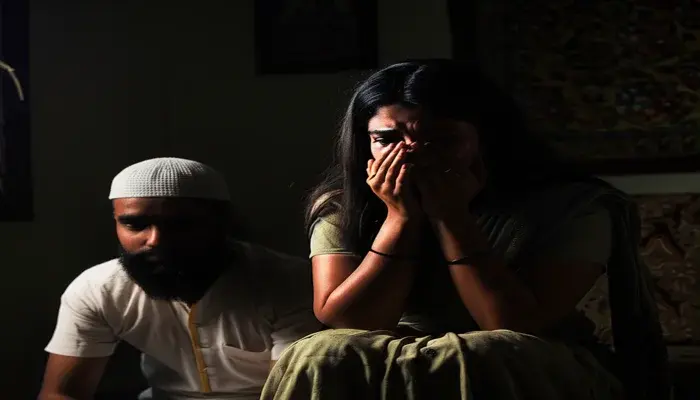
Case Summary
In Samaro, Sindh, Pakistan, a married Hindu woman, identified as Kanno Kolhi, was abducted at gunpoint from her home by a Muslim man and his accomplices. She was then held hostage at an Islamic shrine, where she was raped, forcibly converted to Islam, and made to undergo a nikah (Islamic marriage). On the day of the incident, the victim was sleeping alone at her house when the accused, identified as Ghulam Rasool Chandio, his accomplice Lachhman Kolhi, and several other individuals forcibly entered her residence and abducted her. Following the abduction, the victim was taken to an Islamic religious shrine near Samaro, where she was forcibly converted to Islam and forced into marriage against her will. During her approximately one-month-long captivity, she was repeatedly sexually assaulted. Following sustained legal efforts, continuous advocacy, and coordination by Hindu activist Fakir Shiva Kachhi, the Chairman of the Pakistan Darawer Ittehad (Pakistan Dravid Alliance), the victim was rescued from captivity. A video of the victim's testimony was shared on social media by Shiva Kachhi, detailing her armed abduction, forced religious conversion, forced marriage, and repeated sexual assault. Following the victim's recovery, Fakir Shiva Kachhi, Chairman of the Pakistan Darawer Ittehad, condemned the incident, stating that the abduction, forced conversion, and forced marriage of women and girls constituted grave violations of fundamental human rights and were contrary to the Constitution and laws of Pakistan. He demanded a fair and impartial investigation into the case, the prosecution of all those responsible, and adequate protection and legal assistance for the survivor to ensure she could pursue the case without intimidation. He further stated that his organisation would continue its peaceful constitutional efforts to safeguard the rights of religious minorities, women, and other vulnerable communities. This case highlights the persistent persecution faced by the Hindu minorities in Pakistan, marked by systemic discrimination, violence, and forced conversions. Hindu women, particularly young girls, are often abducted, forcibly converted to Islam, and married off to Muslim men with little to no legal recourse. Temples are frequently vandalised or destroyed, and Hindu communities are subjected to social and economic marginalisation. Blasphemy laws are disproportionately used against Hindus, leading to false accusations and severe punishments. Many Hindu families are forced to flee their homes due to religious intolerance, living in constant fear of attacks. This sustained persecution highlights the dire conditions for Hindus in Pakistan, where their religious identity makes them targets of oppression.
Why it is Hate Crime ?
In this case, the primary category selected is: Predatory Proselytisation. The subcategory selected is: Harassment, threats, coercion for conversion. Harassment covers a wide range of offensive behaviours. It is commonly understood as behaviour that demeans, humiliates, and intimidates a person, including threats and coercion. Harassment and threats, in this case, find their root in discriminatory grounds which have the effect of nullifying a person’s rights or infringing upon his freedom to exercise his right, specifically owing to the victim’s religious identity. Verbal and physical threats and psychological or physical harassment are often used against Hindu victims because they choose to practice their professed religion. Religious harassment also includes forced and involuntary conversions by harassment, threats or coercion. Coercion includes intimidatory tactics like force-feeding a Hindu victim beef to convert to another religion, forceful circumcision, etc. In several cases documented, non-Hindu perpetrators or those who harbour specific animosity towards Hinduism harass victims simply based on their religious identity. Such cases often also include harassment to ensure the Hindu victim abandons his/her professed religion and adopts the religion of the perpetrator. This case has been categorised as a hate crime, as a married Hindu woman was abducted by a Muslim man and his accomplices before being forcibly converted to Islam, forced into marriage, and repeatedly sexually assaulted. The sequence of these acts demonstrated the targeted persecution of the Hindu minority in a Muslim-majority country like Pakistan through coercion, violence, and religious oppression. Such incidents are not isolated occurrences but form part of a persistent and deeply troubling pattern in Pakistan, where Hindu women and girls are repeatedly targeted because of their religious identity. They are subjected to abduction, forced religious conversion, forced marriage, sexual violence, and other forms of coercion aimed at stripping them of their faith and autonomy. This ongoing pattern reflects the entrenched discrimination and religious persecution faced by the Hindu minority in Pakistan. Since the country's inception, Hindu communities have endured harassment, marginalisation, intimidation, violence, and systemic abuses that have undermined their ability to practise their faith and live with security and dignity. In this case, the victim was targeted because of her Hindu identity. After abducting her, the perpetrators forcibly converted her to Islam and compelled her to undergo a nikah (Islamic marriage) against her will. The victim's forced conversion to Islam was not an act of free will, but one imposed through coercion, intimidation, and violence. Under Islamic law, a non-Muslim woman is required to convert to Islam before a marriage with a Muslim man can be regarded as religiously valid. In this case, the victim's forced conversion before the nikah demonstrates that the marriage was used to institutionalise the coerced religious conversion and permanently impose a new religious identity upon her. Rather than constituting a genuine expression of faith, the conversion served as a tool of religious domination, compelling the victim to abandon her Hindu identity as a precondition for the marriage. Such coercive conversion violated her religious autonomy, freedom of conscience, and fundamental right to practise and profess her own faith. It also reflected hostility towards her Hindu identity by treating her religion as something inferior that had to be discarded before the marriage could take place. This, therefore, made the forced conversion an integral component of the religiously motivated persecution she endured. The repeated sexual assault inflicted upon the victim throughout her approximately one-month-long captivity further underscored the religiously motivated nature of the crime. In the context of her abduction, forced conversion to Islam, and forced nikah (Islamic marriage), the sexual violence cannot be viewed as an isolated act driven solely by sexual gratification. Rather, it formed part of a sustained pattern of coercion and abuse directed at a Hindu woman because of her religious identity. The assaults served to degrade her dignity, inflict profound physical and psychological trauma, and break her resistance, thereby facilitating her forced conversion and marriage through fear and subjugation. By targeting the victim's body, autonomy, and religious identity simultaneously, the perpetrators used sexual violence as a weapon of religious persecution and domination. Viewed in its entirety, the repeated rape and sexual abuse were inseparable from the broader campaign of coercion that sought to erase the victim's Hindu identity, making the sexual violence an integral component of this religiously motivated hate crime. Given that this incident met multiple parameters of a religiously motivated crime, including the targeted abduction of a Hindu woman, forced religious conversion under coercion, forced marriage, prolonged captivity, and repeated sexual assault, this case has been unequivocally classified as a religiously motivated hate crime. Accordingly, it has been added to the hate crime database of the Hinduphobia Tracker. Disclaimer: The Hinduphobia Tracker records incident dates based on when the crime occurs or when the victim's ordeal begins, rather than when it is reported by the media. However, in this case, the exact date on which the victim's ordeal began was not stated in the available information. The incident came to public attention on 3 July 2026, when Fakir Shiva Kachhi shared details of the case through his official X account. The available information also stated that the victim had been held captive for approximately one month. Based on these facts, an indicative incident date of 3 June 2026 has been selected. This date has been recorded for documentation purposes only. While this tracker acknowledges that multiple individuals were involved in the commission of this crime, for documentation purposes, the religion of the perpetrators has been recorded as Muslim, as the primary accused, Ghulam Rasool Chandio, is confirmed to be Muslim. The religious identities of the remaining accused, including Lachhman Kolhi and several other unidentified individuals, could not be independently verified at the time of documentation. However, as they acted in concert with the primary accused in the abduction, forced conversion, and forced marriage of the Hindu victim, the case has been recorded under a single perpetrator religion for consistency in categorisation. This approach ensures clarity in data representation while acknowledging the involvement of all accused persons. In this case, although multiple perpetrators were involved in the crime, the available reports identified only Ghulam Rasool Chandio and Lachhman Kolhi by name, while referring to the remaining accused only as several other individuals. Accordingly, only the two named accused have been counted as the perpetrators for documentation purposes. This count is based solely on the information presently available and may be revised if further verified details emerge.
Victim Details
Total Victim
1
Deceased
0
Gender
- Male 0
- Female 1
- Third Gender 0
- Unknown 0
Caste
- SC/ST 1
- OBC 0
- General 0
- Unknown 0
Age Group
- Minor 0
- Adult 1
- Senior Citizen 0
- Unknown 0


Case Status
Unknown


Perpetrators Details
Perpetrators
Muslim Extremists
Perpetrators Range
From 2 To 5
Perpetrators Gender
male
 Sources




