Vulnerable Hindu villagers pressured to convert to Christianity using various inducements in Kharora, Chhattisgarh
 Raipur, Chhattisgarh, India
  4 July, 2026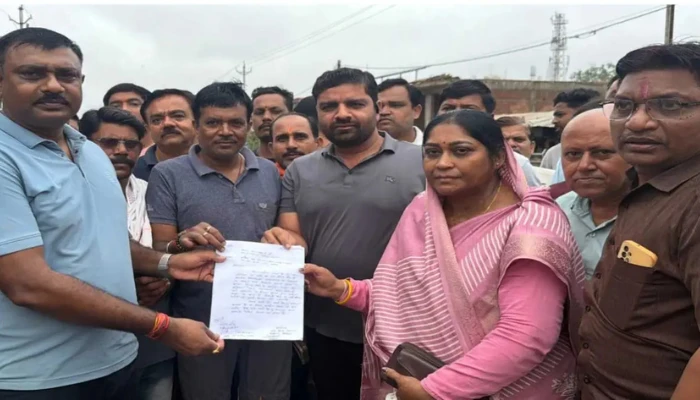
Case Summary
In Kharora, Raipur, Chhattisgarh, Hindus, particularly those from economically vulnerable and rural backgrounds, were targeted for forced Christian conversion by a pastor. The victims were offered various inducements such as free medicines, medical treatment, rations and financial assistance. According to the Sarva Hindu Samaj, a Hindu organisation, these inducements were offered during weekly prayer meetings on Sundays organised by a pastor at the premises of a private shop. As per Hindu activists, this shop was being used as a public venue for the gatherings. In response to these activities, the Sarva Hindu Samaj and allied Hindu organisations staged a large protest on Sunday, 5 July 2026. A large number of people assembled for a rally, proceeded to the Kharora Police Station and submitted a memorandum to the Station House Officer, demanding the immediate closure of the illegal prayer meeting. As per the report, members of the Sarva Hindu Samaj and various Hindu organisations from Kharora and neighbouring villages gathered at the Kharora Rest House early in the morning before marching to the Kharora Police Station to submit a memorandum outlining their demands. According to Sarva Hindu Samaj officials, the pastor had been organising the prayer meeting every Sunday at the private shop premises. They stated that economically vulnerable and rural Hindu families were being induced to convert by offering medicines, medical treatment, rations and financial assistance. The organisation further stated that it had received repeated complaints that Hindus were being invited to these prayer meetings and subsequently converted. During the protest, the Sarva Hindu Samaj demanded that the administration conduct an impartial investigation into the illegal prayer meeting and take appropriate legal action if any violations were found. The organisation urged the authorities to shut down the gathering immediately if it was found to be operating in violation of the law. The protesters also warned that, if the administration failed to take prompt action, they would launch a large-scale public movement, for which they said the administration would be held responsible.
Why it is Hate Crime ?
The primary category for this case is "Predatory Proselytisation". The subcategory for this case is "Conversion/attempts to convert by inducement". Predatory Proselytisation is not just limited to threat, harassment, force and violence, but it also has contours of stealth. In several cases, the Hindu victim is exploited to convert, with non-Hindus taking advantage of their poverty. In such cases, the Hindu victim who is suffering financially is offered monetary benefits, including lucrative offers for jobs, health treatment, education, etc, to induce the victim into changing his/her religion. In such cases, the religious identity of the victim and the aim to disenfranchise him from his faith form the heart of the crime. Also, taking advantage of and exploiting an individual’s economic vulnerabilities is widely acknowledged as exploitation, forms of which are often penalised by law. Such cases, therefore, are considered religiously motivated hate crimes since the victim’s religious identity forms the very heart of the crime itself. Another sub-category for this case is "Proselytisation by grooming, brainwashing, manipulation or subtle indoctrination. The tertiary category here is "Pattern of targeting Hindus". Religious brainwashing essentially means the often subtle and forcible indoctrination to induce someone to give up their religious beliefs to accept contrasting regimented ideas. Religious grooming or brainwashing also involves propaganda and manipulation. It involves the systematic effort, driven by religious malice and indoctrination, to persuade “non-believers’ to accept allegiance, command, or doctrine to and of a contrasting faith. Cases of such grooming or brainwashing are far more nuanced than direct threats, coercion, inducement and violence. In such cases, it is often seen that there is repeated, subtle and continual manipulation of the victim to induce disaffection towards their own faith and acceptance of the contrasting faith of the perpetrator. While subtle indoctrination is widely acknowledged as predatory, an element that is often understated in such conversions or the attempts of such conversion is the role of loyalty and trust that might develop between the perpetrator and the victim. Fiduciary relationships are often abused to affect such religious conversion—for example, an educator transmitting religious doctrine of a competing faith to a Hindu student. The Hindu student is likely to accept what the teacher is transmitting owing to the existence of the fiduciary relationship. The exploitation of the fiduciary relationship to religiously indoctrinate victims would also be included in this category. Since the underlying animosity towards the victim’s faith forms the basis of predatory proselytisation, such cases are considered religiously motivated hate crimes. This case was included in the Hinduphobia Tracker because it involved the systematic targeting of economically vulnerable Hindus for coercive religious conversion to Christianity. The religious motivation behind the incident lay in the deliberate attempt to persuade Hindus to abandon their ancestral Hindu faith and embrace another religion by exploiting their economic vulnerability rather than through genuine spiritual conviction. Poor Hindus were deliberately chosen because their precarious financial circumstances made them the easiest targets, as economic dependence significantly reduced their ability to resist material inducements offered in exchange for religious conversion. By selecting victims on the basis of their vulnerability and attempting to alter their religious identity, the perpetrators directed their actions at individuals because they were Hindus, making the victims' religious identity central to the offence rather than incidental. The use of free medicines, medical treatment, ration supplies and financial assistance demonstrated that the objective extended beyond charitable assistance. These material benefits were employed as instruments to pressure vulnerable Hindus into converting to Christianity and abandoning their native faith. Rather than respecting an individual's freedom to make an independent religious choice, the conduct exploited financial hardship to weaken the victims' attachment to their Hindu beliefs and traditions. The targeting of economically vulnerable Hindus for the purpose of religious conversion reflected a calculated effort to use material dependency as a means of transforming the religious composition of the affected community, thereby making the conduct discriminatory in both its selection of victims and its intended outcome. Furthermore, the repeated organisation of conversion-oriented gatherings reflected a sustained and organised process of religious influence rather than an isolated incident. The recurring nature of these meetings suggested a structured mechanism through which vulnerable Hindus were repeatedly invited into an environment designed to cultivate familiarity, dependence and acceptance of religious conversion over time. Instead of relying upon an individual's free and informed religious choice, the process sought to achieve conversion through prolonged engagement combined with material inducements. This pattern demonstrated planning and continuity, indicating that the conduct formed part of an organised effort to bring about the religious replacement of members of the Hindu community. Such carefully structured efforts enabled the perpetrator to build trust over time and normalise religious conversion through subtle manipulation instead of overt coercion. The intention behind these prayer meetings was not spiritual exchange or religious coexistence but the coercive replacement of the victims' Hindu faith with Christianity. While prayer meetings are ordinarily understood to be spaces for spiritual discourse, worship and religious fellowship, in this case, they were used as a pretext to lure Hindus under the guise of spiritual engagement and subsequently pressure them to convert to Christianity and abandon their Hindu faith. Economically vulnerable Hindus were specifically targeted because their circumstances made them more susceptible to sustained influence and material inducements. The repeated invitation of multiple Hindus to these gatherings, followed by efforts to secure their conversion, indicated that the prayer meetings functioned as an organised centre for coercive religious conversion rather than genuine spiritual interaction. The objective was to reduce adherence to Hinduism by exploiting economic hardship and replacing inherited religious beliefs with those of another faith. The conduct, therefore, demonstrated a deliberate and organised attempt to secure religious conversion through the calculated targeting of a vulnerable Hindu community, making the prayer meetings the focal point of the coercive activity. Such predatory conversion efforts stem from Abrahamic doctrines like Christianity that view non-believers with disdain until they convert, fostering contempt that manifests in targeted crimes against Hindus. Therefore, this case is being added to the Hinduphobia Tracker's hate crime database. Disclaimer: The Hinduphobia Tracker records incident dates based on when the crime occurred or when the victim's ordeal began, rather than when it was reported or published. However, where this information is unavailable, the tracker uses the earliest verifiable date. In this case, the exact date on which the conversion activities began in Kharora could not be established from the available source. Therefore, 5 July 2026, the date on which the protest and memorandum were submitted to the police, has been recorded as the indicative incident date for documentation purposes only.


Case Status
Complaint filed


Perpetrators Details
Perpetrators
Christian Extremists
Perpetrators Range
One Person
Perpetrators Gender
unknown
 Sources




