Hindu minor girl pressured to convert to Islam, threatened with abduction and social media humiliation in Godda
 Godda, Jharkhand, India
  5 April, 2026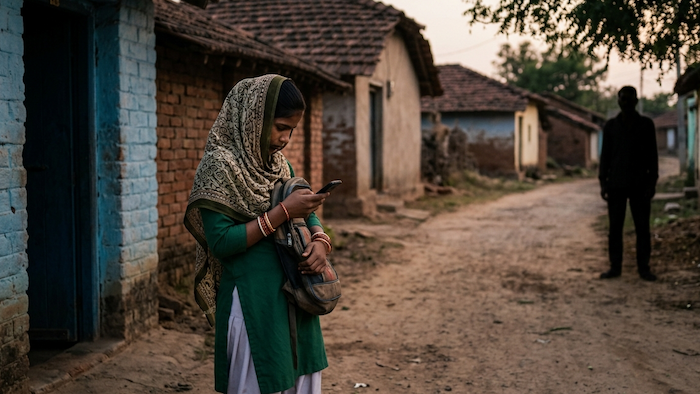
Case Summary
A Hindu minor girl endured months of sustained pressure to abandon her faith in Thakurgangti, Godda district, Jharkhand. The Muslim perpetrator persistently targeted her, attempting to force her to accept Islam and marry him. When she resisted, he escalated his campaign by threatening her, circulating her photograph on social media, and intimidating her with further humiliation. The victim was subjected to continuous religious coercion that extended over a period of three months. The intimidation intensified after she refused to submit to the perpetrator's demands, placing her under sustained psychological pressure while she remained a minor. The Hindu minor girl became the target of Mohammad Aftab Mansoor, a Muslim man from Karan Tola in the Thakurgangti police station area. Over a period of three months, he repeatedly pressured her to abandon her Hindu faith, accept Islam, and marry him. His conduct was directed towards compelling the minor to change her religion against her will, while simultaneously using intimidation to ensure her compliance. Despite the sustained pressure, the Hindu minor consistently refused to convert or accept the marriage proposal. In response to her refusal, Mohammad Aftab Mansoor escalated his actions by uploading and circulating her photograph through his Instagram account, exposing her image on social media without her consent. The circulation of her photograph was used as a means of humiliation and coercion after she resisted his demands. The intimidation did not end there. Through messages sent directly to the victim, Mohammad Aftab Mansoor warned her that she had to accept his religion and marry him. He further threatened that if she continued to refuse, she would be forcibly taken away from her home, converted to Islam, and publicly humiliated by making her photographs viral on social media. He also threatened that the humiliation would become so severe that she would be driven to take her own life. As the harassment continued, the victim's mother approached Thakurgangti Police Station and submitted a written application detailing the sustained targeting of her minor daughter. She stated that her daughter had been subjected to continuous pressure to convert to Islam over the preceding three months and that the threats intensified after she resisted. The written complaint also described the circulation of the girl's photograph on social media and the repeated messages threatening abduction, forced religious conversion, marriage, and public humiliation. Following the complaint, the police registered a case against Mohammad Aftab Mansoor. He was arrested by Thakurgangti police on 5th July 2026 and remanded to judicial custody in Godda. The police stated that they were conducting a thorough investigation into every aspect of the incident and that legal action had been initiated in the matter.
Why it is Hate Crime ?
This case has been added to the tracker under the primary category of - Predatory Proselytisation. Within it, the sub-category selected is - Harassments, threats, coercion for conversion. Harassment covers a wide range of behaviours of an offensive nature. It is commonly understood as behaviour that demeans, humiliates, and intimidates a person, including threats and coercion. Harassment and threats, in this case, find their root on discriminatory grounds which has the effect of nullifying a person’s rights or infringing upon his freedom to exercise his right specifically owing to the victim’s religious identity. Verbal and physical threats and psychological or physical harassment are often used against Hindu victims because they choose to practice their professed religion. Religious harassment also includes forced and involuntary conversions by harassment, threats or coercion. Coercion includes intimidatory tactics like force-feeding a Hindu victim beef to convert to another religion, forceful circumcision etc. In several cases documented, non-Hindu perpetrators or those who harbour specific animosity towards Hinduism, harass victims simply based on their religious identity. Such cases often also include harassment to ensure the Hindu victim abandons his/her professed religion and adopts the religion of the perpetrator. Such cases where Hindu victims are harassed to convert to the perpetrator’s religion are rooted in animosity towards the victim’s religious identity and are therefore documented as religiously motivated hate crimes. In this case, the sustained harassment, threats, and coercion directed at the Hindu minor girl constituted a clear pattern of religiously motivated targeting because they were employed for the specific purpose of compelling her to abandon her Hindu faith and accept Islam through marriage. The perpetrator did not merely seek a personal relationship; he made acceptance of his religion a condition of ending the abuse, demonstrating that religious conversion lay at the heart of his conduct. By repeatedly insisting that the minor renounce her faith while simultaneously threatening severe consequences for refusing, he treated her Hindu identity as something to be erased rather than respected. This transformed the intimidation from ordinary criminal harassment into religious coercion directed specifically at dismantling the victim's existing religious identity. The threats themselves revealed the extent of this coercive intent. When the Hindu minor refused to convert and marry him, the perpetrator threatened to circulate her photographs on social media, publicly humiliate her, forcibly abduct her from her home, and subject her to such relentless harassment that she would be driven to take her own life. Such conduct is horrifying when directed at any individual, but its gravity is greatly amplified when the target is a child. A minor is particularly susceptible to fear, shame, and psychological intimidation and lacks the emotional maturity to process or withstand sustained threats of public humiliation and social destruction. By weaponising these fears against a Hindu child, the perpetrator deliberately exploited her age and vulnerability to break her resistance and force religious compliance. The coercion was therefore inseparable from religion. The threats were not issued independently of the conversion demand but were activated precisely because the victim refused to abandon Hinduism and accept Islam through marriage. Public humiliation, intimidation, and threats of lifelong social disgrace became instruments through which the perpetrator attempted to overcome the victim's attachment to her Hindu faith. The objective was not simply to frighten the minor but to make continued adherence to her religion appear more unbearable than submission to his demands. Such calculated psychological pressure reflects a deliberate attempt to undermine the victim's religious identity by making conversion appear to be the only means of escaping continued abuse. The victim's age further reinforces the religious significance of the offence. A child cannot freely evaluate the lifelong consequences of changing religion or entering marriage in the same manner as an adult. The perpetrator consciously directed religious threats and psychological abuse against someone least capable of resisting sustained manipulation, knowing that fear and intimidation would carry greater force against a minor. By combining threats of abduction, public humiliation, and psychological destruction with repeated demands for conversion, he exploited both the victim's youth and her Hindu identity in pursuit of religious compliance. Taken together, the repeated demands that the Hindu minor abandon her faith, the threats of forced abduction, the circulation of her photographs, the promise of relentless humiliation, and the intimidation intended to drive her towards suicide demonstrate a sustained campaign of religious coercion rather than isolated criminal conduct. The perpetrator specifically targeted a vulnerable Hindu child and sought to use fear, shame, and psychological terror to compel her to renounce her religion and submit to his demands. These facts establish a clear pattern of religiously motivated hostility in which coercion and intimidation were deliberately employed to attack the victim's Hindu identity and force religious conversion. Disclaimer: The exact date on which the initial contact between the Hindu minor girl and the Muslim perpetrator first began was not specified in the available sources. However, the month when the harassment first started was indicated around April. The tracker records incident dates based on when the crime occurred rather than when it was reported or published. In this case, 6th April 2026 has been used as the indicative incident date, derived by aligning the known month with the article publication date of 6th July 2026. This date has been recorded for documentation purposes only.
Victim Details
Total Victim
1
Deceased
0
Gender
- Male 0
- Female 1
- Third Gender 0
- Unknown 0
Caste
- SC/ST 0
- OBC 0
- General 0
- Unknown 1
Age Group
- Minor 1
- Adult 0
- Senior Citizen 0
- Unknown 0


Case Status
Arrested


Perpetrators Details
Perpetrators
Muslim Extremists
Perpetrators Range
One Person
Perpetrators Gender
male
 Sources




