Hindu villagers converted under guise of Christian prayer meetings in Tehri Garhwal, Uttarakhand
 Tehri-Garhwal, Uttarakhand, India
  4 July, 2026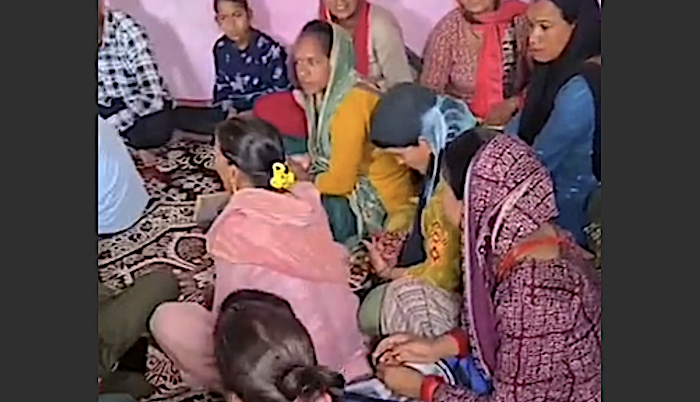
Case Summary
Hindu villagers in Kaitholi village, under Jakhnidhar block in Tehri Garhwal, Uttarakhand, faced organised attempts to convert them to Christianity through prayer meetings conducted by outsiders. The conversion activities prompted strong opposition from local residents, who gathered to stop the gatherings and demanded immediate intervention from the district administration. The incident centred on sustained efforts to influence Hindus to abandon their ancestral faith through religious meetings conducted within the village. The conversion activities came to light after external individuals began organising Christian prayer meetings in Kaitholi village. During these gatherings, people assembled for prayers and other religious activities aimed at influencing local Hindus. One of the Hindu men on site stated that the meetings were being used as a platform to encourage conversion to Christianity and warned that individuals who had become Christians through inducements and monetary temptation were being used to draw others into the faith. The activities took place in a predominantly Hindu area situated near the route leading to the revered Chandrabadni Dham, raising concern among residents over organised religious conversion within the locality. As awareness of the gatherings spread, the Hindu man present at the confrontation objected to the continued organisation of Christian religious meetings inside the village and stated that such activities would not be permitted. He repeatedly instructed those present to discontinue the gatherings and leave the village, asserting that the premises had been provided for residential purposes and not for conducting Christian conversion activities. He also urged neighbouring communities to remain vigilant against similar prayer meetings, stating that he had acted to protect his own village from conversion activities and encouraging others to do the same. During the course of the dispute, villagers also raised concerns regarding one individual who had constructed a structure through unauthorised encroachment along the main road leading to Chandrabadni Dham. Questions were also raised regarding the individual's religious and social documentation, with residents stating that he presented different identities under different circumstances. These concerns formed part of the wider grievances submitted by the local community while seeking an official inquiry into the activities taking place in the area. Following the confrontation, Hindu villagers demanded that the administration conduct a comprehensive investigation into the conversion activities and determine whether any unlawful acts, encroachment, or other legal violations had occurred. They requested that appropriate legal action be taken against those responsible. Amit Thapliyal informed that a formal complaint regarding the matter would be submitted to the District Magistrate on Monday. At the time of reporting, no official statement had been issued by the administration regarding the matter. The villagers' demand for an investigation remained pending, and the outcome of the proposed administrative inquiry had not yet been announced.
Why it is Hate Crime ?
This case has been added to the tracker under the primary category - Predatory proselytisation. Within this, the subcategory selected is - Proselytisation by grooming, brainwashing, manipulation or subtle indoctrination. Religious brainwashing essentially means the often subtle and forcible indoctrination to induce someone to give up their religious beliefs to accept contrasting regimented ideas. Religious grooming or brainwashing also involves propaganda and manipulation. It involves the systematic effort, driven by religious malice and indoctrination, to persuade “non-believers’ to accept allegiance, command, or doctrine to and of a contrasting faith. Cases of such grooming or brainwashing are far more nuanced than direct threats, coercion, inducement and violence. In such cases, it is often seen that there is repeated, subtle and continual manipulation of the victim to induce disaffection towards their own faith and acceptance of the contrasting faith of the perpetrator. While subtle indoctrination is widely acknowledged as predatory, an element which is often understated in such conversions or the attempts of such conversion is the role of loyalty and trust which might develop between the perpetrator and the victim. Fiduciary relationships are often abused to affect such religious conversion. For example, an educator transmitting religious doctrine of a competing faith to a Hindu student. The Hindu student is likely to accept what the teacher is transmitting owing to existence of the fiduciary relationship. The exploitation of the fiduciary relationship to religiously indoctrinate victims would also be included in this category. Since the underlying animosity towards the victim’s faith forms the basis of predatory proselytization, such cases are considered religiously motivated hate crimes. The other subcategory selected is - Conversion/ attempts to convert by inducement. Predatory Proselytisation is not just limited to threat, harassment, force and violence, but it also has contours of stealth. In several cases, the Hindu victim is exploited to convert, with non-Hindus taking advantage of their poverty. In such cases, the Hindu victim who is suffering financially is offered monetary benefits, including lucrative offers for jobs, health treatment, education, etc, to induce the victim into changing his/her religion. In such cases, the religious identity of the victim and the aim to disenfranchise him from his faith form the heart of the crime. Also, taking advantage of and exploiting an individual’s economic vulnerabilities is widely acknowledged as exploitation, forms of which are often penalised by law. Such cases therefore are considered religiously motivated hate crimes since the victim’s religious identity forms the very heart of the crime itself. This case demonstrates a clear instance of religiously motivation through grooming, manipulation and subtle indoctrination, where Christian religious gatherings were used as a sustained mechanism to influence Hindus to abandon their ancestral faith. Rather than functioning solely as acts of worship, the repeated prayer meetings became a vehicle through which members of the Hindu tribal community were gradually exposed to Christian teachings and encouraged to detach themselves from their traditional Sanatan and indigenous religious practices. Conducting regular religious gatherings inside the village allowed sustained engagement with vulnerable Hindus, creating familiarity, trust and dependence before conversion efforts intensified. Such gradual religious influence is a recognised form of subtle indoctrination because it seeks to reshape an individual's religious beliefs over time rather than through open theological debate or voluntary choice. The objective was not merely the propagation of Christianity but the replacement of the existing Hindu religious identity of the tribal community. By systematically drawing Hindus away from their ancestral customs through continuous religious engagement disguised as routine prayer meetings, the perpetrators demonstrated a clear religious intent to expand one faith at the expense of another, making the targeting inherently religious in nature. Furthermore, the conversion activities also reflected attempts to convert Hindus through inducement by exploiting vulnerable members of the tribal community. During the confrontation, one of the Hindu men on site openly stated that Christian activities were being carried out for money and that increasing numbers of villagers were being gathered inside the house for these religious meetings. Significantly, when this was challenged, one of the victims attending the gathering responded that it was "for peace", showing the extent to which the conversion process had shaped the perception of those being targeted. This demonstrates how prolonged religious influence and material inducements can become intertwined, with vulnerable individuals gradually internalising the narrative presented by the missionaries. Additionally, individuals that are economically vulnerable are naturally more susceptible to promises of financial assistance or other material benefits, making them easier targets for organised conversion efforts. Using such inducements under guise of bringing peace to encourage Hindus to abandon their existing faith reveals a deliberate religious objective directed at replacing Hindu religious identity through material influence rather than free and informed religious choice Disclaimer: The Hinduphobia Tracker records incident dates based on when a crime occurs rather than when it is reported in the media. However, in this case, the available media reports do not specify the exact date of when the conversion activities first started. Accordingly, the earliest date on which the incident was published in the media, 5th July 2026, has been adopted as the indicative incident date for documentation purposes only.


Case Status
Unknown


Perpetrators Details
Perpetrators
Christian Extremists
Perpetrators Range
Unknown
Perpetrators Gender
male
 Sources




