Hindu woman lured and sexually assaulted by Muslim man posing as Hindu in Dehradun; accused says Islamic cleric taught him to target multiple Hindu girls
 Dehradun, Uttarakhand, India
  3 July, 2026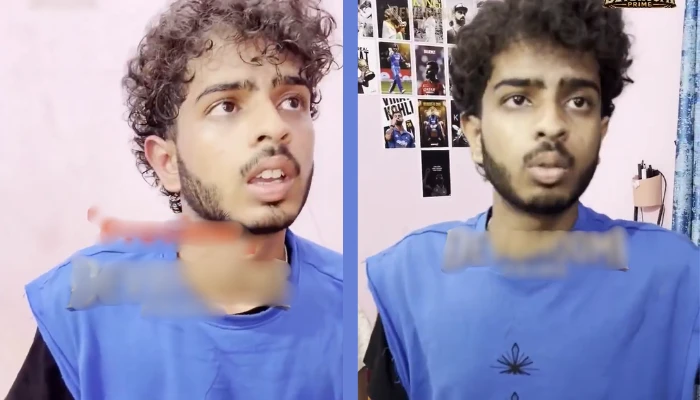
Case Summary
In Dehradun, Uttarakhand, a Hindu woman was deceived, sexually exploited, threatened, and blackmailed by a Muslim man who posed as a Hindu. The accused revealed that he had studied at a madrasa, where an Islamic cleric (Maulvi) had taught him to target Hindu girls and exploit them by concealing his religious identity. The matter came to light when a video of the incident surfaced online. In the video, members of the Bajrang Dal stated that, after receiving information about the incident from local residents, they went to a house in Dehradun and found the accused inside the Hindu woman's room. When the Bajrang Dal members questioned the accused, he initially identified himself as Aman Jaiswal, son of Raja Jaiswal. The accused was also seen wearing ear piercings similar to those commonly worn by Hindu boys, reinforcing the Hindu identity he had presented. However, during the interaction captured in the video, the accused acknowledged that his name was Ashraf Alam, son of Mehtab, and that he was originally from Bihar. The accused further stated that he had studied at a madrasa in Begusarai and, when questioned, said that the Maulvi had taught him to target and exploit Hindu girls. According to the video, the Hindu woman stated that the Muslim man had concealed his religious identity by introducing himself on Instagram as a Hindu named Aman and entering into a relationship with her. The victim further stated that, after gaining her trust, the accused established a physical relationship with her and secretly recorded her private photographs and videos. She stated that when she attempted to distance herself from him, he threatened to make the intimate content public and repeatedly blackmailed her into continuing the relationship. In the video, the woman reiterated that she had believed the accused to be Hindu because he had introduced himself as Aman and had concealed his Muslim identity throughout the relationship. Individuals present during the interaction stated that the accused had deliberately adopted a Hindu identity to befriend and deceive a Hindu woman. They further stated that the victim had repeatedly asked the accused not to circulate her private photographs and videos, but he continued threatening to make them viral in order to coerce her. The video further showed Hindu activists urging parents to remain vigilant when sending their daughters away from home for study or work. Those present stated that the concealment of religious identity, followed by blackmail, had been used to target Hindu women.
Why it is Hate Crime ?
This case has been added to the tracker under the primary category - Crimes against women in relationships and other sexual crimes. Within this, the subcategory selected is - Man pretends to be Hindu. Under this, the tertiary categories selected are - Name changed, Wears symbols of Hinduism, Pattern of targeting Hindu women. When a non-Hindu man pretends to be a Hindu to deceive a Hindu woman into a relationship, the act is seen as triggered by mala fides intentions. In some cases, the woman eventually accepts the man’s original religious identity and converts after the man’s identity is revealed. These cases could be argued as cases of religious brainwashing and a result of the pressure a woman feels after getting into a relationship with a man. The woman, it can be argued, also changed her religious identity because of the stigma she believes she might face if she chooses to walk out of a deceptive relationship. However, for the purpose of documenting hate crimes, the cases in this subcategory are limited to those where there is explicit violence aimed at religious conversion against the wishes of the victim (force-feeding beef, blackmailing with intimate videos, rape on refusal to convert, etc) or if the woman herself complains of the man’s religious deception. In such cases, it is established that the deception of the non-Hindu man had a specific aim of religious conversion or targeting of the victim due to her Hindu religious identity, therefore, making it a religiously motivated hate crime. The other selected subcategory is Brainwashed and/or Groomed. In our database, we have not added incidents where women have converted to another religion of their free will, and no allegations of forced/involuntary conversion have been made. However, there are certain cases of conversion where the consent itself is a result of the brainwashing or grooming of a minor by the non-Hindu perpetrator trying to victimise a woman for her Hindu religious identity. The phenomenon of grooming points to non-Hindu perpetrators identifying their Hindu victims’ vulnerabilities and exploiting them over months and sometimes years, to extract the supposed ‘consent’ in order to convert their religion. In most cases of grooming, the victims are minors or the grooming started when the victim was a minor. In other cases of grooming, the non-Hindu perpetrator brainwashes and grooms a minor victim to extract their trust and then proceeds to rape them repeatedly with the intent of converting them to their faith. It is pertinent to understand here that when the victim is a minor, the ‘consent’ to convert or enter into a romantic relationship with an adult itself is redundant – addressed by POCSO. While every case of conversion of a minor and incidents of establishing a physical relationship with a minor by an adult is a crime, for the purpose of this database, a case would be considered a hate crime only if there is a distinct religious angle to the grooming. For example, in the UK, if a Hindu minor is targeted by Pakistani grooming gangs, it would be considered a hate crime because the victims are specifically targeted owing to their non-Muslim religious identity, with the perpetrators being Muslim. In other cases, if a Hindu minor is brainwashed into entering a physical relationship with the non-Hindu adult perpetrator and the family alleges grooming/brainwashing of the minor to convert her religion, it would form a part of this database. If the victim is a Hindu adult, the case would form a part of this database only if the victim herself says that she was brainwashed/groomed to convert her religion. However, if the victim is deceased (murdered or otherwise), the case would form a part of this database if her family/friends provided testimony that the victim was brainwashed/groomed to convert her religion. Since these crimes have a distinct religious angle where the victim is being targeted owing to her Hindu religious identity, these cases are considered hate crimes. This case was included in the Hinduphobia Tracker because a Hindu woman was deceived into a relationship by a Muslim man who concealed his religious identity by posing as a Hindu. The religious trigger became evident from the deliberate assumption of a Hindu identity to gain the victim's trust, coupled with the accused's own statement in the video that a Maulvi had instructed him to selectively target Hindu girls. After gaining her trust, he established a sexual relationship with her, secretly recorded her private photographs and videos, and later blackmailed her by threatening to make the intimate content public if she attempted to leave the relationship. This overall makes this incident a clear example of a religiously driven hate crime. Firstly, the perpetrator's act of deception by posing as a Hindu using a fake name and wearing Hindu symbols like ear piercings itself demonstrates a clear bias and malicious intent towards the victim's religion. Significantly, ear piercing for men is generally prohibited (haram) under mainstream Islamic teachings, making its adoption in this instance inconsistent with ordinary Islamic practice. Its use, therefore, was intended to reinforce the false Hindu identity presented to the victim and reduce any suspicion regarding his true religious identity. By hiding his true identity, the Muslim man manipulated the Hindu woman's trust and specifically targeted her under false pretences, indicating a premeditated effort to exploit her because of her religious background. This deception deprived the victim of her right to make an informed decision about entering into an intimate relationship, as she was deliberately denied truthful information about the perpetrator's identity. The accused was aware that the victim, being Hindu, would likely have refused his advances had she known his real identity, and he circumvented this by concealing his religion and falsely presenting himself as a Hindu. In such instances, identity concealment is not merely a deceptive tactic for personal gain but a calculated strategy rooted in religious profiling and the targeting of Hindu women. The accused's own statement that an Islamic cleric had instructed him during his madrasa education to target and exploit Hindu girls further strengthens the indication that the victim was not chosen at random but because she was Hindu. Such conduct reflects a broader pattern in which Hindu women are singled out by Muslim men using false identities for coercion, forced religious conversion, and exploitation, exposing a deeper hostility towards Hindus and their beliefs. Secondly, the Hindu woman was sexually exploited only after being deliberately deceived into a relationship through the accused's false Hindu identity. Once he had gained her confidence, he established a physical relationship with her and secretly recorded her private photographs and videos without her knowledge. He subsequently used these recordings as a means of coercion, threatening to make them public whenever she attempted to end the relationship, thereby trapping her in a cycle of intimidation and blackmail. The sexual exploitation and subsequent coercion were not isolated acts detached from the preceding deception; rather, they were made possible by the perpetrator's conscious decision to target a Hindu woman by concealing his religious identity. Had the victim known that the accused was a Muslim, she would have had the opportunity to make an informed choice about whether to enter into the relationship. By depriving her of that choice and exploiting her trust, the accused selectively targeted the victim because she was Hindu and subjected her to sustained sexual exploitation and blackmail. The sexual exploitation and blackmail were therefore not merely acts of personal misconduct but the culmination of a religiously motivated pattern of deception directed at a Hindu woman. The victim's Hindu identity was central to the manner in which the offence was executed, making the exploitation and coercion instruments of targeted victimisation based on religion. The accused's admission that he had been taught by a Maulvi to target Hindu girls lends further weight to the conclusion that the victim was selected because of her religious identity rather than by chance. Such acts demonstrate not only a disregard for the victim's bodily autonomy and personal autonomy but also hostility towards her religious identity, bringing the offence within the ambit of a religiously motivated hate crime. Notably, this is not the first time the Hinduphobia Tracker has documented a case of a Hindu woman being religiously profiled and targeted by a Muslim man through deception. The Hinduphobia Tracker has documented nearly 1,276 such cases involving the religiously motivated targeting of Hindu women in interfaith relationships by Muslim men between 1 January 2023 and 6 July 2026. In 795 of these cases, the perpetrators had posed as Hindus to conceal their religious identity and gain the victims' trust. The recurrence of this modus operandi indicates a broader pattern of targeting Hindu women rather than an isolated incident. Viewed in this wider context, the present case forms part of a recurring pattern of crimes directed against Hindu women on the basis of their religious identity, making it a clear example of a religiously driven hate crime. Disclaimer: The tracker records incident dates based on when the crime occurred, or the victim's ordeal began, rather than when it was reported or published. However, when this information is unavailable, the tracker uses the earliest available date. Here, the exact date on which the victim met the accused and was deceived was not mentioned. Therefore, 4 July 2026 has been used as the indicative incident date, reflecting the publication date as the earliest available reference point. This date has been recorded for documentation purposes only.
Victim Details
Total Victim
1
Deceased
0
Gender
- Male 0
- Female 1
- Third Gender 0
- Unknown 0
Caste
- SC/ST 0
- OBC 0
- General 0
- Unknown 1
Age Group
- Minor 0
- Adult 1
- Senior Citizen 0
- Unknown 0


Case Status
Unknown


Perpetrators Details
Perpetrators
Muslim Extremists
Perpetrators Range
One Person
Perpetrators Gender
male
 Sources




