Hindu faith ridiculed; leftist youtuber questions the sanctity of cow, distorts depictions of Hindu deities
 India
India  20 March, 2026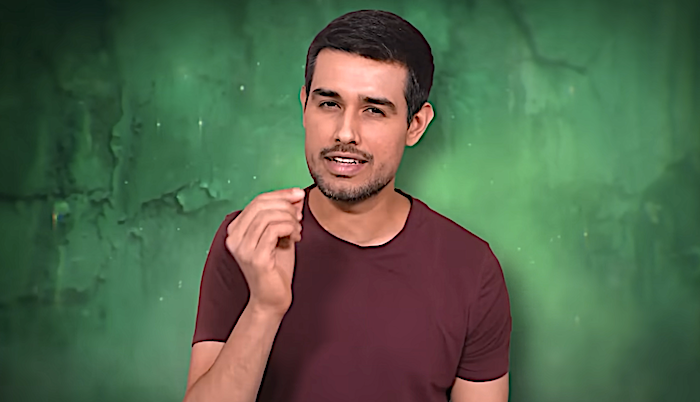
Case Summary
Hindu devotees were subjected to content that questioned and challenged deeply held religious beliefs relating to the sanctity of the cow, the reverence accorded to Lord Ram, Lord Krishna and Mother Sita, and the significance of forced beef consumption as an act of religious humiliation. The content was disseminated through a YouTube video uploaded by YouTuber Dhruv Rathee, where references to Hindu scriptures, Hindu deities and Hindu religious practices formed the central theme of the discussion. The video extended beyond a discussion of dietary practices and directly addressed a scene depicting a Hindu girl being forcibly fed beef in the film Kerala Story 2. Instead of treating the act as an instance of religious coercion directed at a Hindu victim, the video questioned its significance by arguing that a large proportion of Hindus consumed meat and that beef had historically been consumed within sections of Hindu society. It further described the film as propaganda that sought to create communal polarisation through the issue of beef. The video was uploaded on 21st March 2026 under the title 'Can Hindus Eat Beef? | Kerala Story 2 Exposed'. It opened by criticising Kerala Story 2, describing it as another propaganda film that portrayed Muslims as villains and Hindu girls as fools. Referring to the trailer sequence in which a Hindu girl was forced to eat beef, the video jokingly remarked that "it is a crime to feed someone beef without parotta" before stating that the incident reflected a North Indian narrative rather than a Kerala one. It then questioned why the forced feeding of beef should be viewed as an act of religious persecution against Hindus. The discussion proceeded to argue that a majority of Hindus were non vegetarian and that vegetarianism did not define Hindu identity. To support this position, the video cited demographic surveys, historical writings and passages from Hindu scriptures. It referred to texts including the Mahabharata, Manusmriti, Vyas Samhita, Brihadaranyaka Upanishad and the Valmiki Ramayana, asserting that meat consumption was recognised within Hindu traditions under various circumstances. The video specifically discussed Lord Ram, Lord Krishna and Mother Sita. It stated that there were scriptural references indicating that Lord Ram and Lord Krishna consumed meat and alcoholic beverages and referred to passages from the Valmiki Ramayana concerning Mother Sita's vow to offer meat, rice and wine to the River Ganga. It also cited passages relating to the Pandavas, Arjuna and other figures from Hindu scriptures to argue that meat consumption formed part of ancient Hindu practice. Throughout the presentation, these scriptural references were used to contend that meat eating, including references connected with beef, had historical and religious acceptance within Hindu traditions. The video further contrasted dietary practices across different Hindu communities, regions and castes. It referred to meat offerings at various Hindu temples, discussed animal sacrifice in certain religious traditions and argued that vegetarianism became more widespread due to historical, geographical and social developments rather than because it represented an original or universal Hindu religious doctrine. It concluded that the portrayal of beef as inherently incompatible with Hinduism was politically motivated and described films centred on such themes as propaganda intended to generate communal division. The content prompted legal proceedings before the Delhi High Court and the Magistrate Court. During the hearing before the Delhi High Court, the Grievance Appellate Committee was directed to decide within 15 days whether the video should be removed from the platform. The court also sought an action taken report from the police in the connected criminal proceedings. Separately, the Magistrate Court directed the Station House Officer to submit an Action Taken Report by 10th September 2026, and the proceedings remained ongoing.
Why it is Hate Crime ?
This case has been added to the tracker under the primary category - Hate speech against Hindus. Within this, the subcategory selected for this case is - Anti-Hindu slurs, mocking faith. Anti-Hindu slurs and the deliberate mocking of the Hindu faith owing to religious animosity involve the usage of derogatory terms, stereotypes, or offensive references to religious practices, symbols, or figures. One of the common anti-Hindu slurs used against Hindus is “cow-worshipper” and “cow piss drinker”. The intention of using this term is to demean and mock Hindus as a group and their religious beliefs since Hindus consider the cow holy. Additionally, some symbols and the slurs attached to them have a historical context that exacerbates the insult, hate, stereotyping, dehumanisation and oppression against Hindus. Cow worship has been used for centuries to denigrate Hindus, insult their faith and oppress Hindus specifically as a religious group. There has been overwhelming documentation about how cow slaughter has been used to persecute Hindus with cow meat being thrown in temples and places of worship. There has also been overwhelming documentation where cow meat (beef) has been force-fed to Hindus to either forcefully convert them to Islam or denigrate their faith. Apart from cow worship, the Swastika – which holds deep religious significance for the Hindus – has also been misinterpreted and distorted to use as a slur against Hindus. Similarly, the worship of the Shivling has been used by supremacist ideologies and religions to denigrate Hindus owing to religious animosity. Such slurs and denigration stem out of inherent animosity and hate towards Hindus and their faith, therefore, it is categorised as hate speech targeted at Hindus specifically owing to their religious identity. The other sub-category selected here is - Anti-Hindu subversion and prejudice, with the tertiary category being Anti-Hindu fake news or downplaying. Hate speech is defined as any speech, gesture, conduct, writing, or display that is prejudicial against a specific individual and/or group of people, which is leading to or may lead to violence, prejudicial action or hate against that individual and/or group. Media plays a specific and overarching reach in perpetuating prejudicial attitudes towards a community owing to unfair, untrue coverage and/or misrepresentation/misinterpretation, selective coverage and/or omission of facts of/pertaining to issues affecting a specific religious group. This type of bias can dehumanise the victim group, making it easier for others to justify harmful actions against them, which aligns with the objectives of hate speech laws aimed at preventing such harm. It is often observed that the media takes a prejudicial stand against the Hindu community driven by their need to shield the aggressor community which happens to be a numeric minority, however, is the one perpetrating violence against Hindus. For example, the media is often quick to contextualise religiously motivated crimes against Hindus, omit or misrepresent facts that point towards religiously motivated hate crimes, justify and/or downplay religiously motivated hate crimes or simply present fake news to stereotype Hindus. Such media bias leads to the denial of persecution and is often used to dehumanise Hindus, leading to justification for violence against them. For example, the media covered several fake allegations of Hindus targeting Muslims and forcing them to chant Jai Shree Ram. Most of these cases were proved false and fabricated after police investigation. These fake news reports were subsequently never retracted or clarified. Such fake news led to the justification of violence and dehumanisation of Hindus based on the argument that since Hindus targeted Muslims and forced them to chant Jai Shree Ram, the dehumanisation of Hindus and violence against them was par for the course and merely a retaliation. Such media bias leads to prejudicial portrayal of Hindus and offers a justification for violence against them and therefore, is considered hate speech under this category. Another sub-category selected for this case is - Subversion of scriptures. Subverting the religious scriptures of Hindus has particularly devastating consequences. Subversion of the scriptures of Hindus is often done to justify or promote hatred, discrimination, or violence against specific individuals or groups of Hindus. Religious scriptures are often nuanced and those who harbour religious animosity towards Hindus often misquote or misrepresent the scripture to legitimise their animosity and hate towards the faith and its adherents. Any such misquoting of scriptures or subversion to justify hate, violence and discrimination against Hindus owing to religious animosity is hate speech and is categorised as such. This case has been added to the Hinduphobia Tracker because it involved public content that directly engaged with beliefs, scriptures, deities and religious practices that are sacred to Hindus in a manner capable of ridiculing, undermining and delegitimising their faith. Rather than confining itself to political criticism or film review, the video centred its discussion on core aspects of Hindu religious identity, including the sanctity of the cow, revered Hindu deities and ancient Hindu scriptures. The content repeatedly challenged beliefs held sacred by millions of Hindus and presented them in a manner that diminished the legitimacy of those beliefs. The religious dimension was therefore central to the content, making Hindu faith itself the subject of public disparagement rather than incidental to the discussion. One of the clearest religious markers in this case was the manner in which the video mocked the forced feeding of beef to a Hindu girl depicted in the Hindi movie, Kerala Story 2. The remark that "it is a crime to feed someone beef without parotta" trivialised an act that derives its significance from Hindu religious belief. Within Hinduism, the cow is regarded as sacred and revered by millions of devotees as a symbol of purity, motherhood and divine creation. Consequently, forcing a practising Hindu to consume beef is not merely an act involving food but one capable of inflicting profound religious humiliation by compelling the victim to violate deeply held religious convictions. Instead of recognising the trauma arising from such coercion or examining the religious hostility that underlies forcing beef upon a Hindu, the video reduced the incident to humour before dismissing it as reflecting a regional narrative. This shifted attention away from the victim's religious injury and normalised the ridicule of a practice that carries immense spiritual significance for Hindus. By making light of an act whose impact rests entirely upon Hindu religious beliefs, the content demonstrated contempt towards those beliefs and mocked the faith of the Hindu community itself. The religious hostility was further reinforced by the repeated dismissal of concerns surrounding Kerala Story 2 as propaganda, thereby undermining narratives centred on religious targeting of Hindus. The discussion did not merely disagree with the film's portrayal but questioned the legitimacy of concerns relating to religious coercion, including the forced feeding of beef, by presenting them as exaggerated or politically manufactured. Such a narrative diminished experiences that many Hindus regard as genuine manifestations of religious hostility and encouraged audiences to view those concerns with scepticism rather than seriousness. By portraying expressions of Hindu religious injury as propaganda instead of recognising the religious significance attached to them, the content weakened the credibility of Hindu victims and fostered prejudice against concerns rooted in Hindu faith. This created an environment where the religious sensitivities of Hindus were treated as inherently suspect or undeserving of equal respect. The religious dimension became even more pronounced through the extensive use of Hindu scriptures and references to revered Hindu deities in support of the video's central narrative. Hindu scriptures are not ordinary historical documents but sacred texts that preserve the religious beliefs, philosophy and spiritual traditions of one of the world's oldest living civilisations. Likewise, Lord Ram, Lord Krishna and Mother Sita are worshipped by millions of Hindus as divine figures whose lives and teachings form the foundation of Hindu religious practice and devotion. By invoking these revered personalities and citing ancient scriptures to argue that they consumed meat and to challenge contemporary Hindu beliefs surrounding the sanctity of the cow, the content placed sacred religious figures at the centre of a narrative that many devotees regarded as deeply offensive. Rather than treating these scriptures with the reverence ordinarily accorded to sacred religious texts, the video employed them as instruments to undermine present-day Hindu beliefs and religious practices. The selective presentation of scriptural references to support conclusions that diminished long-held religious convictions had the effect of subverting the authority of texts that Hindus regard as sacred and undermining the faith placed in them by devotees across generations. The impact of this conduct was amplified by the scale of the platform through which it was disseminated. As one of India's largest YouTube creators, Dhruv Rathee possesses the ability to influence millions of viewers through content that reaches a vast public audience. The decision to use such a platform to present narratives concerning revered Hindu deities, sacred scriptures, and fundamental religious beliefs in a manner that challenged and diminished their sanctity substantially increased the content's reach and impact. Public dissemination of such material risks normalising disrespect towards Hindu scriptures, deities and religious practices while encouraging wider acceptance of narratives that portray core elements of Hindu faith as unworthy of reverence. When content directed at sacred figures and scriptures is broadcast to millions, its effect extends beyond individual opinion and contributes to a broader climate in which hostility towards Hindu religious identity becomes increasingly normalised. Taken together, the mockery of a Hindu victim's religious humiliation through forced beef consumption, the dismissal of Hindu concerns as propaganda, the use of sacred scriptures to undermine long-held religious beliefs, and the public discussion of revered Hindu deities in a manner that diminished their sanctity established that the content directly targeted matters of profound religious significance for Hindus. The repeated engagement with sacred Hindu beliefs was not incidental but formed the foundation of the narrative presented to a mass audience, making the religious dimension central to the incident. Given that this case met the parameters of a religiously motivated hate speech incident, it was added to the hate speech database of the tracker.


Case Status
Case sub-judice


Perpetrators Details
Perpetrators
Others
Perpetrators Range
One Person
Perpetrators Gender
male
 Sources




