Hindu woman deceived and sexually exploited by Muslim man posing as Hindu politician; accused similarly targeted multiple other Hindu women
 Umaria District, Madhya Pradesh, India
  3 July, 2026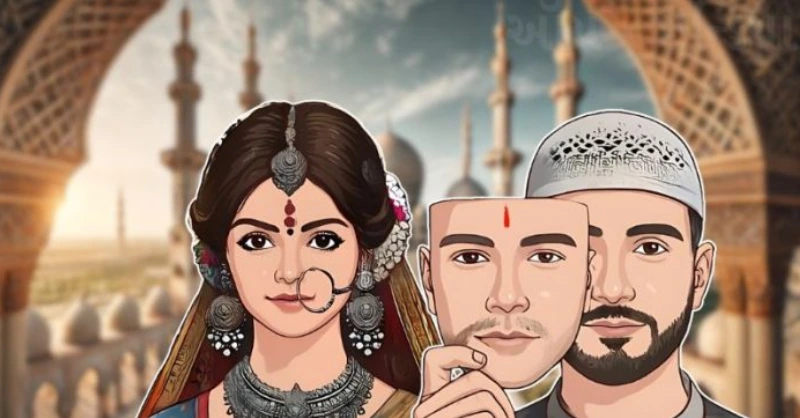
Case Summary
In Chandia, Umaria district, Madhya Pradesh, a Hindu woman was lured into a relationship by a Muslim man, Haroon Mohammad Khan. The accused pretended to be a Hindu by using a fake name and wearing a tilak. When she discovered his true identity and attempted to distance herself, she became the target of blackmail, financial extortion, and threats involving intimate videos. Reports also revealed that the perpetrator used the same method to interact with and target several other Hindu women. According to media reports, the Muslim perpetrator introduced himself to the Hindu woman as Abhishek Singh Parihar, claiming to be a leader of the Bharatiya Janata Party. To reinforce this false identity, he wore a tilak and presented himself as a practising Hindu. Believing that he belonged to the same religious community, the Hindu woman gradually entered into a relationship with him. He then sexually exploited her under the pretext of this relationship. Only later did she discover that his real identity was Haroon Mohammad Khan and that he had deliberately concealed both his name and his religious identity from the very beginning of their association. The Hindu woman realised that the trust on which the relationship had been built had been secured through sustained religious deception. Following the revelation of his true identity, the Hindu woman attempted to end all contact with him and distance herself from the relationship. Instead of allowing her to leave, the Muslim perpetrator subjected her to continued intimidation and coercion. He created obscene videos of the Hindu woman, threatened to circulate them publicly, and used them to blackmail her. Through this intimidation, he extorted approximately 8 lakh rupees from the Hindu woman while continuing to exert pressure and control over her. During the investigation, police recovered digital chat records linked to the Muslim perpetrator. According to the investigating authorities, the chats indicated similar interactions with other Hindu women. The contents of those conversations remained under verification as part of the ongoing investigation. Police investigated the complaint and gathered evidence relating to the fabricated identity, the blackmail, the financial extortion, and the digital material recovered during the investigation. The Muslim perpetrator, Haroon Mohammad Khan, who operated a private clinic, was arrested, produced before the court, and remanded to judicial custody. The investigating officer stated that further legal action would be taken if additional evidence emerged during the course of the investigation.
Why it is Hate Crime ?
This case has been added to the tracker under the primary category - Crimes against women in relationships and other sexual crimes. Within this, the subcategory selected is - Man pretends to be Hindu. Under this, the tertiary categories selected are - Name changed, Pattern of targeting Hindu women, and Wears symbols of Hinduism. When a non-Hindu man pretends to be a Hindu to deceive a Hindu woman into a relationship, the act is seen as triggered by malafide intentions. In some cases, the woman eventually accepts the man’s original religious identity and converts after the man’s identity is revealed. These cases could be argued as cases of religious brainwashing and a result of the pressure a woman feels after getting into a relationship with a man. The woman, it can be argued, also changed her religious identity because of the stigma she believes she might face if she chooses to walk out of a deceptive relationship. However, for the purpose of documenting hate crimes, the cases in this subcategory are limited to those where there is explicit violence aimed at religious conversion against the wishes of the victim (force-feeding beef, blackmailing with intimate videos, rape on refusal to convert, etc), or if the woman herself complains of the man’s religious deception. In such cases, it is established that the deception of the non-Hindu man had a specific aim of religious conversion or targeting of the victim due to her Hindu religious identity, therefore, making it a religiously motivated hate crime. This case demonstrated clear religiously motivated targeting because the Muslim perpetrator deliberately concealed his true religious identity and presented himself as a Hindu to gain the trust of a Hindu woman. This was not an insignificant personal lie but a carefully constructed false identity centred on Hindu religious belonging. By maintaining this deception, he deliberately exploited the trust and familiarity associated with a shared faith to establish a relationship under false religious pretences. The fabricated Hindu identity enabled him to exploit the Hindu woman, financially extort her, and later blackmail her with obscene videos. His deception, therefore, reflected a calculated effort to misuse Hindu identity as a means of accessing and exploiting a Hindu victim due to her faith identity. The deliberate change of name further reinforced the religious nature of the deception. Rather than using his real Muslim name, the perpetrator adopted the Hindu name "Abhishek Singh Parihar", a decision that cannot be viewed as incidental when examined alongside his broader pattern of conduct. Names serve as immediate indicators of religious and cultural identity, and adopting a distinctly Hindu name allowed the perpetrator to convincingly present himself as belonging to the victim's own religious community. This false identity was strengthened further by portraying himself as a Bharatiya Janata Party leader, thereby projecting an image associated with Hindu political and cultural identity. These were calculated decisions intended to remove suspicion, establish credibility, and create a sense of shared religious values with the Hindu woman. The deception was therefore not limited to concealing his own identity but extended to constructing an entirely fictitious Hindu persona designed to exploit the trust that accompanies perceived religious commonality. By intentionally assuming markers of Hindu identity solely to gain access to and exploit a Hindu woman, the perpetrator demonstrated that Hindu identity itself was the mechanism through which the victim was targeted. The religious deception became even more pronounced through the deliberate use of Hindu religious symbols to authenticate the fabricated identity. The perpetrator wore a tilak on his forehead and consistently projected himself as a Hindu during his interactions with the victim. Within Hinduism, the tilak carries profound religious and cultural significance and is widely recognised as an outward expression of devotion, faith, and Hindu identity. By displaying this sacred symbol while knowingly concealing his true identity, the perpetrator transformed a respected religious marker into an instrument of deception. The tilak was not worn as an expression of genuine belief but as a calculated tool to reinforce the false impression that he belonged to the Hindu faith, thereby encouraging the victim to lower her guard and place her trust in him. The misuse of a sacred Hindu symbol for the purpose of deceiving a Hindu woman demonstrates a conscious exploitation of Hindu religious traditions for personal gain. It reflects not merely dishonesty but the intentional weaponisation of Hindu religious symbolism to manipulate the victim's confidence in someone she believed shared her faith and cultural background. The appropriation of a revered Hindu symbol in furtherance of deception underscores the religious dimension of the targeting and demonstrates a calculated intent to exploit Hindu identity itself as the means through which the victim could be lured and ultimately exploited. The sexual exploitation that followed was therefore inseparable from the calculated deception that specifically targeted her as a Hindu woman. Had the Muslim perpetrator not fabricated a Hindu identity, he would not have been able to obtain her trust in the same manner. The victim was thus sexually exploited because she was a Hindu and because the perpetrator intentionally manipulated her religious trust to facilitate that exploitation. The concealment of his real identity and the deliberate assumption of a Hindu identity demonstrate that her religious identity was central to the manner in which she was selected, deceived, and exploited. This makes the case a clear instance of religiously motivated sexual targeting and a religiously motivated hate crime in which the victim's Hindu identity was instrumental to the commission of the offence. The abuse did not end with the sexual exploitation. After the Hindu woman discovered the Muslim perpetrator's true identity and attempted to end the relationship, he escalated the abuse by blackmailing her with obscene videos, threatening to circulate them publicly, and extorting approximately 8 lakh rupees from her. Rather than allowing her to leave after his deception had been exposed, he sought to maintain control over her through fear, intimidation, and financial exploitation. This progression from religious deception to sexual exploitation and then to sustained blackmail and extortion significantly aggravated the seriousness of the offence. It demonstrated that the perpetrator's objective extended beyond securing a physical relationship and evolved into a sustained campaign of coercion designed to exploit the vulnerability he had created through his fabricated Hindu identity. The continued intimidation, financial extortion, and threats reinforced the pattern of targeted victimisation, illustrating that the exploitation did not cease once the deception had served its initial purpose but instead developed into prolonged abuse directed against a Hindu victim whom he had specifically selected and manipulated through religious impersonation. The recovery of digital chat records indicating similar interactions with multiple other Hindu women further strengthens the conclusion that this was not an isolated act directed at a single victim but part of a broader pattern of conduct. According to the investigating authorities, the chats suggested that the Muslim perpetrator had engaged in similar interactions with other Hindu women while operating under a fabricated Hindu identity. This demonstrates a recurring method of selecting Hindu women, concealing his real religious identity, and exploiting the trust created through that deception. Rather than being an isolated instance of personal misconduct, the available evidence points towards a deliberate pattern of targeting Hindu women as a specific group for sexual exploitation through religious impersonation. The repeated use of the same modus operandi against multiple Hindu women indicates that their Hindu identity was not incidental but a key factor in their selection as victims, reinforcing the conclusion that the case constitutes a religiously motivated hate crime characterised by systematic targeting of Hindu women through deception. Overall, since this case met the parameters of a religiously motivated crime, it is being added to the hate crime database of the Hinduphobia Tracker. Disclaimer: Hinduphobia Tracker records incident date based on when the victim's ordeal begins rather than when it is reported by the media. However, the exact date on which the initial contact between the Hindu woman and the Muslim perpetrator first began was not specified in the available sources. Therefore, 3rd July 2026, the publication date of the earliest available report, has been used as the indicative incident date in the tracker. This date was recorded solely for archival and documentation purposes. Although the investigation indicated that the Muslim perpetrator had interacted with and targeted multiple other Hindu women using a similar modus operandi, only one victim was specifically identified in the available reports. As the exact number of other Hindu women targeted was not stated, the victim count has been recorded as one for documentation purposes. This count may be revised if subsequent investigations or official records identify additional victims.
Victim Details
Total Victim
1
Deceased
0
Gender
- Male 0
- Female 1
- Third Gender 0
- Unknown 0
Caste
- SC/ST 0
- OBC 0
- General 0
- Unknown 1
Age Group
- Minor 0
- Adult 1
- Senior Citizen 0
- Unknown 0


Case Status
Arrested


Perpetrators Details
Perpetrators
Muslim Extremists
Perpetrators Range
One Person
Perpetrators Gender
male
 Sources




