Hindu woman pressured to convert to Islam, raped upon refusal by Muslim man posing as Hindu; victim threatened with acid attack for pursuing legal action
 Muzaffarnagar, Uttar Pradesh, India
  1 July, 2022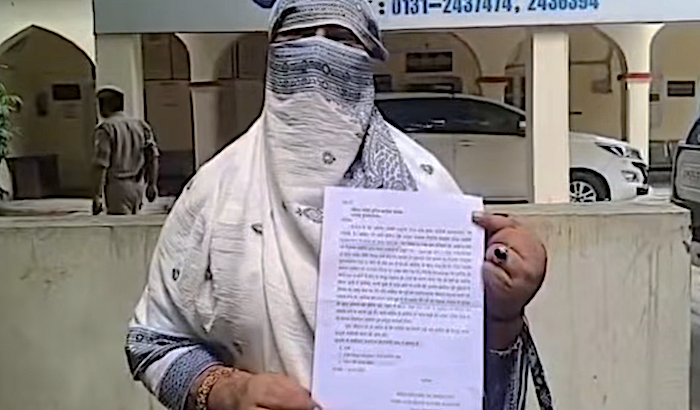
Case Summary
In Muzaffarnagar, Uttar Pradesh, a Hindu woman endured years of deception, coercion, and abuse after a Muslim man concealed his religious identity and entered into a relationship with her by posing as a Hindu. He later subjected her to sustained pressure to abandon her faith and convert to Islam. Even after criminal proceedings were initiated, she continued to face intimidation, blackmail, and threats of acid attack intended to silence her before her testimony in court. Fearing for her safety and that of her daughter, she approached the Senior Superintendent of Police, seeking immediate protection and legal action. According to media reports, the Hindu woman stated that the Muslim perpetrator first befriended her by presenting himself as a Hindu and concealing his true religious identity. Believing him to be a Hindu, she entered into a relationship with him after he promised marriage. He later took her to Haridwar and married her while continuing to maintain the false identity. Only after the marriage did she discover that his real identity was Muslim and that he had deliberately hidden this fact from her. The Hindu woman further discovered that the Muslim perpetrator had concealed another significant fact throughout their relationship. She came to know that he was already the father of eight children before marrying her and had deliberately hidden this information from her. Following the marriage, the Muslim perpetrator began pressuring the Hindu woman to convert to Islam. She refused to abandon her Hindu faith despite repeated pressure. According to her account, when she continued to resist conversion, he raped her. The Hindu woman filed a criminal case against the Muslim perpetrator in 2022 at Khatauli Police Station under multiple provisions, including rape and the Uttar Pradesh Prohibition of Unlawful Religious Conversion Act. The matter subsequently came before the Fast Track Court, FTC II, in Muzaffarnagar, where it remained pending as the trial progressed towards the stage of recording her testimony. As the court proceedings advanced, the Muslim perpetrator repeatedly pressured the Hindu woman to reach an out-of-court settlement before she testified. He threatened to throw acid on her if she gave a statement against him before the court. He also threatened to circulate old private videos on social media in an attempt to intimidate and blackmail her into withdrawing from the legal process. The Hindu woman stated that these threats were repeatedly made to prevent her from pursuing the prosecution and to force her into silence. She also stated that she had previously approached the police regarding these threats. However, action at that stage was limited to proceedings relating to a breach of the peace, following which the intimidation against her continued. The continued threats created an atmosphere of fear for both the Hindu woman and her daughter. Fearing that the threats would be carried out before her scheduled testimony, she approached the office of the Senior Superintendent of Police in Muzaffarnagar at around 3.00 pm on 2nd July 2026, requesting immediate intervention. She sought the registration of a fresh First Information Report against the Muslim perpetrator, strict legal action, protection for herself and her family, and a fair investigation into the fresh acts of intimidation linked to the pending criminal case. The Hindu woman stated that the threats had escalated as the court proceedings reached the testimony stage. She informed the authorities that the Muslim perpetrator repeatedly threatened to throw acid on her and circulate private videos if she refused to compromise or testify in the pending criminal case. The threats were intended to prevent her from pursuing legal action while keeping her under constant fear and coercion. Following her representation, the matter was assigned to the concerned police station and the Special Operations Group for further inquiry and appropriate legal action. The Hindu woman continued to seek police protection while the criminal proceedings arising from the 2022 case remained pending before the Fast Track Court in Muzaffarnagar.
Why it is Hate Crime ?
This case has been added to the tracker under the primary category - Crimes against women in relationships and other sexual crimes. Within this, the subcategory selected is - Man pretends to be Hindu. Under this, the tertiary category selected is - Raped and/or murdered after Hindu woman finds out her real identity. When a non-Hindu man pretends to be a Hindu to deceive a Hindu woman into a relationship, the act is seen as triggered by malafide intentions. In some cases, the woman eventually accepts the man’s original religious identity and converts after the man’s identity is revealed. These cases could be argued as cases of religious brainwashing and a result of the pressure a woman feels after getting into a relationship with a man. The woman, it can be argued, also changed her religious identity because of the stigma she believes she might face if she chooses to walk out of a deceptive relationship. However, for the purpose of documenting hate crimes, the cases in this subcategory are limited to those where there is explicit violence aimed at religious conversion against the wishes of the victim (force-feeding beef, blackmailing with intimate videos, rape on refusal to convert, etc), or if the woman herself complains of the man’s religious deception. In such cases, it is established that the deception of the non-Hindu man had a specific aim of religious conversion or targeting of the victim due to her Hindu religious identity, therefore, making it a religiously motivated hate crime. Another sub-category selected for this case is - Forced conversion after marriage. In such cases, a non-Hindu man marries a Hindu woman, and the force/pressure to convert to any Abrahamic faith, like Islam, begins after marriage. In such cases, typically, two patterns emerge. First, when the relationship is consensual, and the religious identity of the perpetrator is known to the Hindu woman in the relationship. The marriage could be under the Special Marriages Act, where neither parties are required to convert their religion for the marriage to be considered legitimate. While the victim in such cases enters matrimony assuming that religious identity is not a barrier, the non-Hindu man starts to pressure the woman to convert her religion after marriage. The second is when the woman gets into a marriage with the man, pretending to share her faith. Later, when the truth is revealed, the man starts pressuring the woman to convert her religion and give up her religious identity. In both situations, there is application of force by the perpetrator, including the denial of the woman’s religious rights. Some of the means by which the woman is forced/pressured to convert include force-feeding beef, being forced to read the Kalma, being forced to wear a hijab, forced to undergo Halala, etc. There are several instances where, after marriage, the woman voluntarily converts to Islam. Such cases are often argued to be a result of religious brainwashing, however, for the purpose of documenting religiously motivated hate crimes, in the absence of the victim complaining of forced conversion, such cases do not form a part of the database. Another sub-category selected for this case is - Rape for refusal to convert. When Hindu women are in a relationship with non-Hindu men, there are cases where the woman faces pressure/threats/violence to convert and change her religious identity by the non-Hindu man. Such relationships may be consensual with the religious identity of the non-Hindu man known to the victim. Somewhere along the relationship, the non-Hindu man starts pressuring the Hindu woman to convert. In some of these cases, the association could be non-consensual as well or, the religious identity of the non-Muslim man could be previously unknown to the Hindu victim. As the case may be, in such cases, the non-Hindu man forces himself sexually on the Hindu woman when she refuses his advances and pressures to convert her religion. The rape of the woman is often seen as either a punishment for the woman refusing to convert. Such cases are driven by specific religious motivations and against the religious identity of the victim and are therefore qualified as hate crimes. Another primary category selected is: Attack not resulting in death. The subcategory selected is: Attacked for opposing radicals or trying to save victim. In several cases, Hindus are attacked for opposing religiously motivated crimes being committed against a fellow Hindu or simply for voicing an opinion opposing radical elements, who either have in the past or continue to persecute Hindus. In such cases, the initial attack against the victim, against which the Hindu was trying to defend the victim, would also need to be classified as a religiously motivated hate crime. Since the initial crime itself was religiously motivated and the subsequent crime of attempting to save the victim or speaking against the radical elements ends up inviting a violent attack, it would also be classified as a religiously motivated hate crime under this category. This case qualified as a religiously motivated hate crime because a Muslim man deliberately targeted a Hindu woman by concealing his religious identity, gaining her trust through deception, and later attempting to erase her religious identity through coercive conversion, sexual violence, and sustained intimidation. The deception was not incidental to the crime but the very mechanism through which the Hindu victim was selected, exploited, and controlled. The subsequent pressure to abandon Hinduism, coupled with violence when she refused, demonstrated that religion was central to both the perpetrator's objective and his method of harming the victim. The continued acid attack threats before her court testimony further reflected an effort to preserve the consequences of that religiously motivated abuse by preventing her from seeking justice. Firstly, the perpetrator's act of deception by posing as a Hindu itself demonstrates a clear bias and malicious intent towards the victim’s religion. By hiding his true identity, the Muslim man manipulated the Hindu woman's trust and targeted her under false pretences, indicating a premeditated effort to exploit the woman based on her religious background. Additionally, the fabricated marriage legitimised the relationship in the eyes of the woman and the wider Hindu community. This constituted a direct violation of her right to informed consent regarding whom she chooses to marry, as well as an infringement upon her religious beliefs. Thus, the perpetrator’s deliberate decision to hide his religious identity strongly underscores the religious motive behind this crime. In such instances, identity concealment is not just a deceptive tactic for personal reasons but a calculated strategy rooted in religious profiling and targeting. The accused was aware that the victim, being Hindu, would likely refuse his advances if she knew his real identity, and he circumvented this by lying, which directly points to a religiously driven intent. This deception reflects a larger pattern where Hindu women are specifically singled out using false identities, with coercion or conversion in mind. Such targeted victimisation based on religion not only demonstrates a fundamental disregard for Hinduism but also exposes a deeper animosity toward Hindus and their beliefs. After securing the marriage through religious deception, the Muslim perpetrator began compelling the Hindu woman to convert to Islam. This demand struck at the core of her religious identity, as it required her to renounce the faith into which she had been born and instead embrace another religion against her will. Religious belief forms an integral part of an individual's identity, conscience and freedom, and compelling someone to abandon that identity constitutes a direct attack on their religious autonomy. The demand for conversion was not incidental to the relationship but represented the very objective that followed the initial deception. By making conversion a condition of continuing the marriage, he sought to strip the Hindu woman of the very religious identity upon which he had initially built her trust through deception. Rather than respecting her freedom to practise and retain her own faith, he attempted to use the marital relationship as a vehicle for religious coercion. The progression from concealing his Muslim identity to demanding that she abandon Hinduism demonstrates that the deception and the conversion demand formed part of the same course of conduct. His actions reveal that the victim's Hindu identity was not incidental but central to his conduct, as he first exploited that identity to gain access to her and then sought to extinguish it through pressure to convert. Such conduct targeted the victim not only as a woman but also as a Hindu, making her religion the focus of the abuse and coercion. When the Hindu woman refused to convert to Islam, the Muslim perpetrator responded with rape rather than accepting her decision to retain her faith. Her refusal to abandon Hinduism became the point at which the violence escalated into one of the gravest forms of physical and psychological abuse. Sexual violence in these circumstances functioned not merely as an assault on her bodily autonomy but as a means of punishing her resistance to religious coercion and breaking her resolve to preserve her religious identity. Instead of respecting her right to freely practise her faith, he resorted to extreme violence after she rejected his conversion demands. The sequence of events demonstrates that her adherence to Hinduism directly preceded and was intertwined with the abuse she endured. The rape, therefore, formed part of the broader pattern of coercion directed at overcoming her refusal to renounce her religion, reflecting conduct in which religious pressure and sexual violence became inseparable instruments of domination. The perpetrator's actions reveal a deliberate attempt to subordinate the Hindu woman's religious identity through intimidation, coercion and violence, reinforcing the religiously motivated nature of the offence. The abuse in this case did not end with the initial deception, religious coercion, and sexual exploitation. When the Hindu woman finally mustered the courage to seek justice through the legal process, she became the target of a fresh campaign of intimidation intended to stop her from pursuing the case. The Muslim perpetrator threatened to throw acid on her and circulate private videos if she refused to compromise or testify against him, using fear and blackmail to break her resolve. Such conduct amounted to coercion and arm-twisting of a Hindu victim who had chosen to challenge the perpetrator through lawful means and protect her dignity. Rather than allowing the legal process to proceed, he sought to silence her, force her to withdraw from the prosecution, and escape accountability. The continued threats demonstrate that the victim was targeted not only for the original offences but also for opposing the Muslim perpetrator and seeking justice. This sustained intimidation formed a continuation of the original pattern of religiously motivated victimisation, reinforcing the hate-driven nature of the offence by punishing the victim for resisting the perpetrator and pursuing legal action. This incident is not an isolated case but part of a broader pattern where Hindu women are deliberately targeted through deception and emotional blackmail for religious conversion and sexual exploitation. This stems from inherent hostility towards the victim's professed faith since Abrahamic faiths believe that any non-adherent to the faith is subject to being dehumanised till they convert. Such predatory actions stem from doctrinal animosity towards the Hindu faith and its adherents. Given that this case met the parameters of a religiously motivated hate crime, it was added to the hate crime database of the Hinduphobia Tracker. Disclaimer: Since the Hinduphobia Tracker records incident dates based on when a victim's ordeal begins, the incident date in this case has been assessed accordingly. However, media reports do not specify the exact date on which the victim's ordeal began. They only state that she first filed a criminal case against the Muslim perpetrator in 2022 and subsequently approached the police again on 2 July 2026 after facing fresh threats and intimidation. Based on these details, 2 July 2022 has been selected as an indicative incident date for documentation purposes only. This date is an approximation and should not be interpreted as the confirmed date on which the victim's ordeal commenced.
Victim Details
Total Victim
1
Deceased
0
Gender
- Male 0
- Female 1
- Third Gender 0
- Unknown 0
Caste
- SC/ST 0
- OBC 0
- General 0
- Unknown 1
Age Group
- Minor 0
- Adult 1
- Senior Citizen 0
- Unknown 0


Case Status
Complaint filed


Perpetrators Details
Perpetrators
Muslim Extremists
Perpetrators Range
One Person
Perpetrators Gender
male
 Sources




