300-year-old sacred idols of Hindu deities stolen by unidentified miscreants from a temple in Rohtas, Bihar
 Rohtas, Bihar, India
  19 June, 2026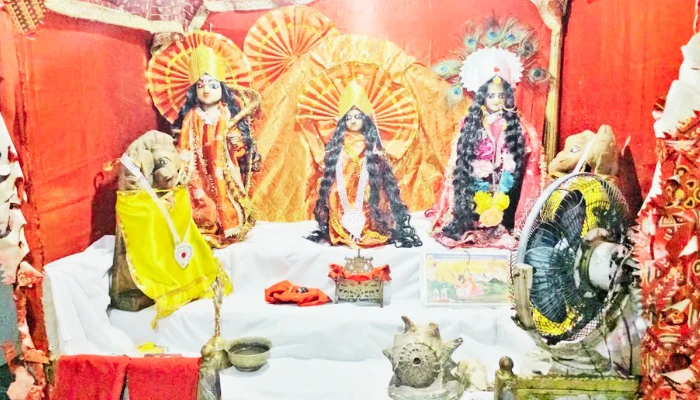
Case Summary
In Rohtas district, Bihar, nearly 300-year-old sacred Ashtadhatu idols of Lord Ram, Goddess Sita, and Lord Krishna were stolen from a Hindu temple by unknown miscreants. The theft of these priceless idols from the historic Thakurbari Temple in Berkap village, under the jurisdiction of the Darihat Police Station, sparked widespread outrage among the local Hindu community. On the night of 20 June 2026, unknown miscreants broke into the Thakurbari Temple in Berkap village and stole the nearly 300-year-old Ashtadhatu idols of Lord Ram, Goddess Sita, and Lord Krishna. When villagers arrived the following morning to offer prayers, they found the temple lock broken and all three idols missing. During a subsequent search, the idol of Goddess Sita was recovered abandoned in the village courtyard, while the idols of Lord Ram and Lord Krishna remained untraced. Following the theft, a complaint was lodged with the police. A case was registered against unknown persons, and an investigation was initiated. However, the Hindu villagers stated that despite the passage of several days, the police had neither identified the culprits nor recovered the stolen ancient idols, fuelling widespread resentment over the perceived lack of progress in the investigation. More than ten days passed after the theft of the Ashtadhatu idols, yet the police had neither recovered the idols nor apprehended those responsible. Amid mounting public anger, a Mahapanchayat was convened in the village and attended by a large number of residents from Berkap and neighbouring villages. The Station House Officer of Darihat Police Station was also present. During the meeting, the villagers firmly demanded the immediate recovery of the stolen ancient idols, warning that they would be compelled to launch a large-scale public agitation if prompt and effective action was not taken. Expressing the community's anguish, villager Suryanath Singh stated: "The Thakurbari housed idols dating back nearly 300 years. People from this village and many neighbouring villages came here to worship. The stolen idols were not merely objects of religious faith but also an integral part of the village's historical and cultural heritage. Their recovery had to be ensured at all costs." In response to the villagers' concerns, the Station House Officer requested an additional four to five days to continue the investigation. Acknowledging the public's anger, he assured those present that the police were treating the matter with the utmost seriousness and would make every effort to recover the idols and arrest those responsible.
Why it is Hate Crime ?
This case is being added to the Undecided database because the facts currently available provide no evidence of a religious motive behind the immediate crime. While the offence involved the theft of sacred idols from a Hindu temple, the available information does not establish that the perpetrators targeted the temple out of hostility towards the Hindu faith or its adherents. A Hindu temple is not merely a physical structure but a sacred space where devotees worship and connect with the divine. The consecrated idols of Hindu deities installed within a temple are regarded as the living embodiment of the deities after the ritual of pran pratishtha and form the spiritual centre of temple worship. Together, the temple and its consecrated idols constitute an inseparable sacred ecosystem. The removal and theft of such idols, therefore, goes beyond the loss of valuable artefacts; it disrupts the sanctity of the temple and desecrate a place of worship by depriving devotees of the sacred deities that are central to religious rituals and daily worship. In that sense, the theft of the idols resulted in the desecration of the temple's sanctity. However, although Hindu temples are targeted on a regular basis by anti-Hindu perpetrators driven by religious hostility, the facts presently available in this case do not demonstrate that the theft was motivated by religious animosity. Instead, the available evidence indicates that the offence could have been committed with the primary objective of stealing valuable Ashtadhatu idols for financial gain, suggesting a criminal motive rooted in greed rather than hostility towards the Hindu faith. At present, there is no definitive evidence establishing that this crime was motivated by religious hostility or anti-Hindu bias. Accordingly, this incident is being included in the Undecided database of the Hinduphobia Tracker rather than the hate crime database. If any further evidence emerges demonstrating that the theft was driven by religious animosity or an intent to target the temple because of its Hindu identity, the classification of the case will be reviewed, and it will be moved to the hate crime database.


Case Status
Complaint filed


Perpetrators Details
Perpetrators
Unknown
Perpetrators Range
Unknown
Perpetrators Gender
unknown
 Sources




