Hindu women targeted, pressured to convert, married and held hostage by a Muslim man posing as Hindu in Kanpur, Uttar Pradesh
 Kanpur, Uttar Pradesh, India
  1 July, 2017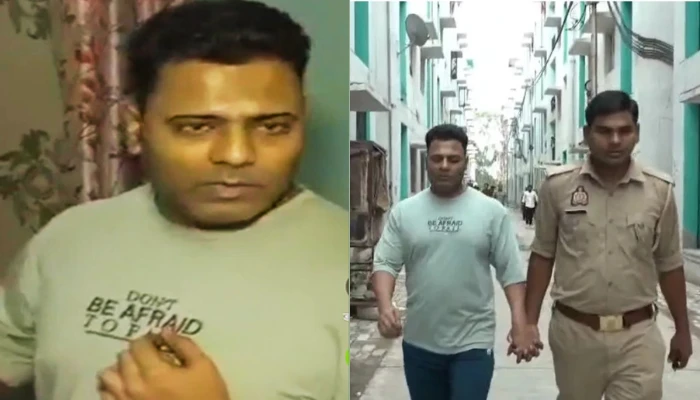
Case Summary
In the Panki police station area of Kanpur, Uttar Pradesh, two Hindu women were deceived into marriage by a Muslim man who concealed his religious identity by posing as a Hindu. Following the marriages, the women were subjected to sustained pressure to convert to Islam, prevented from practising their Hindu faith, physically assaulted when they resisted, and confined inside their residence. The accused, identified as Irshad Khan, was arrested, and a case was registered against him. According to the complaint, the first victim came into contact with the accused on social media in 2017, who introduced himself as "Vishal." Their online interaction gradually developed into a relationship, during which he proposed marriage. In 2018, against her family's wishes, she left her home in Hardoi and travelled to Kanpur to marry him. It was only during the court marriage process, while submitting the required documents, that she discovered his real identity was Irshad Khan. The victim stated that, having already left her family and home, she felt compelled to proceed with the marriage. After the marriage, the victim stated that she was forced to live according to Islamic customs and was prevented from practising Hindu rituals. She said that whenever she attempted to offer Hindu prayers, Irshad abused and assaulted her. She further stated that he repeatedly forced her to consume meat against her wishes. The couple later had a son. According to the victim, she wished to name him "Adi", but Irshad forcibly named the child "Arish" against her wishes. She further stated that when the child was around two and a half years old, Irshad attempted to have him circumcised. When she objected, he confined both her and the child inside a room and prevented them from leaving the house. The victim later learnt that Irshad had married another Hindu woman around three years earlier after deceiving her in a similar manner. According to the second victim, she first met Irshad while seeking employment, during which he introduced himself as "Vishal." Believing him to be Hindu, she married him. At the time the case came to light, the second victim was six months pregnant. She too stated that she had been confined inside the same residence for several months. Unable to endure the situation any longer, the first victim contacted members of a Hindu organisation and sought their assistance. Acting on the information, the organisation alerted the police. A police team led by ACP Amit Chaurasia and Panki Inspector Dinesh Singh Bisht reached the residence at Kamadgiri Apartments in Ratanpur. According to the police, the first victim and her child were found in one room, while the second victim and Irshad were in another. Both women and the child were brought to the police station. Based on the first victim's complaint, the police registered a case against Irshad under provisions of the Uttar Pradesh Prohibition of Unlawful Religious Conversion Act, along with charges relating to wrongful confinement, criminal intimidation, domestic violence, and fraud. The accused was arrested, while the second woman was also questioned as part of the investigation. Police stated that neighbouring residents described the household as suspicious, noting that its occupants were rarely seen leaving the apartment. Bajrang Dal's Metropolitan In-charge, Naresh Tomar, stated that the organisation assisted the victims after receiving information about the case and demanded strict action against the accused. At the time of documenting this incident, the police said the investigation was ongoing and that further facts would emerge upon completion of the inquiry.
Why it is Hate Crime ?
This incident has been added to the tracker under the primary category Crimes against women in relationships and other sexual crimes. Within this, the subcategory selected is- Man pretends to be Hindu. The tertiary categories are: Name Changed, Marries as per Hindu rituals. When a non-Hindu man pretends to be a Hindu to deceive a Hindu woman into a relationship, the act is seen as triggered by mala fides intentions. In some cases, the woman eventually accepts the man’s original religious identity and converts after the man’s identity is revealed. These cases could be argued as cases of religious brainwashing and a result of the pressure a woman feels after getting into a relationship with a man. The woman, it can be argued, also changed her religious identity because of the stigma she believes she might face if she chooses to walk out of a deceptive relationship. However, for the purpose of documenting hate crimes, the cases in this subcategory are limited to those where there is explicit violence aimed at religious conversion against the wishes of the victim (force-feeding beef, blackmailing with intimate videos, rape on refusal to convert, etc) or if the woman herself complains of the man’s religious deception. In such cases, it is established that the deception of the non-Hindu man had a specific aim of religious conversion or targeting of the victim due to her Hindu religious identity, therefore, making it a religiously motivated hate crime. The other subcategory selected in this case is forced conversion after marriage. The tertiary categories here are forced circumcision and a pattern of targeting Hindu women. In such cases, a non-Hindu man marries a Hindu woman, and the force/pressure to convert to any Abrahamic faith, like Islam, begins after marriage. In such cases, typically, two patterns emerge. First, when the relationship is consensual, and the religious identity of the perpetrator is known to the Hindu woman in the relationship. The marriage could be under the Special Marriages Act, where neither party is required to convert their religion for the marriage to be considered legitimate. While the victim in such cases enters matrimony assuming that religious identity is not a barrier, the non-Hindu man starts to pressure the woman to convert to his religion after marriage. The second is when the woman gets into a marriage with the man, pretending to share her faith. Later, when the truth is revealed, the man starts pressuring the woman to convert to his religion and give up her religious identity. In both situations, there is application of force by the perpetrator, including the denial of the woman’s religious rights. Some of the means by which the woman is forced/pressured to convert include force-feeding beef, being forced to read the Kalma, being forced to wear a hijab, being forced to undergo Halala, etc. There are several instances where, after marriage, the woman voluntarily converts to Islam. Such cases are often argued to be a result of religious brainwashing; however, for the purpose of documenting religiously motivated hate crimes, in the absence of the victim complaining of forced conversion, such cases do not form a part of the database. Another sub-category for this case is "Assault or threat upon refusal to convert". When Hindu women are in a relationship with non-Hindu men, there are cases where the woman faces threats or assault after she refuses to convert and change her religious identity owing to pressure/force by the non-Hindu man. Such relationships may be consensual with the religious identity of the non-Hindu man known to the victim. Somewhere along the relationship, the non-Hindu man starts pressurising the Hindu woman to convert to Islam and, upon her refusal, assaults or threatens the victim. Such cases are driven by specific religious motivations and against the religious identity of the victim and are therefore qualified as hate crimes. Cases where the Hindu woman converts to Islam and does not file a complaint about the force or threat are not considered a part of the hate tracker, even though it may be argued that the woman was brainwashed or threatened to convert to Islam. This case has been added to the Hinduphobia Tracker because the abuse suffered by the victims was marked by a series of actions that were directly aimed at eroding their Hindu religious identity and replacing it with an Islamic one. Religion was not incidental to the abuse but remained central to the manner in which the victims were deceived, controlled, and coerced throughout the relationship. The first religious marker was the concealment of the accused's Muslim identity by presenting himself as a Hindu. Religion plays a significant role in the choice of a life partner for many Hindus, with marriage often viewed not merely as a union between two individuals but as the coming together of families sharing common religious traditions, customs, and beliefs. By assuming a Hindu identity, the accused deprived the victims of the opportunity to make an informed decision about a relationship that carried profound religious implications. The concealment of religious identity was therefore not simply an act of personal deception but a means of securing consent that may not have been forthcoming had the accused disclosed his true identity. The religious dimension of the incident is further reinforced by the fact that the accused employed the same modus operandi against not one but two Hindu women. According to the complaint, he concealed his Muslim identity by posing as a Hindu before entering into relationships with both victims, after which each was subjected to pressure to abandon her Hindu faith and adopt Islamic beliefs and practices. The repetition of the same pattern indicates that the concealment of identity was not an isolated act of personal deception but a deliberate method of religiously profiling Hindu women. This demonstrates that the victims were not chosen at random; rather, their Hindu identity was central to the accused's conduct, revealing an apparent intent to establish relationships with Hindu women as a means of facilitating their religious conversion. The subsequent pressure to convert to Islam demonstrates that the deception was not an end in itself but the beginning of an effort to alter the victims' religious identity. Conversion under coercion negates an individual's freedom of conscience by making the continuation of the relationship contingent upon abandoning one's professed faith. Such conduct reveals an unwillingness to respect the victims' right to remain Hindu and instead seeks to replace their religious identity with another. Another significant religious marker was the prevention of Hindu worship. According to the complaint, the victims were assaulted whenever they attempted to perform Hindu prayers. For Hindus, daily worship is a fundamental expression of devotion and an essential aspect of practising their faith. Preventing a person from engaging in these religious observances through intimidation or violence amounts to an attack on their ability to freely practise Hinduism. It demonstrates hostility not only towards the individual but also towards the faith they profess. The attempt to compel the victim to consume meat against her wishes carries similar religious significance. Although dietary practices vary across Hindu communities, many Hindus abstain from meat for religious reasons, spiritual discipline, or long-standing cultural traditions. Forcing a Hindu to violate such sincerely held beliefs is not merely an intrusion into personal choice but an attempt to override religious conscience and weaken adherence to practices that form part of the individual's Hindu identity. The insistence that the child be given an Islamic name and undergo circumcision further reflects an attempt to determine the child's religious identity in accordance with Islamic traditions despite the objections of the Hindu mother. Names often carry deep religious and cultural significance, while circumcision is an established marker of Islamic religious identity and is not prescribed within Hindu religious practice. The insistence on these religious markers demonstrates an intention to ensure that the child would be raised within an Islamic framework rather than retaining the religious identity of the Hindu parent. This represents an effort not only to alter the mother's religious identity but also to reshape the next generation's. Viewed cumulatively, these actions reveal a sustained pattern in which every significant aspect of the victims' religious life was subjected to pressure aimed at replacing Hindu beliefs and practices with Islamic ones. These actions of the accused stemmed from inherent hostility towards the victim's professed faith since Abrahamic faiths believe that any non-adherent to the faith is subject to being dehumanised till they convert. This mindset does not merely tolerate the existence of another faith but seeks its erasure or assimilation. As a result, Hindus are often targeted not because of who they are as individuals, but because of their religious identity. The violence, deception, or humiliation inflicted in such cases is therefore not random, but part of a broader ideological hostility toward Hinduism and its symbols, practices, and adherents. Here, too, the predatory actions stemmed from doctrinal animosity towards the Hindu faith, which is why this case is being documented as a religiously motivated hate crime. Disclaimer: The exact date of the initial contact between the Hindu woman and the perpetrator was not specified in the available sources. The tracker records incident dates based on when the crime occurred, not when it was published or reported. Here, though the precise beginning of the relationship and grooming process remained unclear, it is mentioned that the victim came in contact with the accused in 2017. Therefore, the date of the incident has been set to 02 July 2017, derived by combining the year the victim first met the accused with the report's publication date and month. This has been used as the indicative incident date for documentation purposes only.
Victim Details
Total Victim
3
Deceased
0
Gender
- Male 1
- Female 2
- Third Gender 0
- Unknown 0
Caste
- SC/ST 0
- OBC 0
- General 0
- Unknown 3
Age Group
- Minor 1
- Adult 2
- Senior Citizen 0
- Unknown 0


Case Status
Complaint filed


Perpetrators Details
Perpetrators
Muslim Extremists
Perpetrators Range
One Person
Perpetrators Gender
male
 Sources




