Hindu temple land encroached upon and illegally occupied for eight years; priest climbed water tank in protest
 Baran, Rajasthan, India
  29 June, 2018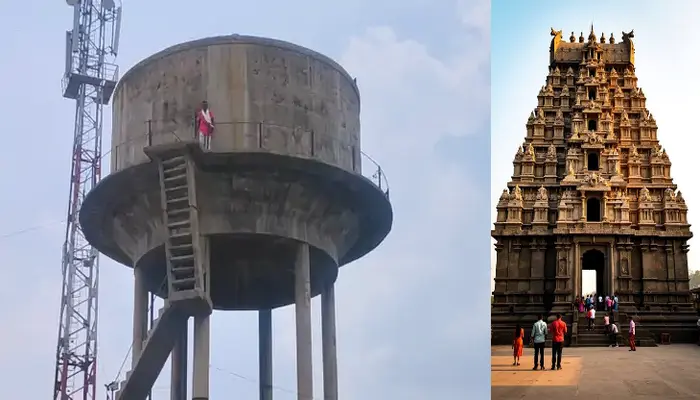
Case Summary
In the Sokanda village of Baran, Rajasthan, a Hindu temple's land was encroached upon and illegally occupied by some influential persons from the village. On 30 June 2026, the temple priest Dhanraj Vaishnav climbed a water tank at the Agricultural Produce Market in protest over an eight-year-long dispute concerning the Hindu temple land encroachment. Following information about the incident, police and administrative officials reached the spot and attempted to persuade him to come down. According to representatives of the Rajasthan Priests' Association, including divisional presidents Mahendra Sharma and Raghuveer Bairagi, the priest had been struggling for years to regain possession of temple land that had been occupied by influential persons from the village. Vaishnav stated that the court had passed orders in his favour and had granted a stay on the land, but despite these orders, the administration had failed to restore possession of the property to the temple. He further stated that an administrative team that had previously visited the village had been attacked with sticks during an attempt to address the dispute, yet no effective action had been taken in connection with the incident. He also said that, even after 11 months, he had continued to visit police stations and approach police officials seeking justice. Owing to the continuing dispute, cultivation on the temple land had also become impossible, prompting him to stage the protest by climbing the water tank to demand enforcement of the court's orders and restoration of the temple land.
Why it is Hate Crime ?
The primary category selected in this case is- Attack on Hindu religious representations. The subcategory selected is- Encroachment or illicit takeover of temple land/land near temple. In Hinduism, a temple is the abode of the Deity. The Deity in the Temple is consecrated, thereby making it a real, breathing entity. Hindus believe that not just the Deity but the temple premises itself are sacred to Hindus since Hindus hold the faith that the entire Temple space is an amalgamation of the divine energy of the deity. Not only the Temple but the Temple premises in its entirety are considered sacred by Hindus. In several cases, the premises of the Temple and/or religious centre are illicitly taken over by institutions belonging to other faiths, like the Waqf board or the Church. Other times, the temple property, land or the property of religious centres are illicitly encroached upon by non-Hindu groups. Any illicit takeover or encroachment is a crime an initio; however, when non-Hindu groups illicitly take over or encroach on the sacred land of Hindus, it is an affront to the Hindu community and is therefore classified as a religiously motivated hate crime under this category. This case has been added to the Hinduphobia Tracker because it involved the prolonged deprivation of a Hindu religious institution's rights over its temple property, resulting in the obstruction of the temple's religious and economic functioning. The continued inability of the temple to regain control over its property, even after judicial intervention, demonstrated that the dispute had gone beyond an ordinary civil disagreement and had evolved into a prolonged denial of the temple's lawful rights. The continued occupation of temple land had direct consequences for the functioning of the Hindu religious institution. Temple land is not merely immovable property but often serves as an important economic resource for the maintenance of religious activities, upkeep of the premises, and sustenance of the priest. The priest stated that farming on the temple land had become impossible because of the continuing dispute, thereby depriving the temple of the benefits associated with its own property. Such prolonged interference with a temple's ability to exercise control over its legally recognised assets undermined the institution's ability to function as intended. For Hindus, a temple is not merely a physical structure but a sacred space dedicated to divine worship and religious observance. Equally important is the land attached to the temple, which forms an integral part of the institution's religious identity and functioning. Temple lands are traditionally used to facilitate worship, accommodate devotees, host religious gatherings, preserve religious heritage, and support the maintenance of the temple itself. Once dedicated to a deity, such land is regarded as sacred and is held in trust for religious purposes rather than for unrelated private or institutional use. Ultimately, the prolonged denial of possession over temple land compelled the priest to resort to an extreme form of public protest by climbing a water tank to draw attention to the issue. The necessity of such a protest, after years of unsuccessful efforts through legal and administrative channels, illustrated the seriousness of the grievance and the sustained nature of the interference with the temple's rights. For these reasons, this incident has been categorised in the Hinduphobia Tracker as involving the obstruction of a Hindu religious institution's lawful rights and functioning through the prolonged denial of possession over temple property. Disclaimer: It is important to clarify that none of the media sources covering this case have specified the exact date when the victim's ordeal began, though it is mentioned that the temple land was illegally occupied for at least 8 years. Thus, to document this case, we have used an indicative date, 30 June 2018, as a placeholder for the beginning of the encroachment. While media coverage of the incident emerged on 30 June 2026, the Hinduphobia Tracker records the incident based on when the victim’s ordeal began, not when it was reported.


Case Status
Case sub-judice


Perpetrators Details
Perpetrators
Unknown
Perpetrators Range
Unknown
Perpetrators Gender
unknown
 Sources




