Hindu woman deceived into marriage by Muslim man posing as Hindu, abandoned for refusing conversion
 Indore, Madhya Pradesh, India
  24 June, 2020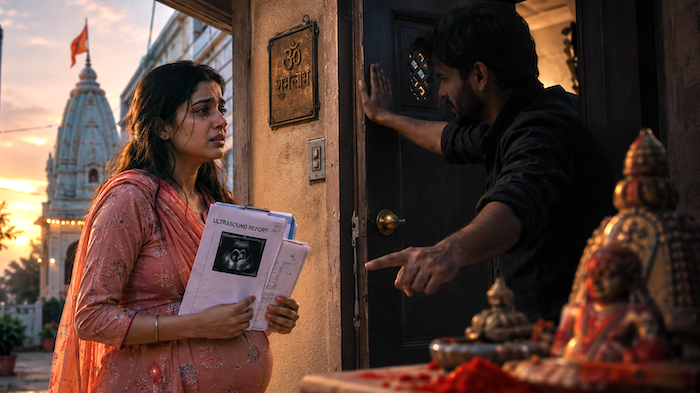
Case Summary
A Hindu woman in Indore, Madhya Pradesh, was deceived into a marriage and pressured to convert to Islam by a Muslim man who concealed his religious identity and presented himself as a Hindu. She entered the marriage believing that she was marrying a Hindu man named Gabbar and participated in Hindu marriage rituals with him. It was later revealed that her husband was, in fact, Mustafa Bohra and that he had hidden his identity from the very beginning. The deception had far-reaching consequences for the Hindu woman. By the time she discovered her husband's true identity, she was pregnant with his child and was entirely dependent on the marital relationship that had been established through concealment and misrepresentation. When she confronted him over his concealed identity, the dispute escalated, and she was subjected to abuse, coercion and threats. During the COVID,19 period in 2020, the accused, Mustafa Bohra, who introduced himself as a Hindu man named Gabbar, came into contact with the Hindu woman and developed a relationship with her. He represented himself as a Hindu and concealed his Muslim identity. Thereafter, he married the Hindu woman according to Hindu customs and rituals. The marriage ceremony was conducted in a temple and included Hindu marital practices such as applying sindoor and tying a mangalsutra, reinforcing his representation that he belonged to the Hindu faith. Following the marriage, the couple lived together and maintained a marital relationship for a brief period. During this time, the Hindu woman became pregnant. When she was preparing to undergo a sonography examination, she took her husband's Aadhaar card and discovered that his real name was Mustafa Bohra. It was then that she learnt that the man she had married while believing him to be a Hindu had concealed his true religious identity. The Hindu woman confronted Mustafa Bohra regarding the deception and questioned why he had hidden his identity before marrying her. According to her account, he responded by physically assaulting her. He further told her that he was a Muslim and that she would have to convert to Islam. When the Hindu woman refused to abandon her faith and convert, he forced her out of the matrimonial home. After being expelled from the house, the Hindu woman approached the Dwarakapuri police station in Indore and lodged a complaint in 2021. Even after the complaint was filed, she stated that Mustafa Bohra again threatened her. As she continued to face difficulties in obtaining relief, she filed another complaint with the Dwarakapuri police and subsequently approached the MG Road police station with a third complaint. The Hindu woman thereafter approached the Family Court in Indore seeking maintenance and compensation. Notices were issued to Mustafa Bohra directing him to appear before the court; however, he did not comply with the proceedings. During this period, the Hindu woman gave birth to a baby girl. The Family Court initially directed Mustafa Bohra to pay only Rupees 2,000 per month towards the maintenance of the child and did not recognise the Hindu woman as his wife for the purpose of maintenance. Dissatisfied with the limited relief granted by the Family Court, the Hindu woman challenged the order before the Madhya Pradesh High Court. On 22nd June 2025, the Indore Bench of the Madhya Pradesh High Court modified the earlier order and directed Mustafa Bohra to pay Rupees 10,000 per month to the Hindu woman and Rupees 10,000 per month for the maintenance of their daughter. The High Court also directed him to pay maintenance arrears amounting to Rupees 10.60 lakh for the previous five years. The High Court's order marked a significant development in the case involving the concealment of religious identity in marriage. The proceedings remained centred on the Hindu woman's pursuit of maintenance and justice after being deceived into marriage, subjected to pressure to convert to Islam, expelled from her home and left to raise her daughter separately following the breakdown of the relationship.
Why it is Hate Crime ?
This case has been added to the tracker under the primary category of - Crimes against women in relationships and other sexual crimes. Within this, the sub-category selected is - Man pretends to be Hindu. Under this, the tertiary categories selected are - Name Changed, and Marries as per Hindu rituals. When a non-Hindu man pretends to be a Hindu to deceive a Hindu woman into a relationship, the act is seen as triggered by malafide intentions. In some cases, the woman eventually accepts the man’s original religious identity and converts after the man’s identity is revealed. These cases could be argued as cases of religious brainwashing and a result of the pressure a woman feels after getting into a relationship with a man. The woman, it can be argued, also changed her religious identity because of the stigma she believes she might face if she chooses to walk out of a deceptive relationship. However, for the purpose of documenting hate crimes, the cases in this subcategory are limited to those where there is explicit violence aimed at religious conversion against the wishes of the victim (force-feeding beef, blackmailing with intimate videos, rape on refusal to convert, etc), or if the woman herself complains of the man’s religious deception. In such cases, it is established that the deception of the non-Hindu man had a specific aim of religious conversion or targeting of the victim due to her Hindu religious identity, therefore, making it a religiously motivated hate crime. The other sub-category selected here is - Forced conversion after marriage. In such cases, a non-Hindu man marries a Hindu woman, and the force/pressure to convert to any Abrahamic faith, like Islam, begins after marriage. In such cases, typically, two patterns emerge. First, when the relationship is consensual, and the religious identity of the perpetrator is known to the Hindu woman in the relationship. The marriage could be under the Special Marriages Act, where neither parties are required to convert their religion for the marriage to be considered legitimate. While the victim in such cases enters matrimony assuming that religious identity is not a barrier, the non-Hindu man starts to pressure the woman to convert her religion after marriage. The second is when the woman gets into a marriage with the man, pretending to share her faith. Later, when the truth is revealed, the man starts pressuring the woman to convert her religion and give up her religious identity. In both situations, there is application of force by the perpetrator, including the denial of the woman’s religious rights. Some of the means by which the woman is forced/pressured to convert include force-feeding beef, being forced to read the Kalma, being forced to wear a hijab, forced to undergo Halala, etc. There are several instances where, after marriage, the woman voluntarily converts to Islam. Such cases are often argued to be a result of religious brainwashing, however, for the purpose of documenting religiously motivated hate crimes, in the absence of the victim complaining of forced conversion, such cases do not form a part of the database. The other sub-category selected is - Leaves partner upon refusal to convert. When Hindu women are in a relationship with non-Hindu men, there are cases where the woman faces pressure/threats/violence to convert and change her religious identity by the non-Hindu man. However, when the Hindu woman refuses to convert, the non-Hindu man ends the relationship or divorces the woman, as the case might be. Such relationships may be consensual with the religious identity of the non-Hindu man known to the victim. Somewhere along the relationship, the non-Hindu man starts pressuring the Hindu woman to change her religious identity and upon her refusal, ends the relationship. Cases where the Hindu woman converts to Islam and does not file a complaint about the force, or threat after she refuses to convert to Islam, are not considered a part of the hate tracker. This case carries clear markers of religious motivation because the Muslim perpetrator deliberately abandoned his real identity and adopted a Hindu identity in order to gain the confidence of a Hindu woman. He introduced himself using the Hindu name "Gabbar" and concealed both his religion and personal background. Names carry deep cultural and religious significance in India and often serve as immediate markers of identity and community affiliation. By presenting himself under a Hindu name, the perpetrator intentionally created a sense of familiarity and trust that would not otherwise have existed. This deception was not incidental but a calculated act designed to lower the victim's guard and enable access to a Hindu woman by exploiting the trust associated with a shared religious identity. The concealment of his Muslim identity and assumption of a Hindu name demonstrated a conscious effort to manipulate the victim's religious and cultural expectations for his own objectives, making the targeting intrinsically tied to her Hindu identity. The religious motivation became even more evident through the marriage being conducted according to Hindu customs and rituals. Hindu marriage ceremonies are sacred religious rites that symbolise spiritual union, mutual commitment, and the formation of a lifelong bond sanctified by Hindu traditions and deities. By participating in these rituals while concealing his true identity, the perpetrator did not merely deceive the victim personally but also misused religious ceremonies and symbols to authenticate his fabricated Hindu persona. The performance of Hindu rituals served as a means of reinforcing the false impression that he belonged to the same faith and cultural background as the victim. The deliberate use of sacred Hindu practices to facilitate deception demonstrates premeditation and a willingness to exploit the religious sentiments and beliefs of the Hindu woman for personal gain. Such conduct reflects a profound disregard for the sanctity of Hindu traditions and highlights that the deception was rooted in the victim's religious identity. Firstly, when the accused's real identity was revealed, he attempted to force the Hindu victim to renounce her religion and convert to Islam. Pressuring a Hindu individual to discard her religious faith and embrace another was a direct attack on her religious identity and dignity. It was not a matter of personal choice; it was coercion rooted in hostility towards the victim's Hindu identity. Such an attempt reflects religious animosity because the act was not simply about personal differences but about erasing the victim’s Hindu faith, making it a religiously motivated crime The events that followed further established the religious nature of the targeting. The abuse and abandonment began when the Hindu woman discovered the perpetrator's true identity and refused to convert to Islam. At the time, she was in an especially vulnerable position as she was pregnant and dependent on the marital relationship that had been built upon deception. Rather than respecting her right to retain her faith and make an informed choice, the perpetrator subjected her to abuse, demanded that she embrace Islam, and expelled her from the matrimonial home when she refused. The escalation of violence and abandonment immediately upon her refusal to convert demonstrated that the continuation of the relationship had become conditional upon her renouncing her Hindu identity and accepting another religion. Her suffering was therefore directly linked to her decision to remain Hindu. Taken together, the adoption of a Hindu name, the participation in Hindu marriage rituals to reinforce a fabricated identity, and the subsequent abuse and abandonment after the victim refused conversion reveal a sustained pattern of religiously motivated targeting. The Hindu woman's faith was not incidental to the incident; it was central to the deception, coercion, and eventual victimisation she endured. The case, therefore, demonstrates clear elements of religious targeting, exploitation of Hindu religious trust, and hostility towards the victim's decision to continue practising her Hindu faith. Disclaimer: The exact date of when the Hindu woman and the Muslim perpetrator first came into contact was not specified in the available sources. However, the year of initial contact was indicated around 2020. The tracker records incident dates based on when the crime occurred rather than when it was reported or published. In this case, 25th June 2020 has been used as the indicative incident date, derived by aligning the known year with the article publication date of 25th June 2026. This date has been recorded for documentation purposes only.
Victim Details
Total Victim
1
Deceased
0
Gender
- Male 0
- Female 1
- Third Gender 0
- Unknown 0
Caste
- SC/ST 0
- OBC 0
- General 0
- Unknown 1
Age Group
- Minor 0
- Adult 1
- Senior Citizen 0
- Unknown 0


Case Status
Case adjudicated


Perpetrators Details
Perpetrators
Muslim Extremists
Perpetrators Range
One Person
Perpetrators Gender
male
 Sources




