Hindu man who left Islam and adopted Hinduism targeted with doctored video and death threats; Muslim man labels him 'apostate'
 Lucknow, Uttar Pradesh, India
  12 June, 2026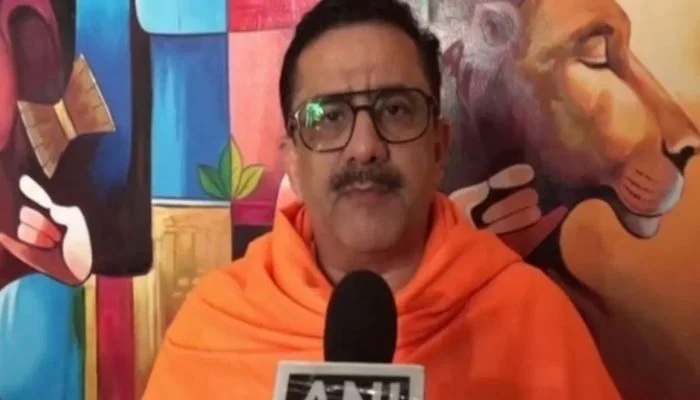
Case Summary
In Lucknow, Uttar Pradesh, a Hindu man, Jitendra Narayan Singh Sengar alias Tyagi, who had renounced Islam and adopted Hinduism, received death threats from a Muslim man identified as Shadab Mirza. The accused circulated a doctored video of him and threatened to kill him, referring to him as “murtad”, an Islamic term used for those Muslims who leave Islam (apostates). The victim, formerly known as Syed Waseem Rizvi, an ex-chairman of the Shia Central Waqf Board in Uttar Pradesh, had publicly left Islam following a series of high-profile controversies, including filing a Public Interest Litigation in March 2021 in the Supreme Court of India seeking the removal of 26 verses of the Quran, stating that it promoted terrorism, which was dismissed by the Court in April 2021. He subsequently published a book titled “Muhammad” in November 2021, which triggered widespread protests and backlash from multiple Muslim organisations due to its content regarding Islamic texts and history. In December 2021, he formally converted to Hinduism and adopted the name Jitendra Narayan Singh Tyagi, publicly embracing Sanatan Dharma. Following his conversion, he was at the receiving end of several death threats by Muslims for leaving Islam. Similarly, in June 2026, he stated that a Muslim youth had threatened to kill him on social media, stating that a conspiracy was being orchestrated to disturb communal harmony. He lodged a complaint at Sahadatganj Police Station. Acting on the complaint, the police registered a case and initiated an investigation. In his complaint, Jitendra Narayan Singh Sengar, a resident of Tulsidas Marg, Nakhas, stated that Shadab Mirza, alias Batishtha, a resident of Hasanpuriya, edited and circulated his old video on his Facebook account on 13 June 2026. The post contained abusive and offensive language and included threats to kill him. He was referred to as a “murtad”, meaning a person who abandons Islamic beliefs, with calls implying violence against him. He further stated that the accused’s posts and comments were intended to provoke hostility against him within the Muslim community. He stated that a conspiracy had been created to threaten his and his family’s safety by disturbing the atmosphere during Muharram and disrupting peace in the city. Jitendra submitted relevant Facebook posts, comments, and screenshots as evidence. Sahadatganj Station House Officer Santosh Arya stated that the case was under investigation based on the complaint, and further action would be taken according to the findings.
Why it is Hate Crime ?
The primary category selected in this case is- Attack not resulting in death. The subcategory selected is- Attacked for Hindu identity. In several cases, Hindus are attacked merely for their Hindu identity without any perceived provocation. A classic example of this category of religiously motivated hate crime is a murder in 2016. 7 ISIS terrorists were convicted for shooting a school principal in Kanpur because they got ‘triggered’ seeing the Kalava on his wrist and tilak that he had put. In this, the Hindu victim had offered no provocation except for his Hindu religious identity. The motivation for the murder was purely religious, driven by religious supremacy. Such cases where Hindus are targeted merely for their religious identity would be documented as a hate crime under this category. The other primary category selected is: Hate Speech against Hindus. The subcategory selected is: Violent Threats. Violent threats, explicit, implicit or implied, is the most dangerous form of hate speech since it goes beyond discriminatory and prejudicial language to express the intent of causing harm to an individual or a group of people based on their religious identity and faith. There could be several different kinds of threats that are issued to Hindus based on religious animosity. An explicit threat would mean the direct threat of violence towards an individual Hindu, a group of Hindus or Hindus at large. Physical violence, death threats, threats of destruction of property belonging to Hindus and threats of genocide would mean explicit threats against Hindus for their religious identity. Implicit threats may not be a direct threat but implied through the use of symbols of actions – for example – in the Nupur Sharma case, other than explicit threats, there were also implicit threats when Islamists took to the streets to burn and beat her effigies. It implies that they want to do the same to Nupur Sharma – thereby is considered an implicit threat. Violent threats can be delivered in person, through letters, phone calls, graffiti, or increasingly through social media and other online platforms. It would be important to understand that a threat – explicit or implicit, online or offline – to an individual who happens to be a Hindu does not qualify as a religiously motivated threat. Such a threat, while vile and dangerous, could be owing to non-religious reasons and/or personal animosity. To qualify as a religiously motivated threat, it would need to exhibit an indication that the individual is being targeted for religious reasons and/or owing to his/her religious identity as a Hindu. This case reflects clear anti-Hindu animosity, where the victim was targeted primarily because he left Islam and adopted Hinduism. His conversion itself became the trigger for hostility, with the Muslim perpetrator using the term “murtad” and issuing death threats specifically in response to his shift to a Hindu identity. The abuse and intimidation were not random but directly linked to his rejection of Islam and public embrace of Sanatan Dharma, demonstrating that his newly adopted Hindu identity was the focal point of targeting. This starkly underscores the perpetrator’s religious hostility and intolerance towards the victim’s change of faith, transforming a personal spiritual choice into a basis for harassment and threats. The victim underwent a voluntary gharwapsi (homecoming) ceremony and embraced Hinduism entirely of his own free will. Yet, this autonomous decision immediately provoked threats from members of the Muslim community, exposing the perpetrator’s hostility towards the victim’s adopted Hindu identity. Even in this current incident, such verbal abuse and death threats directed at an individual for adopting Hinduism constitute religiously motivated bias, classifying the incident as an anti-Hindu hate crime driven by prejudice against the victim’s new religious identity. In Islam, apostasy, leaving the faith, is explicitly punishable by death, as codified in authoritative Hadiths such as Sahih al-Bukhari and Sahih Muslim, which clearly declares, "Whoever changes his religion, kill him," and endorses execution for those who abandon Islam. This entrenched doctrinal hostility provides the precise context for the immediate and severe threats unleashed against the victim after his public conversion from Islam to Hinduism. The rapid, coordinated retaliation by the Muslim perpetrator exemplifies targeted aggression against apostates, particularly those adopting Hinduism, a perceived rival faith, demonstrating zero tolerance for Hinduism and its adherents. This religiously motivated campaign of intimidation sought to terrorise, coerce, and punish the Hindu victim exclusively for his Hindu identity, solidifying the incident as a hate crime firmly rooted in Islamic apostasy laws and anti-Hindu sentiment. The accused circulated a doctored video and used abusive religious labelling such as “murtad” to frame the victim's conversion in a derogatory manner, alongside explicit threats of violence. This reflects intolerance towards the victim’s adoption of Hinduism, treating conversion away from Islam as grounds for coercion and intimidation through fear. The intent was to threaten and pressure him on account of his religious choice and discourage acceptance of Hindu identity, demonstrating the targeted nature of the harassment. Overall, the threats and harassment were driven by hostility towards his adoption of Hinduism, making the incident a clear instance of religiously motivated targeting rooted in anti-Hindu animosity. Therefore, this case is being added to the hate crime database of the Hinduphobia Tracker.
Victim Details
Total Victim
1
Deceased
0
Gender
- Male 1
- Female 0
- Third Gender 0
- Unknown 0
Caste
- SC/ST 0
- OBC 0
- General 0
- Unknown 1
Age Group
- Minor 0
- Adult 1
- Senior Citizen 0
- Unknown 0


Case Status
Complaint filed


Perpetrators Details
Perpetrators
Muslim Extremists
Perpetrators Range
One Person
Perpetrators Gender
male
 Sources




